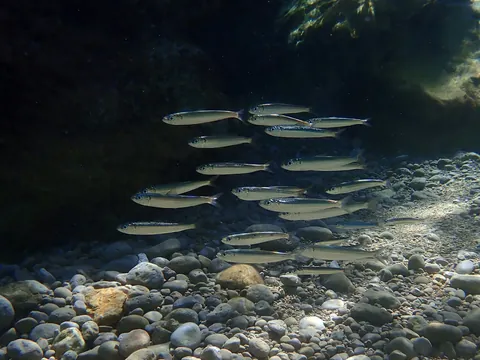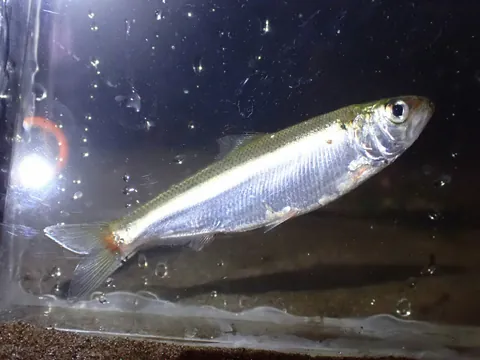
American Shad
Alosa sapidissima
Alosa pseudoharengus
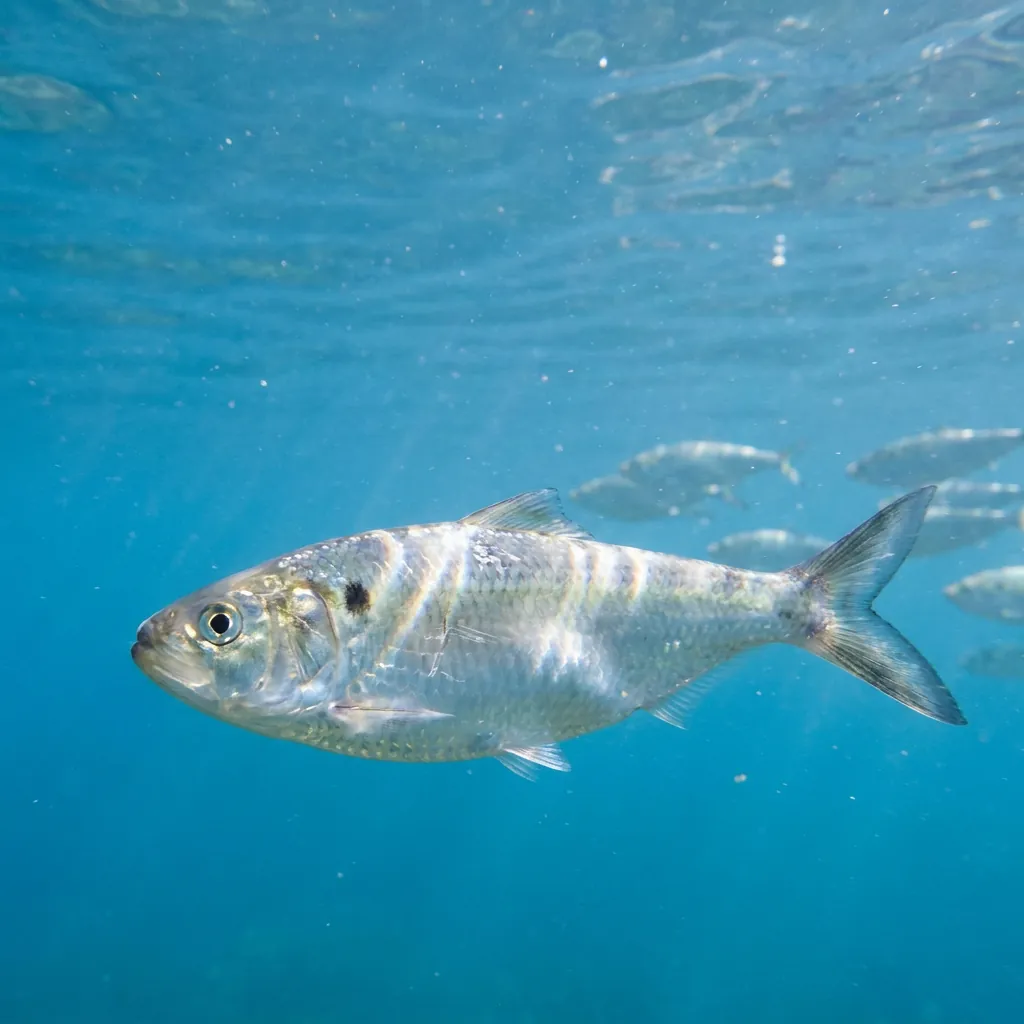
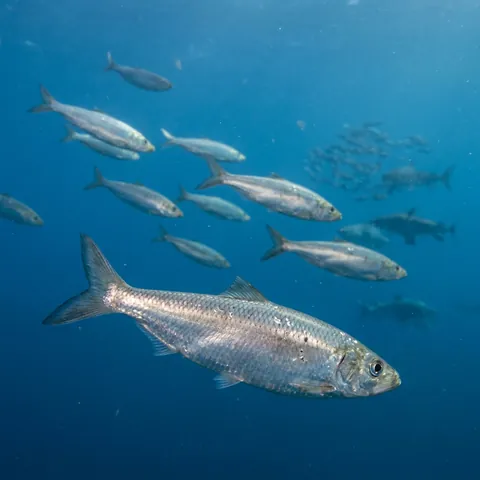
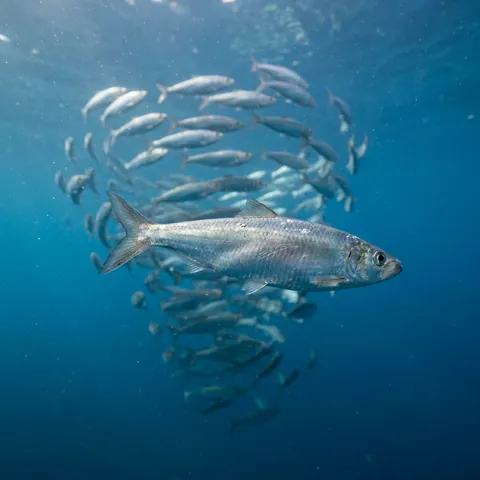
The alewife is a small herring of the North American Atlantic coast, known for swimming up rivers to spawn in fresh water. Some populations never return to the sea, living their whole lives inland instead.
Also known as: ellwife, kiack, kyack, sawbelly, golden shad, big-eyed herring, river herring, anadromous alewives, bigeye herring, branch herring, freshwater herring, gray herring, grayback, greyback, kyak, white herring, green-back, mooneye
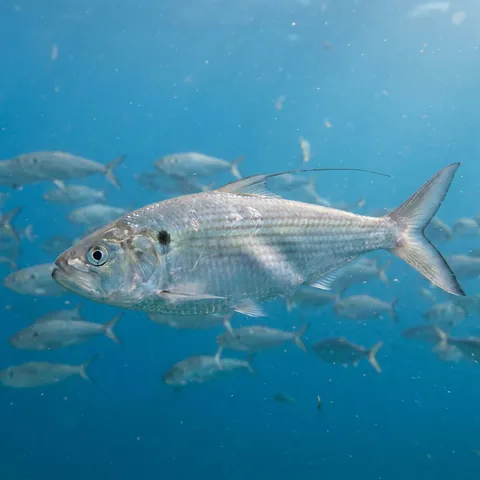
It looks much like the closely related blueback herring, sharing the same waters. The clearest external difference is the eye: on the alewife, the eye is wide enough that its width exceeds the length of the snout in front of it.
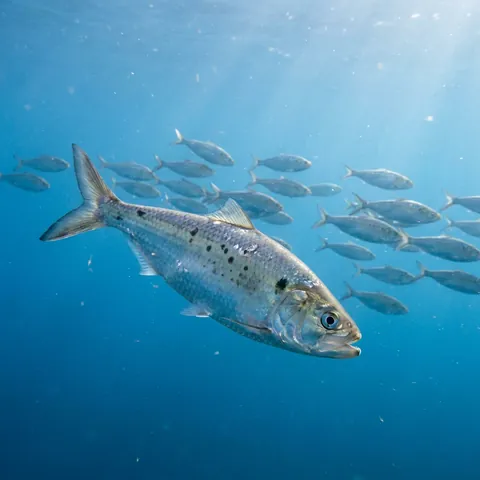
This fish has a deep front body, bigger than other fish sharing its waters, tapering back to a slender tail. Its head is bronze-coloured, its back grey-blue to greyish green, and it often carries a single dark spot behind the gill cover.
The alewife is listed as Least Concern, but its numbers have dropped sharply across much of its range. Dams and other barriers block its migration to spawning grounds, and habitat loss, fishing, and rising numbers of predatory striped bass have added to the decline. Several US states have banned taking alewife to help populations recover.
Alewives spread through the Great Lakes by using the Welland Canal to bypass Niagara Falls, then grew so numerous that die-offs left them washed up in long windrows along the shoreline.
Describe what you saw and we name it, then keep every species you find in your Oceandex.