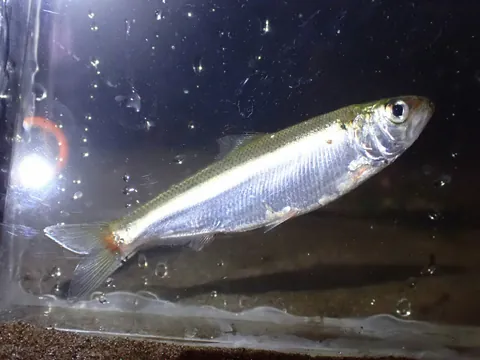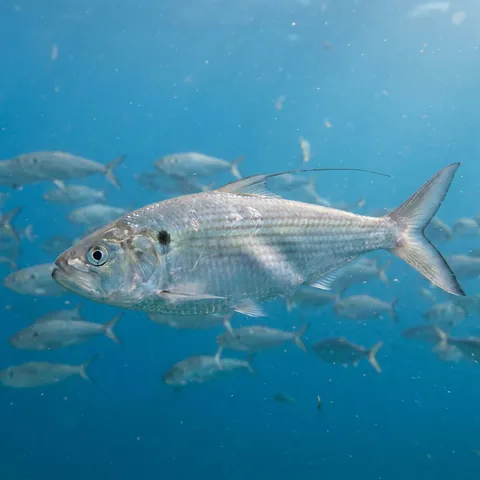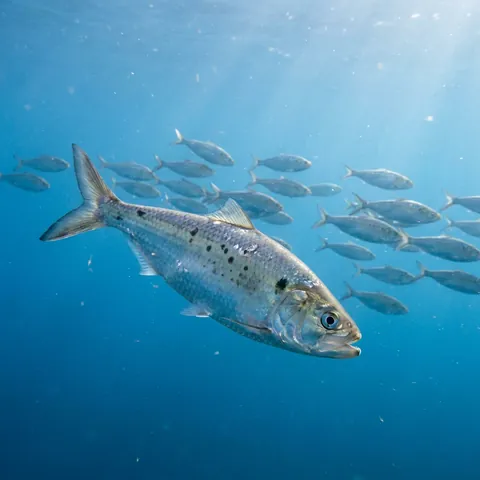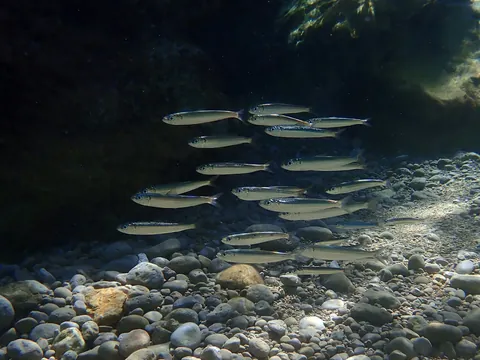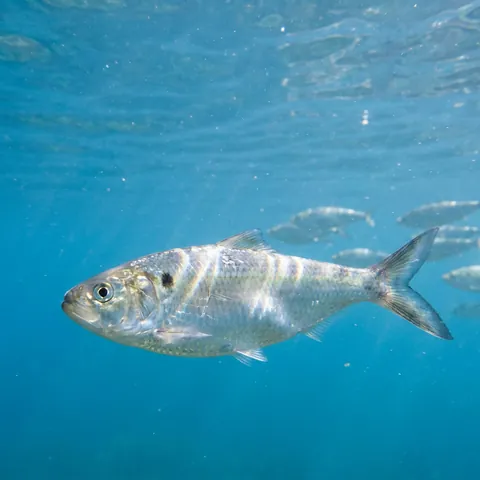
Alewife
Alosa pseudoharengus
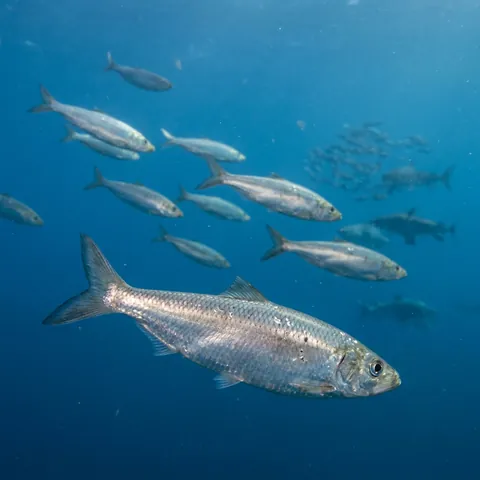
Clupea pallasii
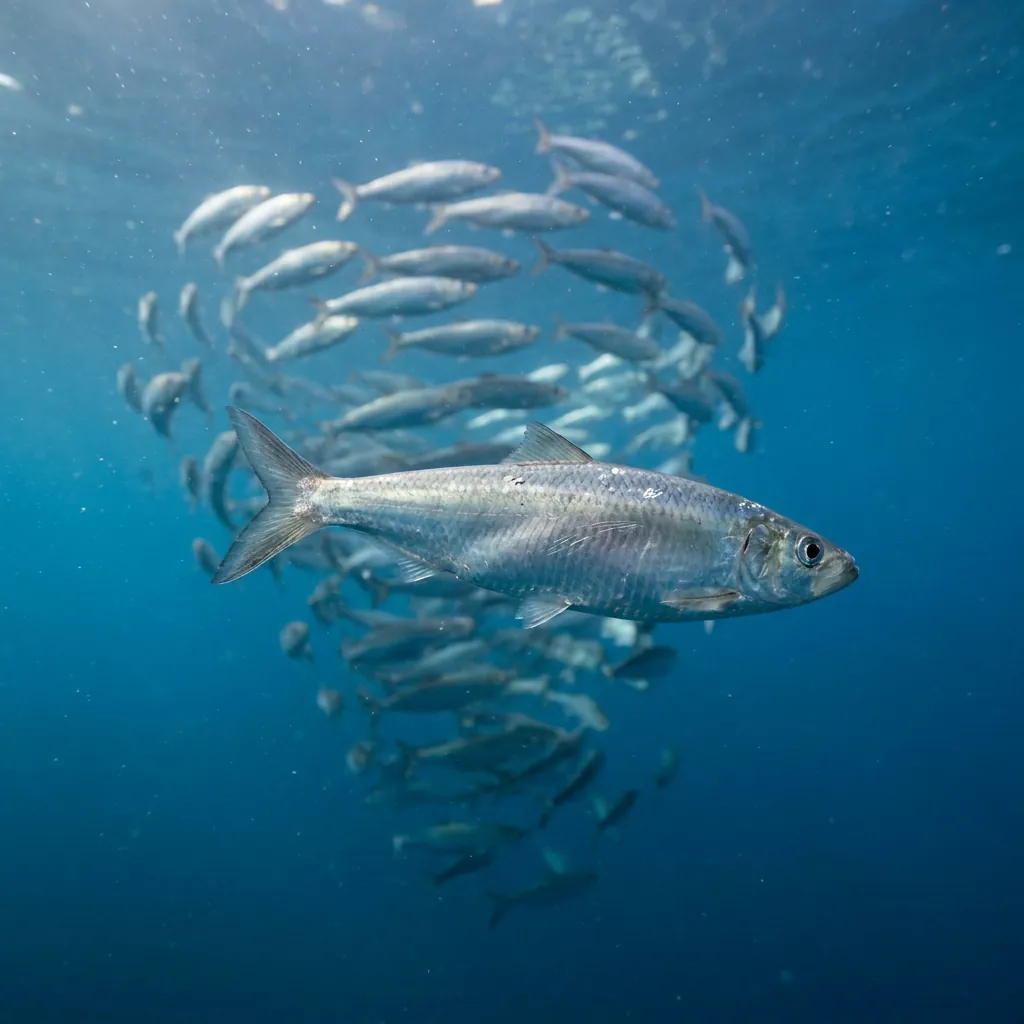
The Pacific herring is a silvery schooling fish of the North Pacific, feeding vast numbers of predators along its coasts. It gathers by the millions each year to spawn on eelgrass and seaweed in sheltered bays.
This fish has a bluish-green back and silvery-white sides and belly, with no other markings. A single dorsal fin sits at mid-body, and the tail fin is deeply forked. The body is flattened from side to side, with large scales that come off easily, and it has no scales on the head or gills. The silvery sheen comes from crystals in the skin that also help it blend into open water.
Pacific herring live in the open ocean but gather in sheltered bays and estuaries to spawn, usually from November through the early months of the year. Schools move from deep channels into shallow water and lay eggs on eelgrass, seaweed, and other submerged plants. A single female can lay up to 20,000 eggs, and a whole school may spawn together over just a few hours. Unlike some fish, they survive spawning and can breed again in later years.
Some Pacific herring populations have declined sharply, including in Puget Sound, where the loss of eelgrass spawning grounds is a suspected cause. A petition to list an Alaska population as threatened was denied, though wildlife agencies have reviewed the wider regional population since.
It can filter-feed even in very dim light, thanks to an unusual eye structure, and a direct nerve link between its gas bladder and its senses lets it change depth unusually fast.
Describe what you saw and we name it, then keep every species you find in your Oceandex.