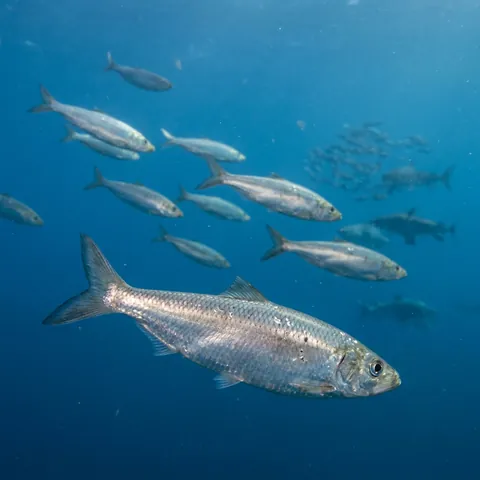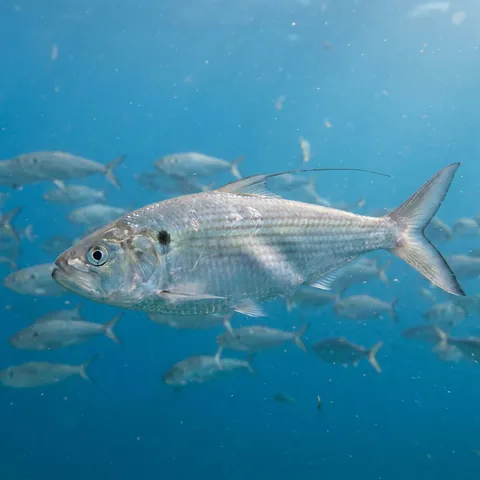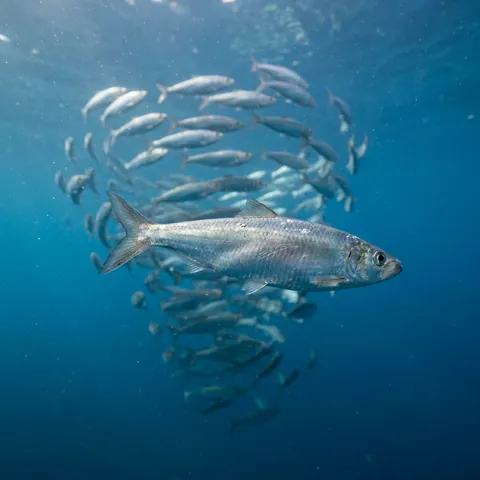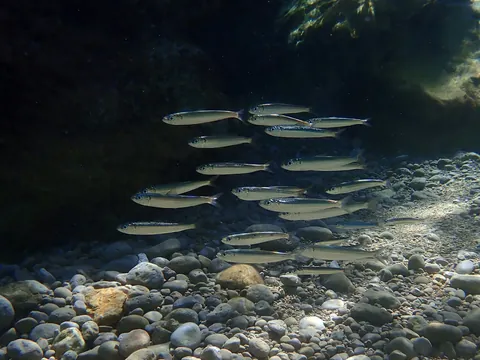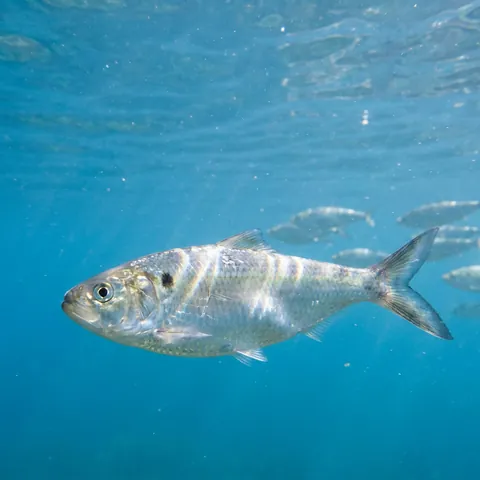
Alewife
Alosa pseudoharengus
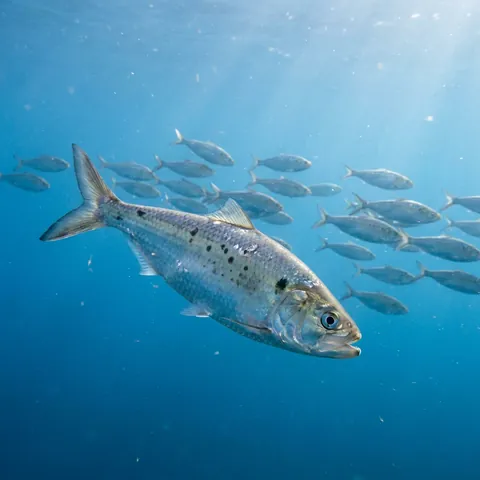
Alosa sapidissima
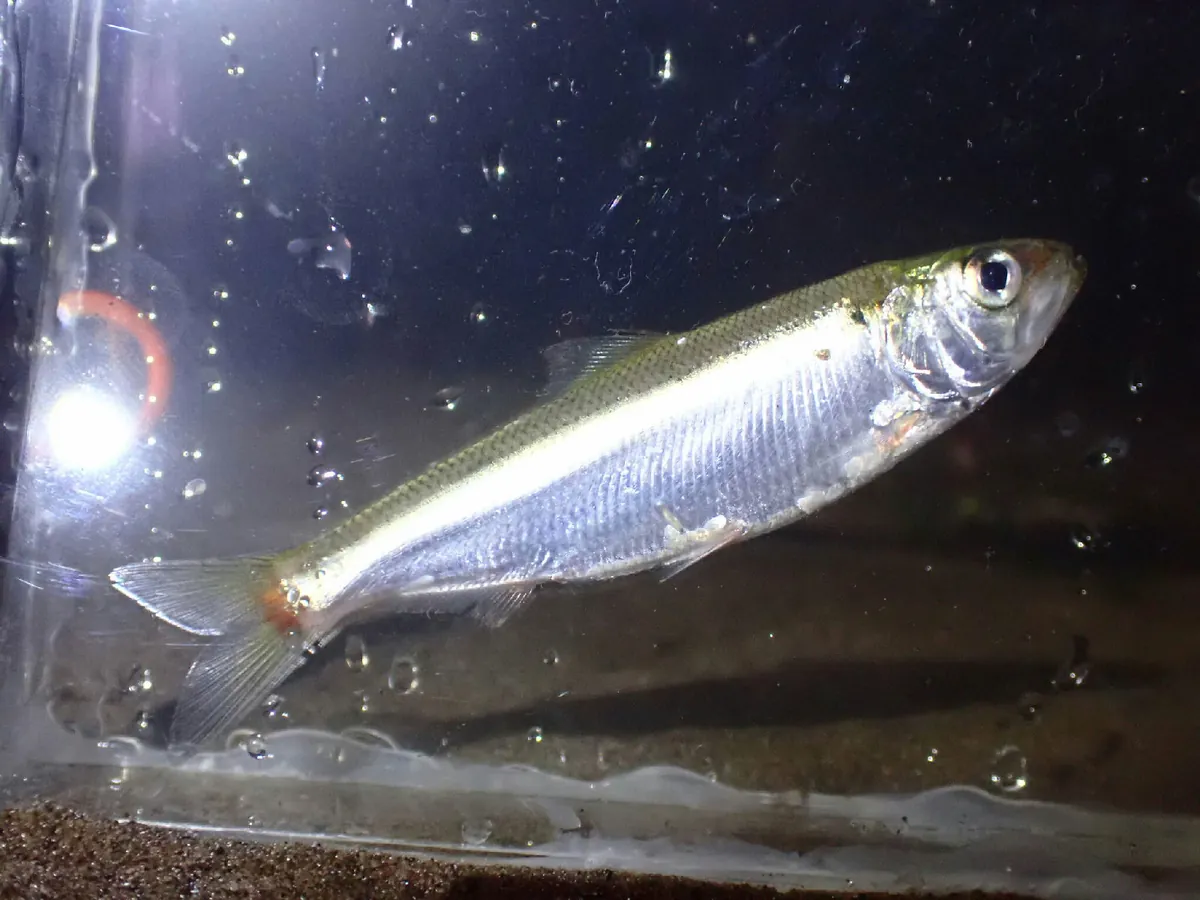
The American shad is a schooling fish of the North Atlantic coast that spends most of its life at sea, then swims far up rivers each spring to spawn. Thousands can gather near the surface in warmer months, making a strong yearly journey between salt and fresh water.
Also known as: atlantic shad, common shad, connecticut river shad, herring jack, north river shad, potomac shad, susquehanna shad
This fish lives mostly in the ocean, schooling in large numbers at the surface through spring, summer, and autumn, then moving deeper before winter. After three to six years it matures and swims up coastal rivers to spawn, timing its run to when the river warms to around 10 to 13 degrees C. Northern fish often survive spawning and return to sea, then come back to freshwater to spawn again in later years; southern fish typically spawn only once and die afterward. At sea it feeds mainly on plankton, small shrimp, and fish eggs, and rarely eats small fish. During the spawning run it may stop feeding, and it is chased by striped bass and, sometimes, harbor seals.
Shad numbers along the Atlantic coast have been falling since the early 1900s. Dams built across many rivers have blocked access to spawning grounds, and the species is also vulnerable to commercial overfishing, though recreational angling has little effect on numbers. Several agencies now co-manage the species and support fish-passage projects to help it reach spawning grounds again.
Unlike most fish, which cannot hear much above 1 kHz, the American shad can detect ultrasound above 50 kHz, letting it pick up frequencies far beyond typical fish hearing.
Describe what you saw and we name it, then keep every species you find in your Oceandex.