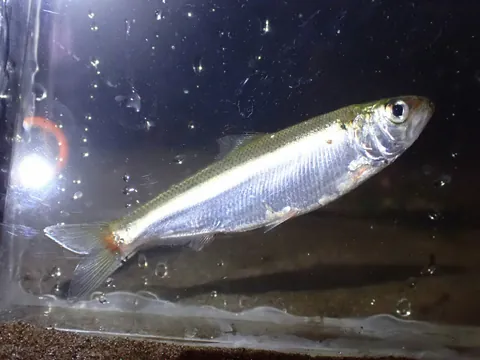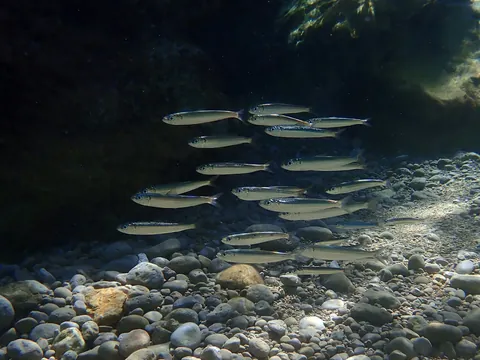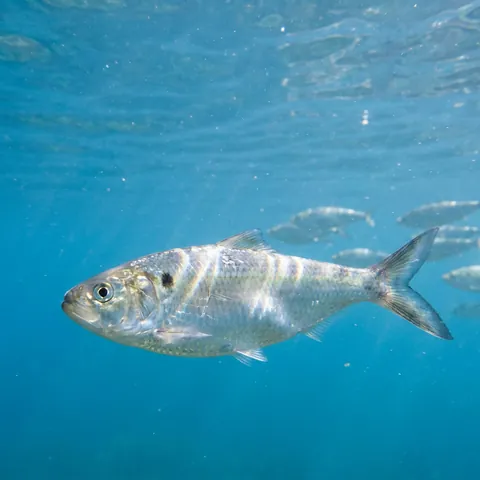
Alewife
Alosa pseudoharengus
Clupea harengus
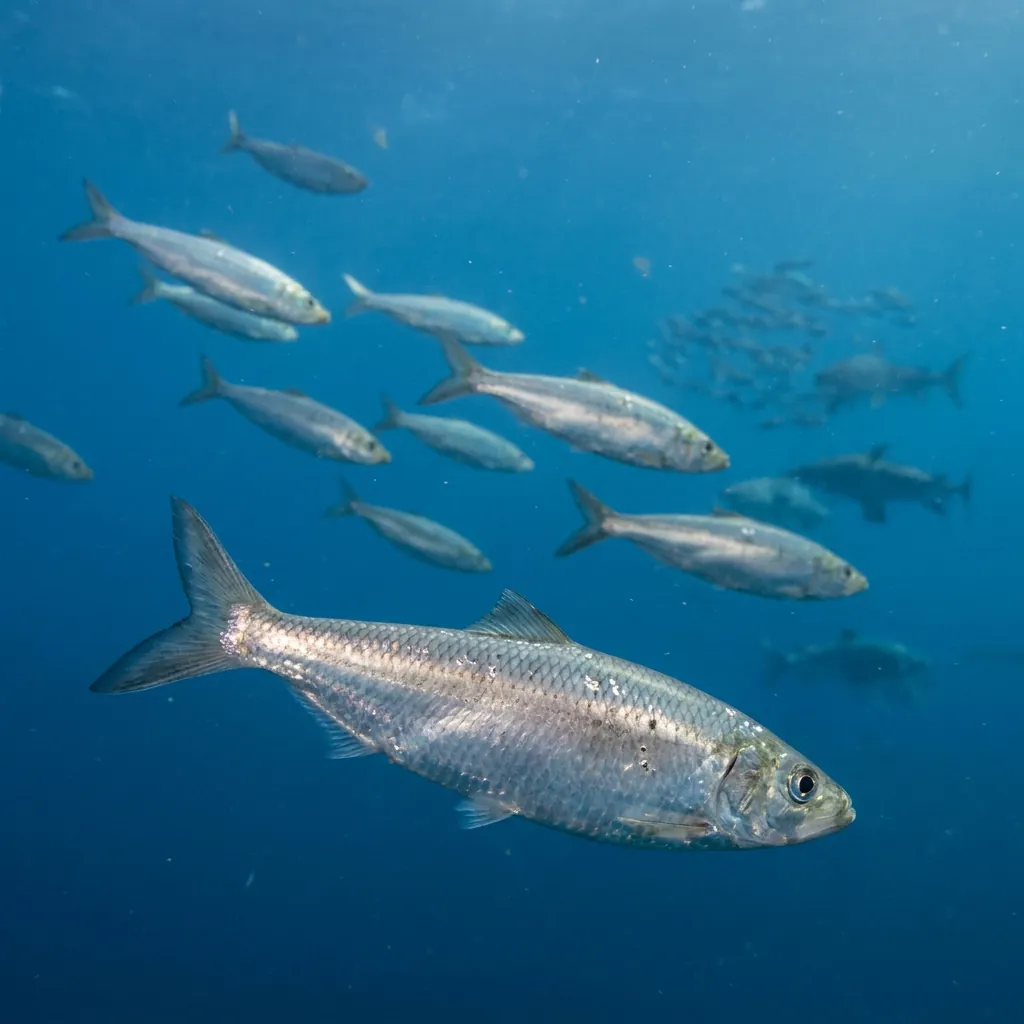
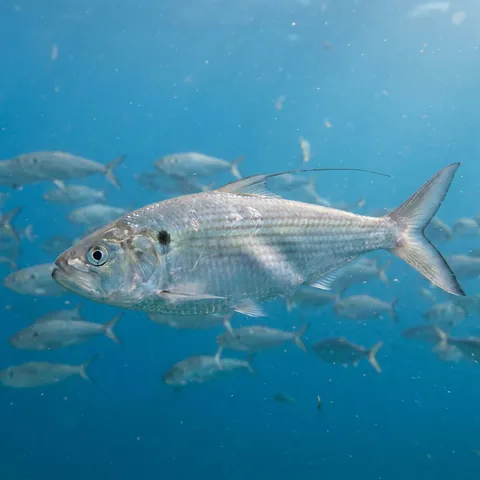
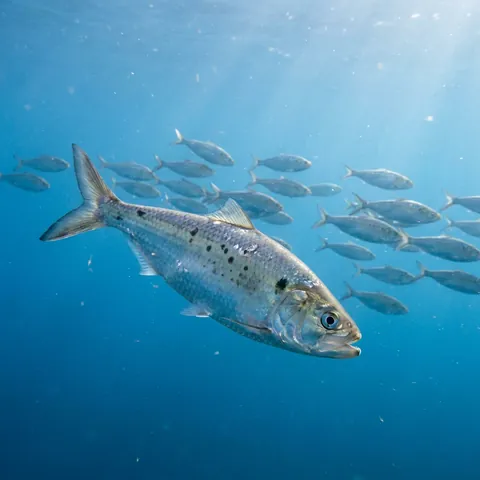
The Atlantic herring is one of the most common fish in the world. It moves through the open ocean in huge, tightly packed schools. A single school can hold millions of fish, acting almost like one body.
Also known as: mustard herring, kipper, herron, bank herring, fall herring, hern, labrador herring, mesh herring, murman herring, norwegian herring, sea atlantic herring, sea stick, shore herring, spring herring, summer herring, split, yawling
This fish has a smooth, torpedo-shaped body built for fast, steady swimming. Its gill rakers, comb-like parts inside the gills, act like a sieve, straining tiny plankton from the water as it swims. Herring are fragile: their large scales rub off easily at the slightest touch, and their gills are easily hurt.
Atlantic herring live on both sides of the North Atlantic, from the coasts of North America to the seas of Northern Europe. They are found in cold northern waters near the Arctic, but they are not counted as a true Arctic species. Different schools move between separate breeding, feeding, and nursery areas through the year.
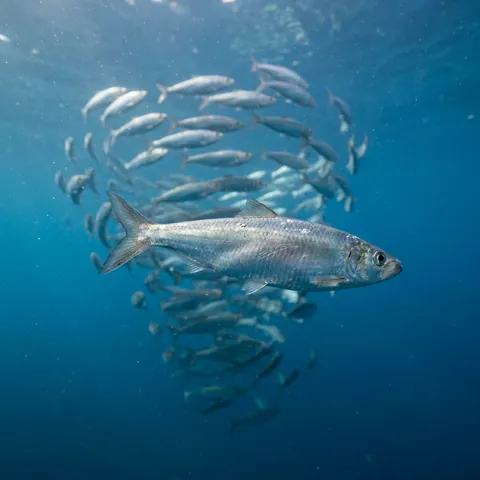
Herring are very social fish. They gather in huge, fast-moving schools that can stretch a long way. Their sharp hearing lets a whole school react almost at once to a predator or diver nearby. The school splits into a ring-shaped gap around the threat, then closes back up once it has passed. This fish is sensitive to pollution, so its young tend to show up only in cleaner water with plenty of oxygen. Herring have come back to some river mouths after clean-up efforts.
The IUCN lists the Atlantic herring as least concern, and it is still one of the most numerous fish in the ocean. Even so, too much fishing has badly hurt some local groups in the past. This shows that even a common species can be fished down in one area.
When threatened, a herring school can open a doughnut-shaped gap around a predator or diver. This team dodge looks like a ring from above, and it closes again once the danger has passed.
Describe what you saw and we name it, then keep every species you find in your Oceandex.