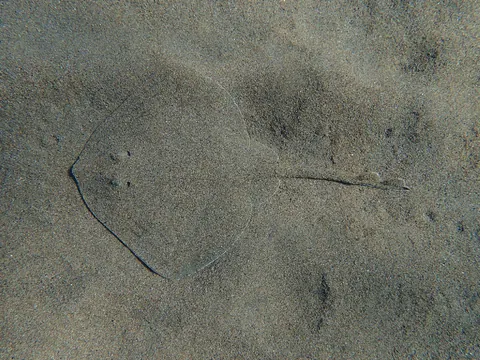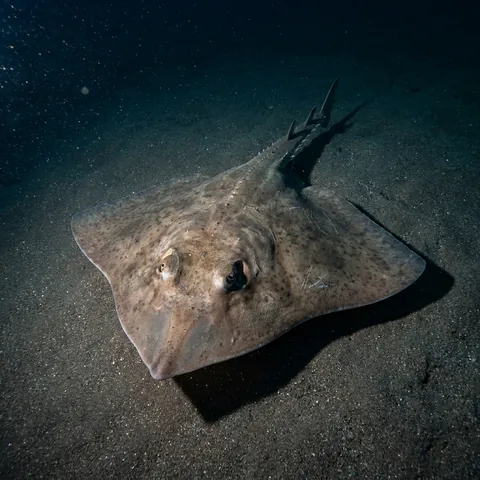
Big Skate
Beringraja binoculata
Leucoraja ocellata
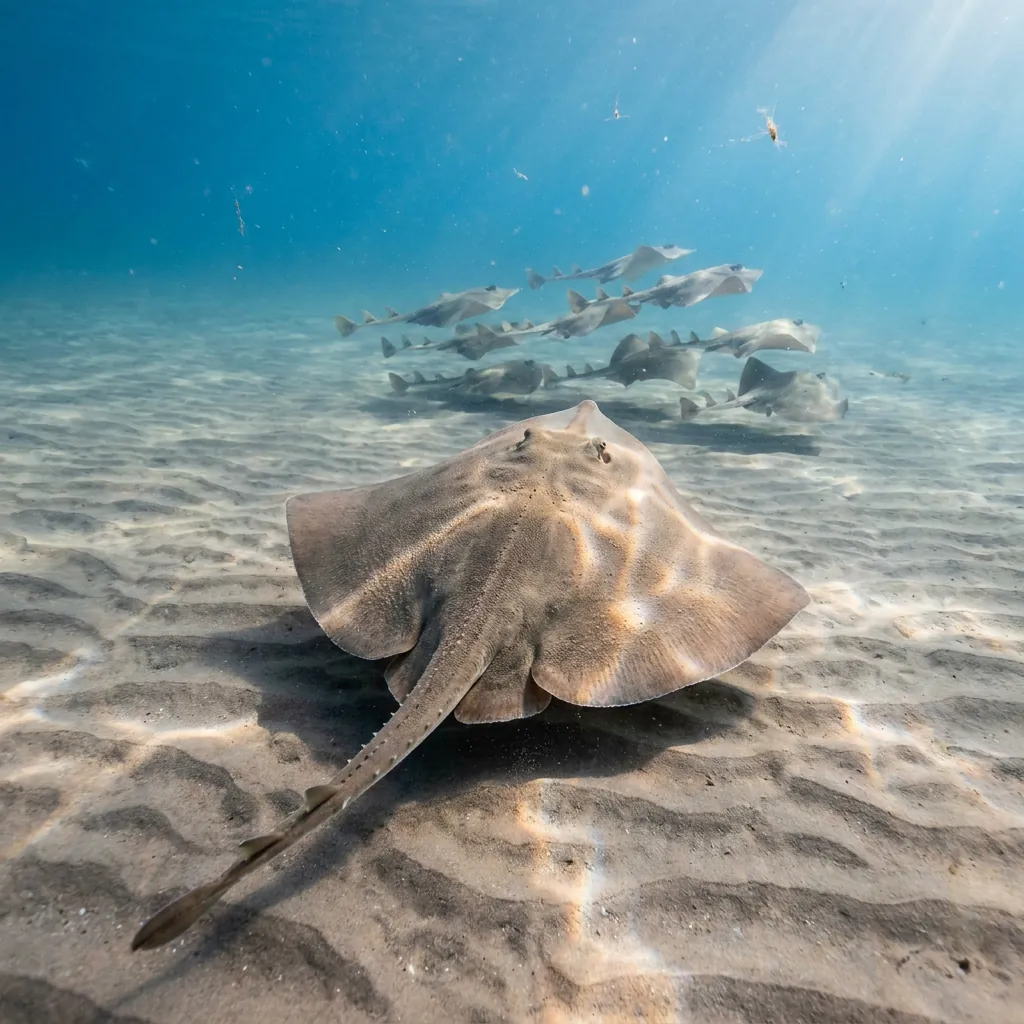
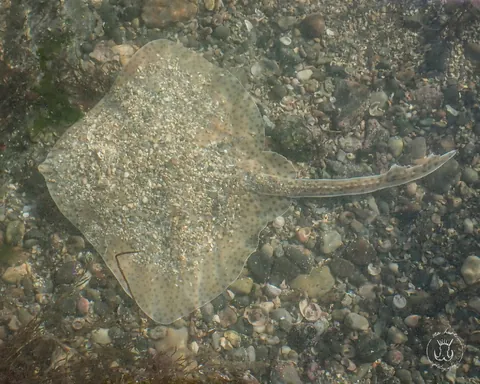
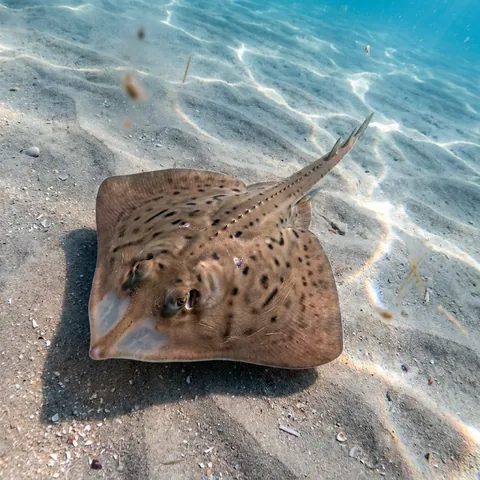
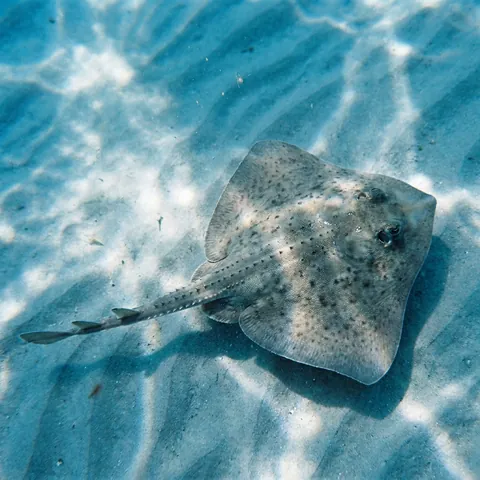
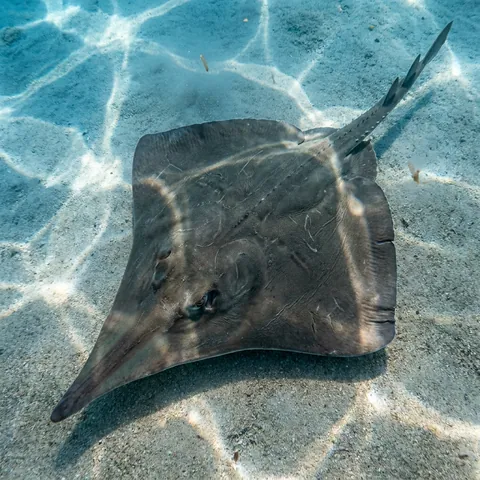
The winter skate is a large, flat-bodied ray relative that lives on the seafloor of the northwest Atlantic. It can grow up to 110 cm across and is best known for the eye-like markings on its back.
This skate is often confused with the little skate. The clearest clue is size: this species grows much larger, reaching up to about 110 cm across, well beyond what a little skate ever gets to.
This skate has a rounded, flat disk covered in light brown skin with small dark spots on top and small spines scattered across the disk and tail. One to four eye-like markings, called ocelli, sit on the upper surface, each with a dark brown centre and a pale ring around it. The underside is mostly white with patchy light brown blotches.
Winter skates range along the northwest Atlantic coast, from north of the Gulf of St. Lawrence in Canada down to Cape Hatteras, North Carolina. They favour sand and gravel seafloor and have been recorded down to about 120 metres.
As juveniles, winter skates mostly eat small shrimp and slender fish called sand lance. As adults, they shift to larger prey, including fish like smelt and flounder, along with crabs, clams, and other bottom-dwelling animals.
Winter skates lay eggs rather than giving birth to live young. Each egg sits inside a tough, rectangular capsule known as a mermaid's purse, anchored to sand or mud on the seafloor.
The winter skate has not been formally assessed by the IUCN, but at least one regional population, in the southern Gulf of St. Lawrence, is close to disappearing. It is mostly caught by accident in fisheries aimed at other species, and predation by grey seals has also driven losses in some areas.
Winter skates give off weak electric pulses of their own, most often at night, a signal that may help them find or recognise one another in the dark.
Describe what you saw and we name it, then keep every species you find in your Oceandex.