Big Skate
Beringraja binoculata
Leucoraja erinaceus
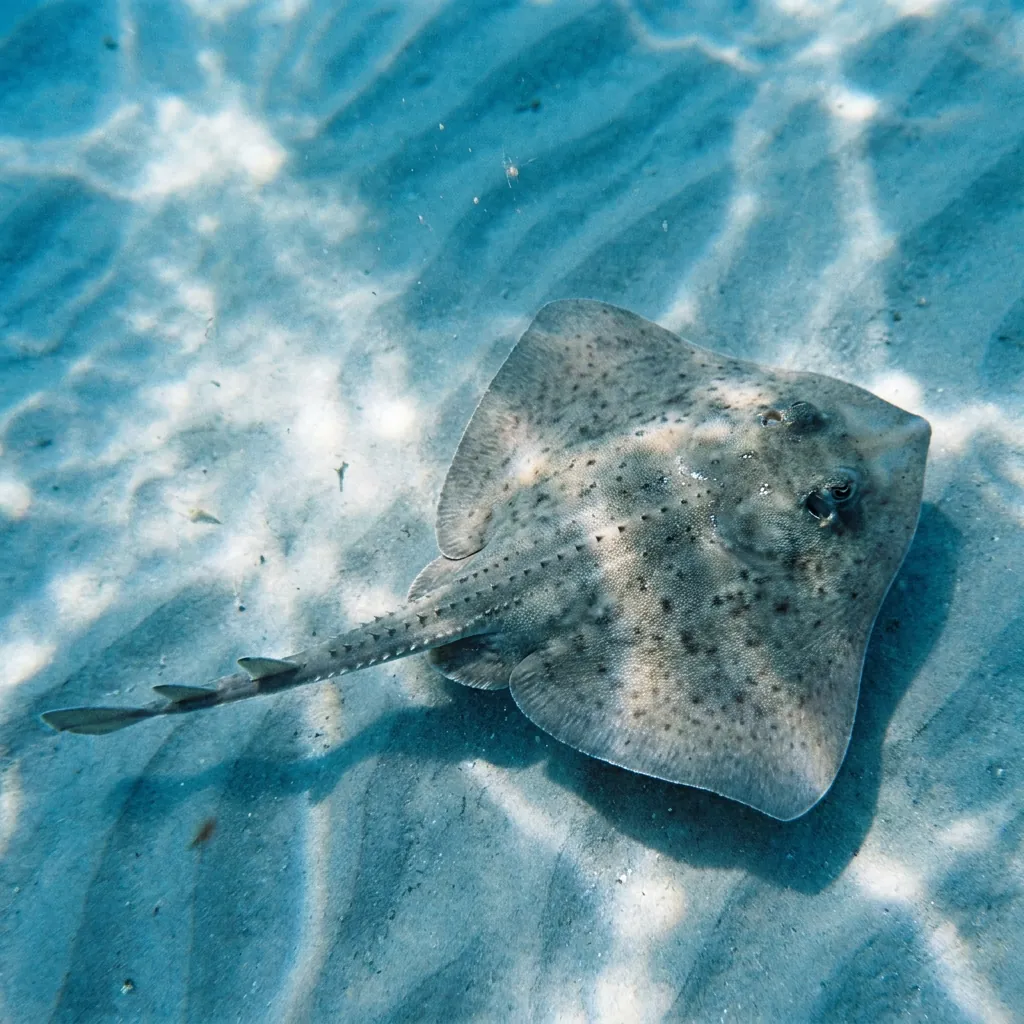
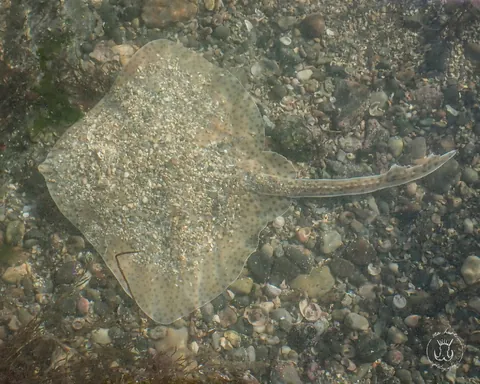
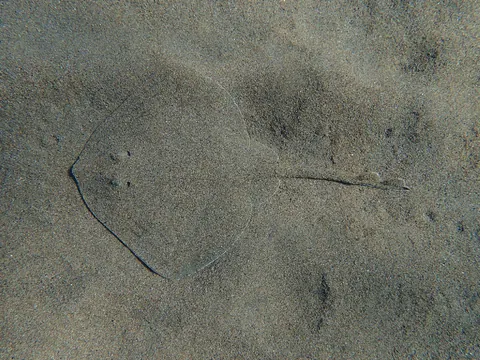
The little skate is a small, flat-bodied relative of rays that spends its days buried in sand and comes out to hunt at night. Instead of swimming everywhere, it can even push itself along the sea floor on modified fins.
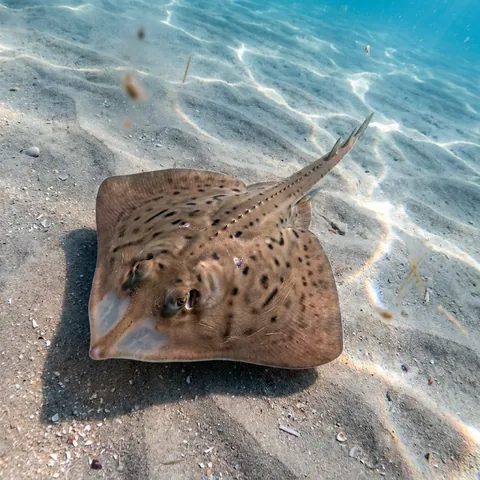
It can be confused with the winter skate when that species lacks its usual markings. Check for small, evenly scattered round dark spots across the back; unmarked winter skates lack this spotted pattern.
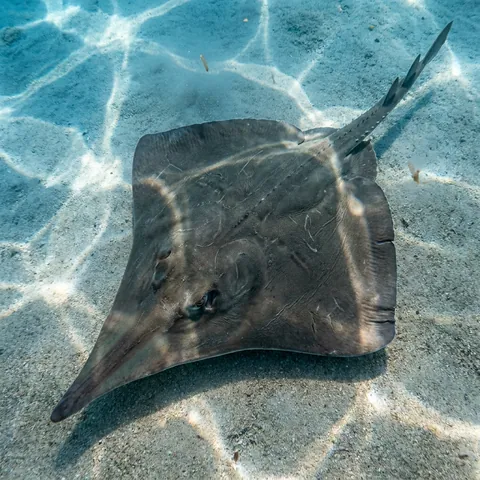
Its body forms a rounded disc, slightly wider than it is long, with a blunt, pointed snout. The upper side is grayish or brown, fading to lighter tones at the edges, with small round dark spots scattered across the back, while the underside is white or grey. The tail carries two small fins near its tip and is armed with strong spines along the head, shoulders, and tail; females tend to have more spines than males.
It lives on sandy or gravelly sea floors along the western Atlantic coast, from Nova Scotia to North Carolina, from shallow water down toward deeper offshore grounds. It shifts into shallower water in summer and moves deeper as temperatures drop in autumn and winter.
It is most active at night, spending the day buried in sediment, often in a shallow dip left by another animal. To move across the bottom, it plants the front lobes of its pelvic fins like small legs and pushes off, gliding a short distance before repositioning, a style of movement scientists call punting. Its tail also holds an electric organ that gives off a weak pulse, likely used to help potential mates find each other.
It feeds mostly on crustaceans such as crabs and amphipods, along with polychaete worms, and eats more crustaceans as it grows larger. It occasionally also takes small bottom-dwelling fish and other invertebrates. Sensitive pores around its mouth help it detect prey hidden in the sand.
This species lays eggs rather than giving live birth, with mating happening year-round and egg-laying peaking twice a year, in autumn and spring. Females attach paired egg cases to the sandy bottom, each holding a single embryo. The egg case has hollow horns at its corners with sticky threads that anchor it in place, and empty cases later wash ashore as what beachcombers call mermaid's purses.
It moves across the seabed by planting its pelvic fins like a pair of legs and pushing off, a walking-like motion known as punting.
Describe what you saw and we name it, then keep every species you find in your Oceandex.