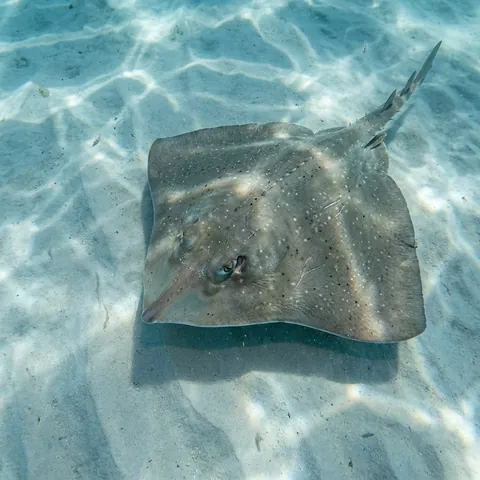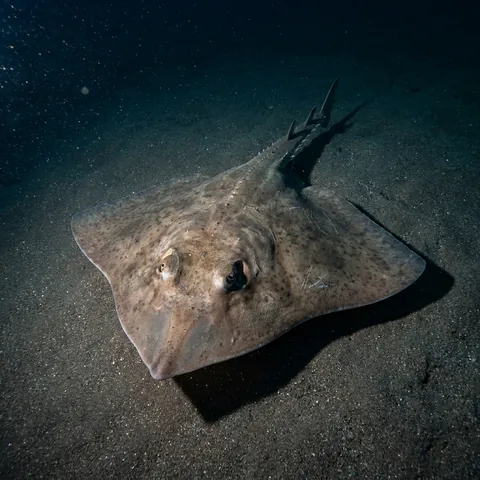
Big Skate
Beringraja binoculata
Rostroraja eglanteria
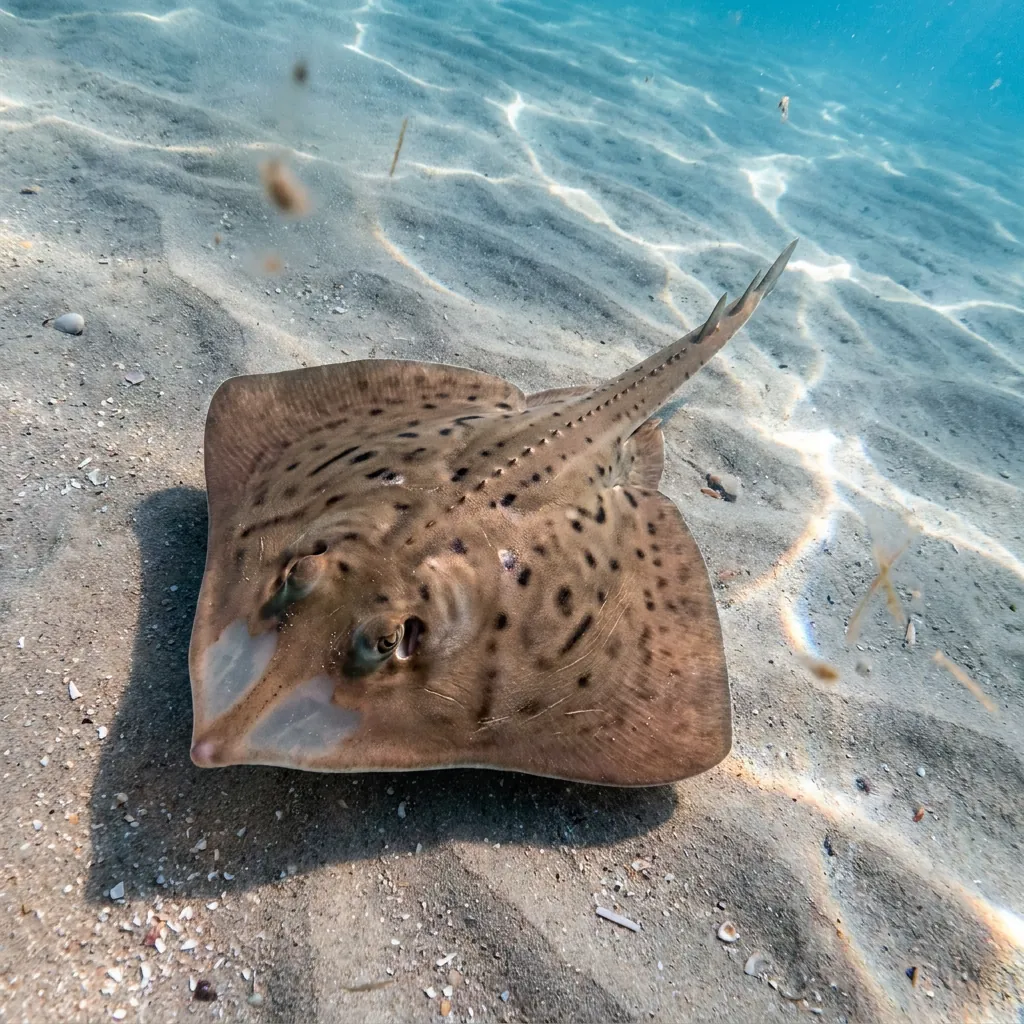
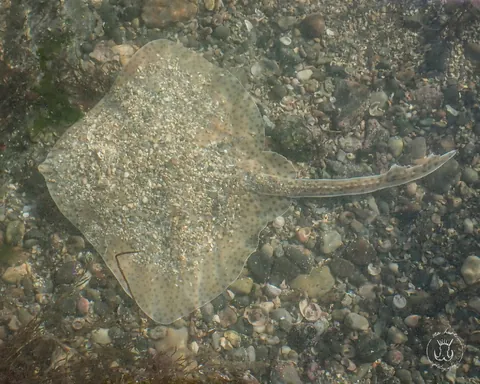
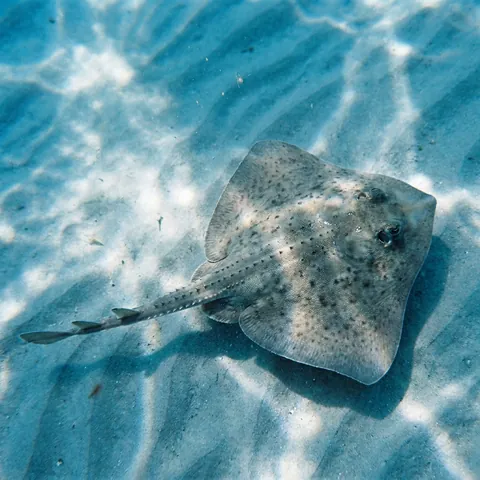
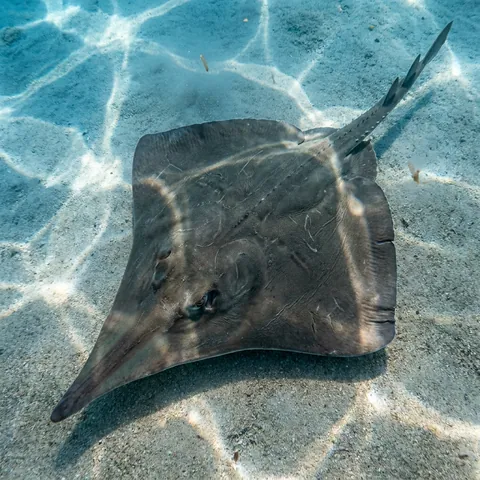
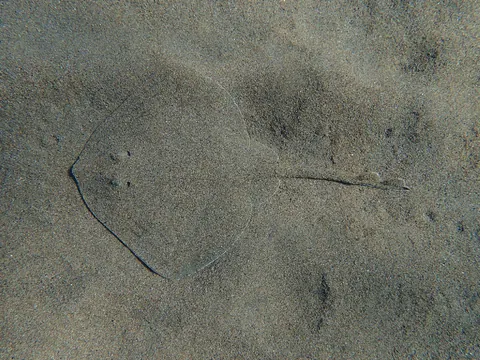
The clearnose skate lies flat on the seabed, its diamond-shaped body dusted with dark spots and bars. A close look reveals the pale, see-through patches on its snout that give the species its name.
Confusion with other skates is common, but the clearnose skate has a simple giveaway: pale, translucent patches on either side of its snout, visible even from a short distance.
This skate has a diamond-shaped disc, with the snout and pectoral fins meeting at roughly a right angle. The upper side is brown to grey with dark brown to black bars and spots, while the underside is white. A row of small thorns runs down the middle of the back and tail, and fine prickles cover the front part of the disc and the length of the spine.
It lives along the US Atlantic coast from Massachusetts to Florida, and around into the eastern and northern Gulf of Mexico. It rests on the seabed over mud, sand, rock, or gravel in shallow, salty coastal water, moving closer to shore in winter and spring and further offshore in summer and fall.
Rather than swimming everywhere, it often 'walks' across the seafloor by planting its pelvic fins and pushing itself forward while the rest of its body stays still. It also swims by rippling its pectoral fins. It senses its surroundings through the lateral line, a row of sensory pores along its body.
It eats crustaceans and mollusks such as shrimp and fiddler crabs, along with small fish. It hunts mainly at night, searching along the seafloor, and uses blunt, closely packed teeth to crush the hard shells of its prey.
This skate is oviparous, laying eggs in pairs inside rectangular cases known as mermaid's purses, each with a curved horn at every corner. Sticky horns anchor the case to the seabed, and a small opening lets seawater flow in and out as the embryo develops inside.
While still developing inside its egg case, a clearnose skate embryo will freeze and stop pumping water through the case if it senses a weak electric field nearby, a defence against predators that hunt by sensing electricity.
Describe what you saw and we name it, then keep every species you find in your Oceandex.