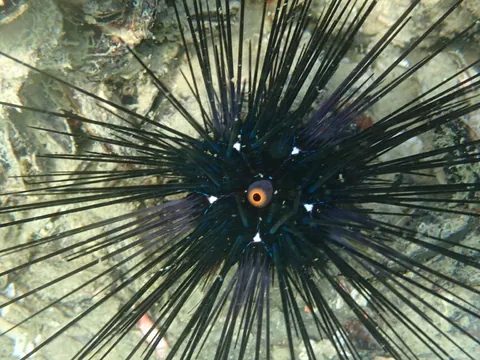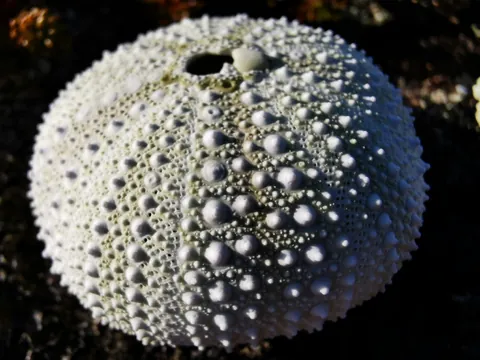
Arctic Green Sea Urchin
Strongylocentrotus droebachiensis
Tripneustes ventricosus
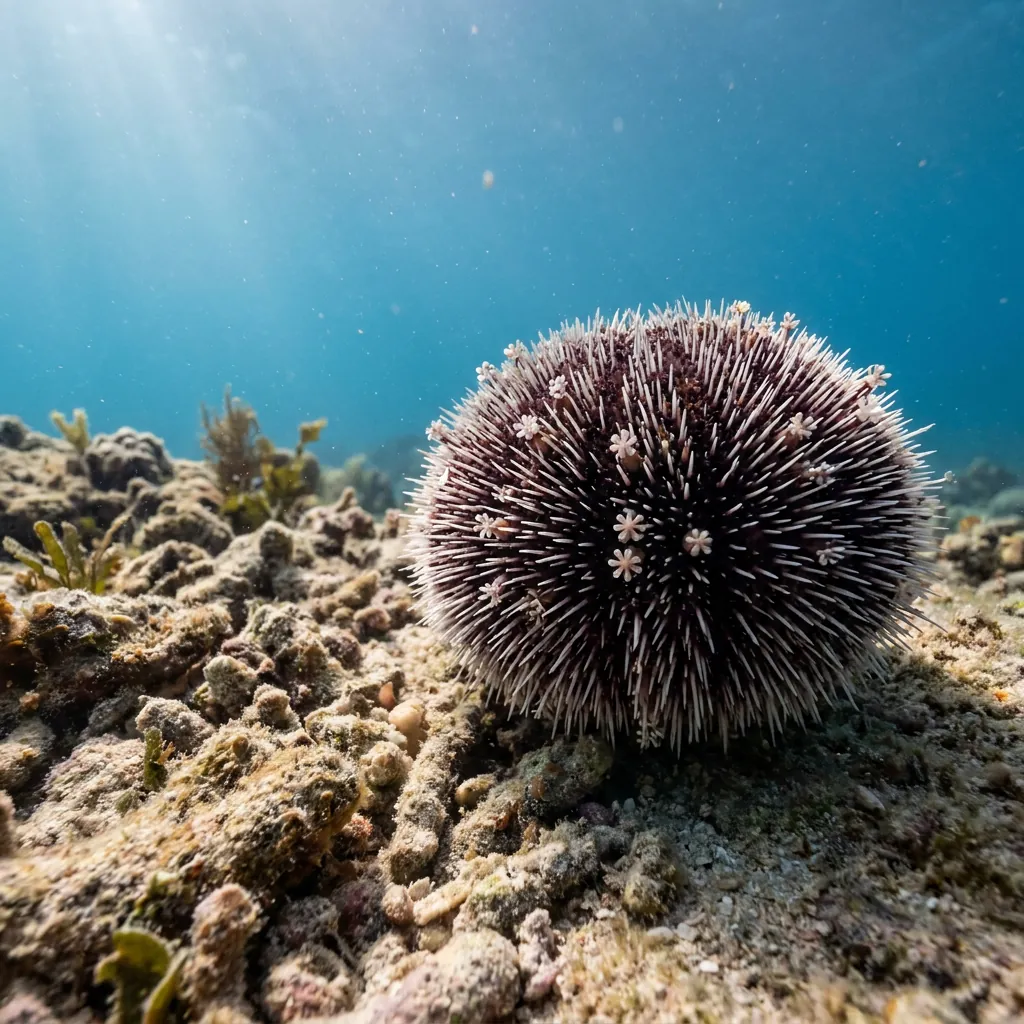
The West Indian sea egg is a dark, spiny sea urchin that often hides its own shell under a pile of seagrass and shell scraps. It has long been prized in the Caribbean for the roe inside its shell.
Also known as: sea egg
Its shell, called a test, is dark - usually black, deep purple or reddish brown - and covered in short white spines. It is often decorated with pieces of seagrass, shell fragments and other debris, held in place among the spines by its tiny tube feet. This covering is thought to shield it from strong sunlight in shallow water.
It lives across the western Atlantic and Caribbean, from Florida and the Bahamas south to Brazil, and also off the coast of West Africa. It is usually found in shallow water, in seagrass meadows, rubble patches and on rocky reefs, and has been recorded down to about 55 m. Young urchins hide in crevices and under rocks by day, while larger adults stay out in the open.
This urchin grazes on algae but avoids the tough, heavily calcified coralline algae. Breeding happens mostly in summer, when males and females release eggs and sperm into the water to fertilise. The young drift as plankton for about a month before settling on the seabed. Bottom-feeding fish prey on the young urchins, and in Jamaica the queen triggerfish is a main predator.
Its gonads are a traditional food in the West Indies, and Barbados once had a fishery so productive that divers could collect a thousand urchins in a few hours.
Describe what you saw and we name it, then keep every species you find in your Oceandex.