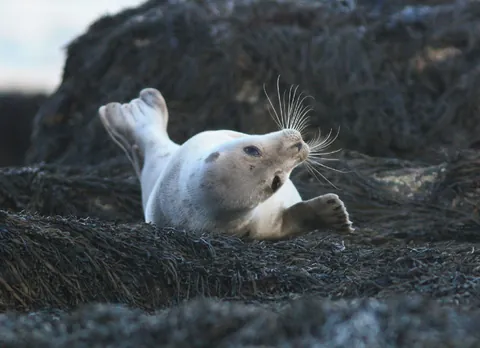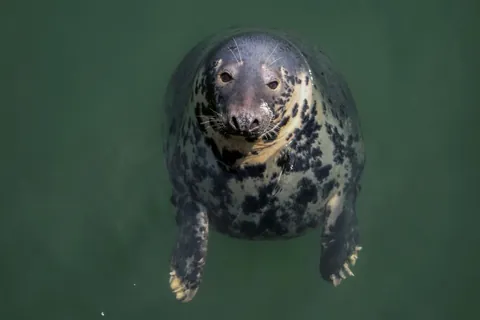
Grey Seal
Halichoerus grypus
Odobenus rosmarus
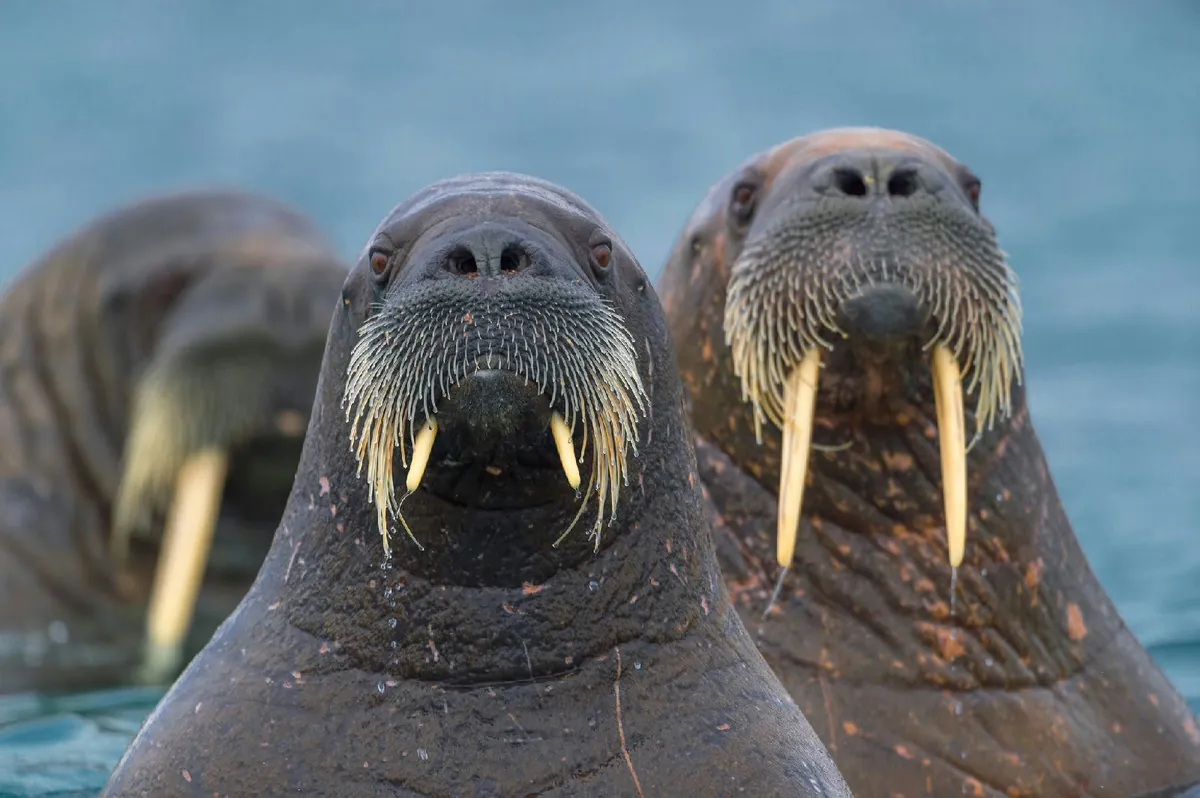
The walrus is a massive Arctic pinniped known for its long tusks and thick body, with bulls reaching up to 380 cm long and as much as 1883 kg. It spends its time hauled out on pack ice or rocky shores between dives to the seabed for food.
Also known as: morse, sea-elephant, sea-oxen, sea-cow, sea-horse
It has a heavy, wrinkled body, a bristly moustache of thick whiskers around the muzzle, and a pair of long tusks that grow from the upper jaw. Bulls of the Pacific population tend to be noticeably larger than those from the Atlantic, which also tend to have shorter tusks and a flatter snout.
Walruses favour shallow water over the continental shelf, close to sea ice or rocky shores where they can haul out to rest. They live across the Arctic Ocean and nearby seas, diving to feed at depths of up to about 91 m.
In late summer and fall, walruses gather in massive groups of thousands on beaches and rocky outcrops. They make long, dramatic migrations between the sea ice and these haul-out sites as the seasons change, and individuals occasionally wander far south of their usual range.
Walruses feed mainly on the seabed, favouring clams and other bivalve molluscs, though they also eat crabs, shrimp, worms, sea cucumbers, snails, squid, and occasionally slow-moving fish. They find prey in murky water using their sensitive whiskers, then use their powerful lips and tongue to suck the soft body out of the shell.
Breeding runs from January to March and peaks in February. Males gather around groups of females near the ice, competing with loud vocal displays, and mating takes place in the water. Pregnancy is unusually long, with an early pause before the embryo implants in the womb.
The walrus is listed as Vulnerable. Heavy hunting by commercial sealers and whalers in the 18th and 19th centuries nearly wiped out the Atlantic subspecies, and while commercial hunting is now banned across its range, Indigenous communities are still permitted limited subsistence hunts.
The walrus's scientific name, Odobenus, means 'tooth-walker' in Greek, describing how it uses its tusks to haul its huge body out of the water and onto the ice.
Describe what you saw and we name it, then keep every species you find in your Oceandex.