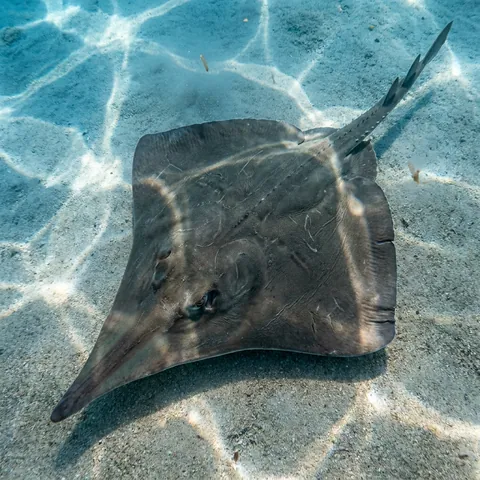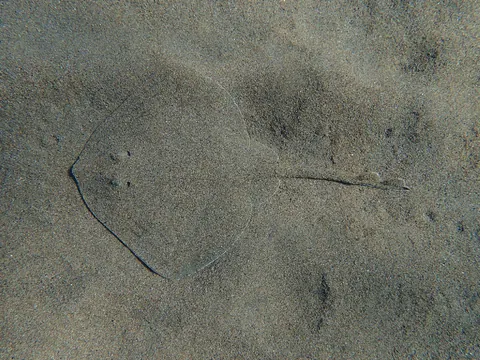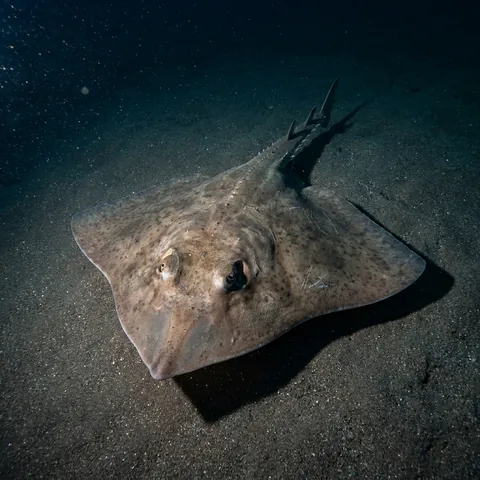
Big Skate
Beringraja binoculata
Raja clavata
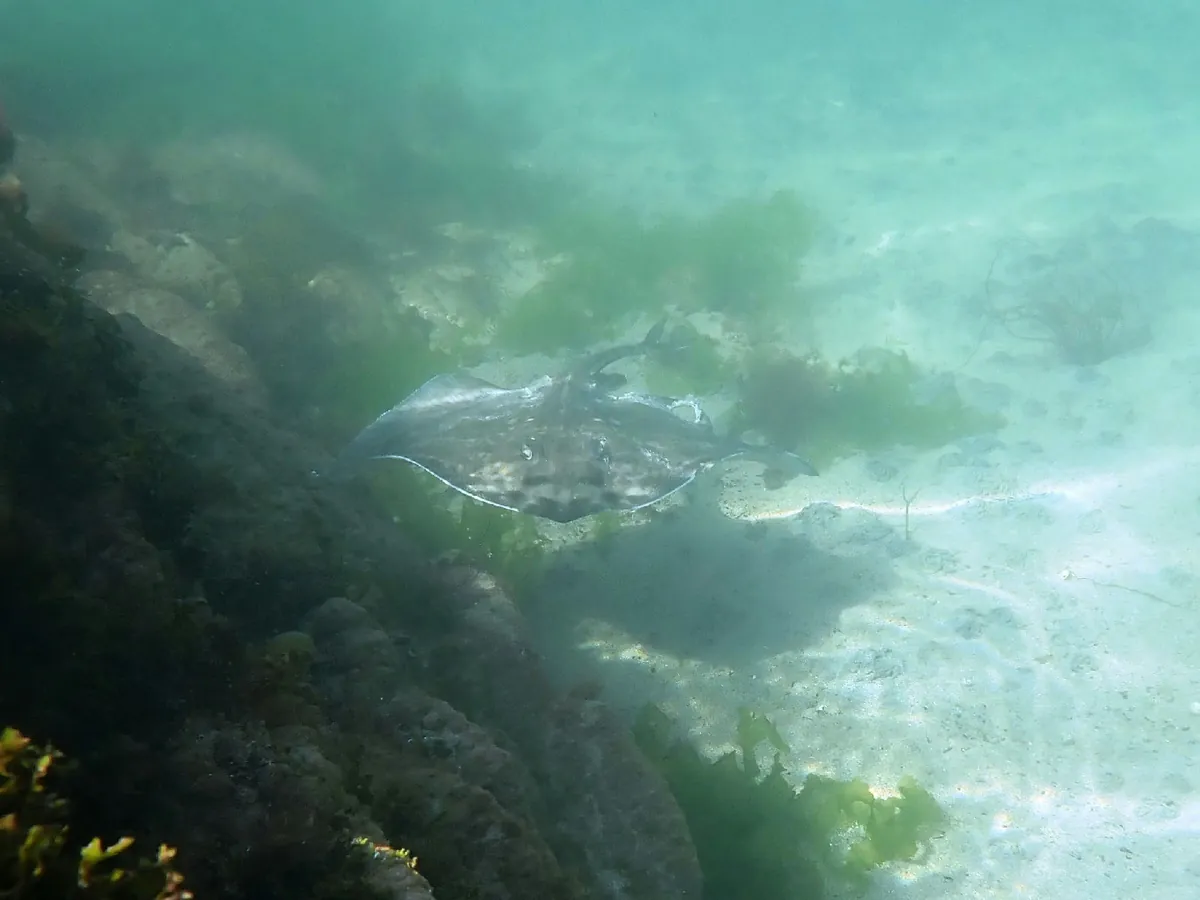
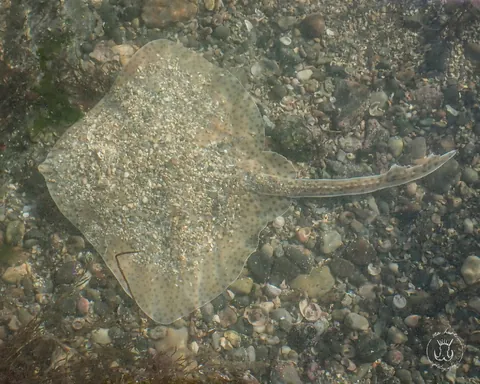
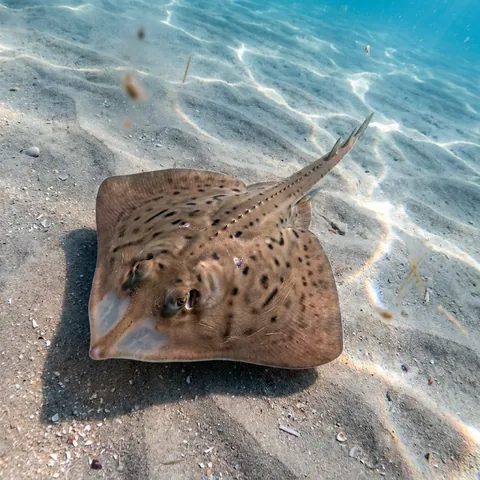
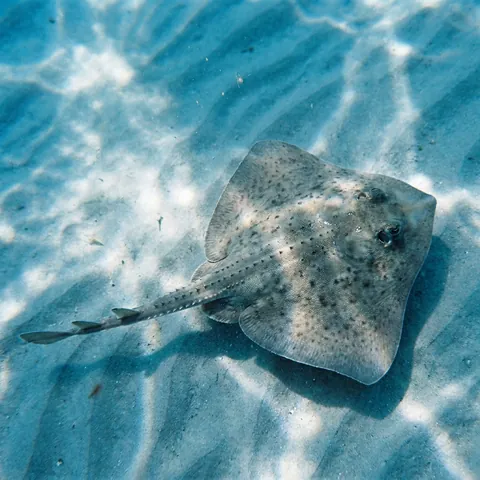
The thornback ray is one of the rays divers see most often, resting flat on the seabed with just its eyes and spiracles showing. It usually reaches about 85 cm, with the largest topping a metre.
Several similar rays share its mottled brown colouring. Look for the single obvious row of large thorns running down the centre of its back, from the nape toward the first dorsal fin.
It has the typical kite-shaped, flattened body of a ray, with broad pectoral fins forming wide wings and a long, spine-covered tail. Its back carries scattered thorny spines, with a noticeable row running down the centre, and older females also grow spines on their underside. Colour ranges from light brown to grey, patterned with darker blotches, small dark spots, and patches of yellow, while the underside is creamy white.
It lives on sand, mud, and gravel seabeds around Europe and western Africa, including the Mediterranean and Black Seas. It is most common in coastal water between about 10 and 60 metres, though it can be found much deeper offshore.
Thornback rays lie still on the bottom for long periods, often half-buried, and can sense the weak electric fields given off by nearby animals. Adults gather in same-sex groups during the mating season, with females moving into shallow water ahead of the males.
It feeds on bottom-dwelling animals, mainly crabs, shrimps, and small fish, along with amphipods in its early life. It hunts by sensing prey hidden in the sediment rather than by sight alone.
The thornback ray is a known host for the marine leech Pontobdella muricata, which attaches itself to the ray's skin.
Describe what you saw and we name it, then keep every species you find in your Oceandex.