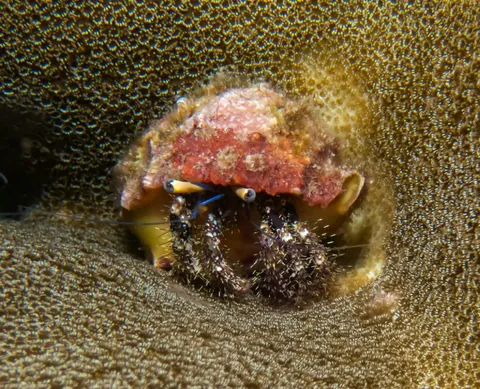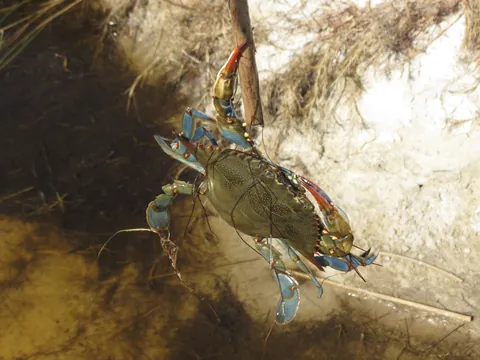
Atlantic Blue Crab
Callinectes sapidus
Grapsus tenuicrustatus
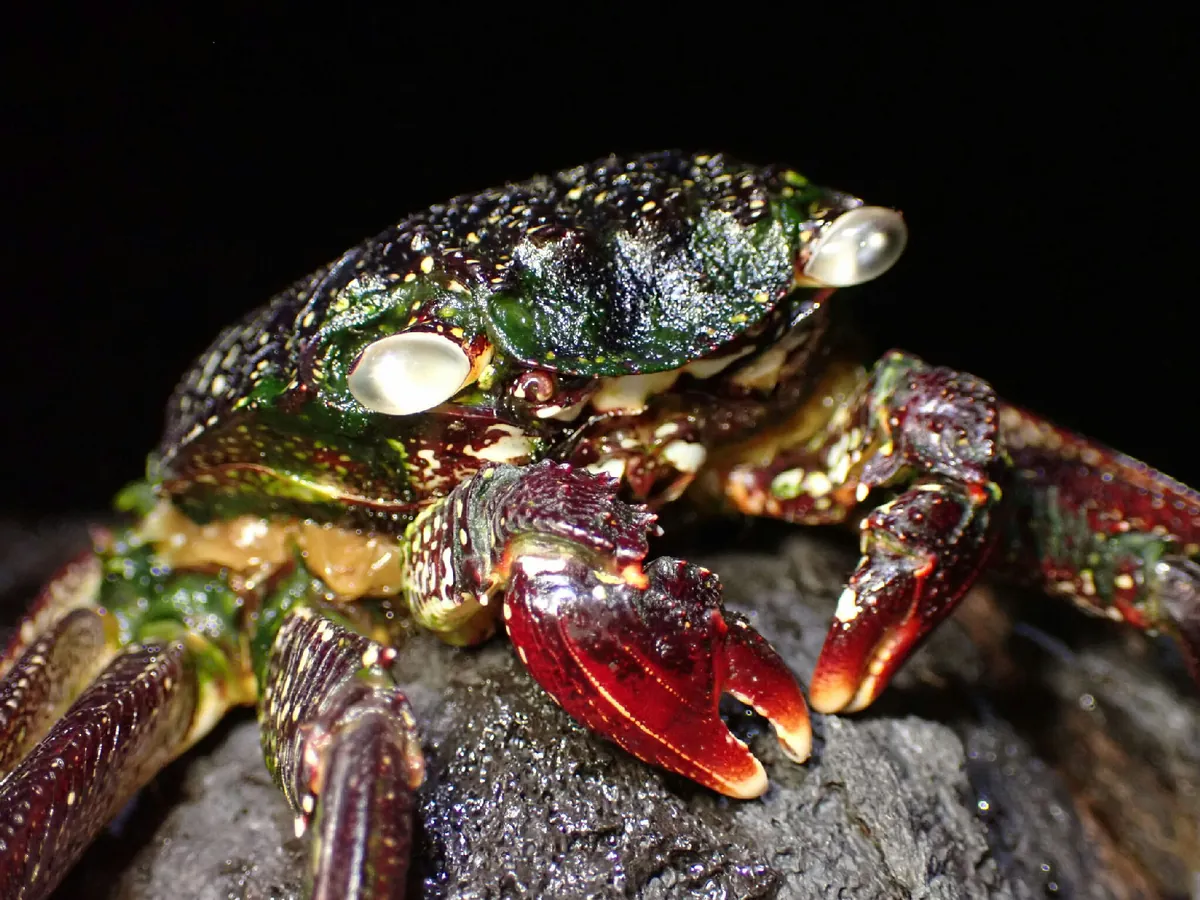
The thin-shelled rock crab lives on rocky shorelines across the Indo-Pacific, near beaches and tide pools. Divers rarely see it underwater: it is recorded down to only about 6 m. It spends most of its time out of the water, on rocks in the splash zone where waves break over it. It is quick and shy, and darts into cracks in the rock at the first sign of danger. Females grow larger than males.
Also known as: natal lightfoot crab, natal rock crab
Look for a very dark, almost black shell broken up by pale markings, on bare rock in the wave-washed zone rather than on the reef itself. This dark, speckled pattern holds true in every living animal, so you do not need to see the legs or turn the crab over.
The shell, called the carapace, is deep purple to black in a living animal and is covered with many lighter markings. The overall look is a dark, flat-backed crab dotted and streaked with pale spots.
The dark colour belongs only to the living crab. When this species moults its shell, or when it dies, the empty carapace left behind turns a bright red-orange, so the shells you find on the rocks look nothing like the animal that made them.
Describe what you saw and we name it, then keep every species you find in your Oceandex.