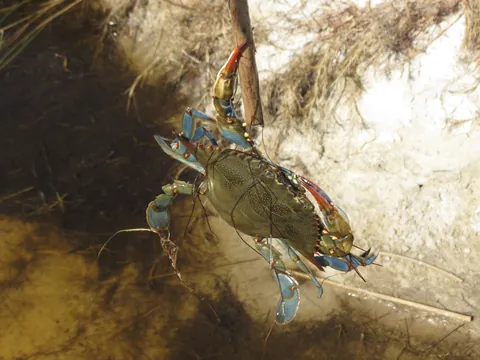
Atlantic Blue Crab
Callinectes sapidus
crab
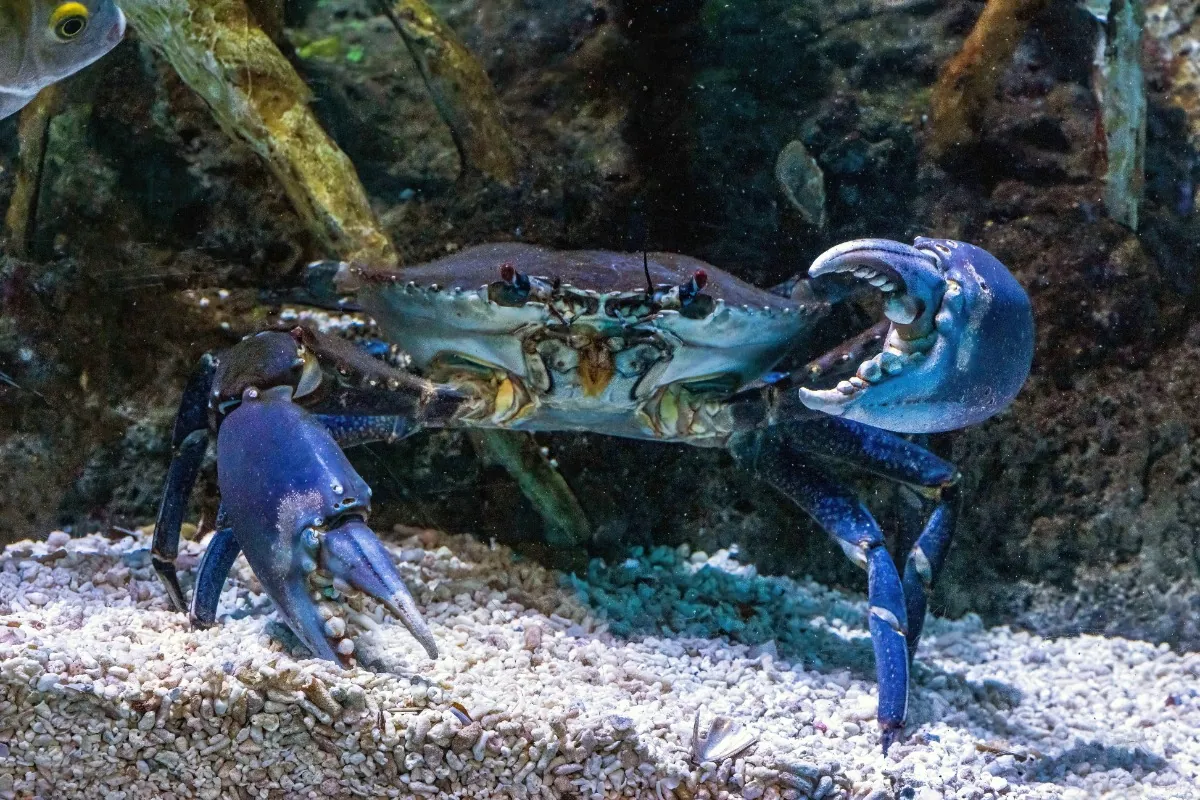
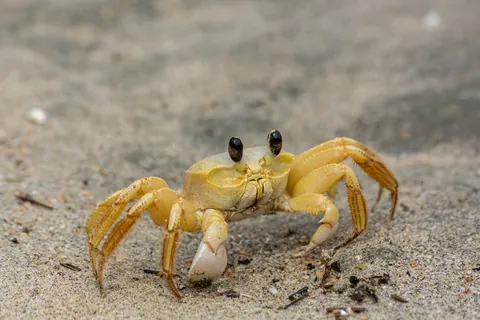
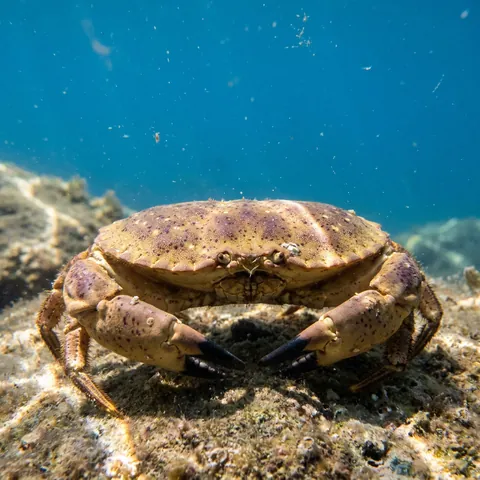
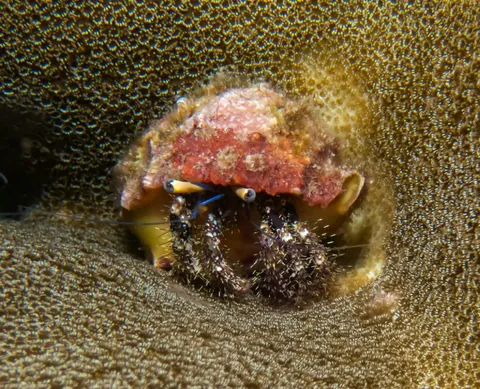
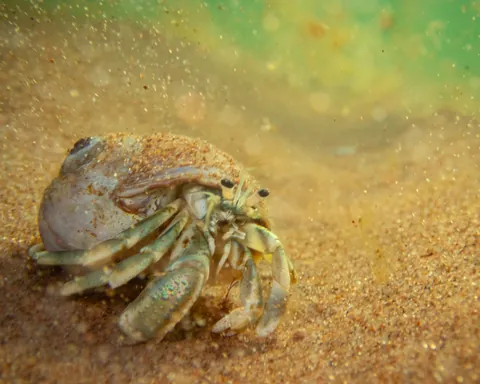
Crabs are armoured reef and shore animals with a flat shell and pincers, often seen scuttling sideways. In this app the group includes the Sally Lightfoot Crab, the Atlantic Blue Crab, and the White-spotted Hermit Crab.
Look for the flat, broad shell, the tucked-away tail, and pincers on the front legs; many crabs move sideways rather than forwards. Hermit crabs in this group are told apart by living inside a borrowed snail shell instead of growing their own full shell.
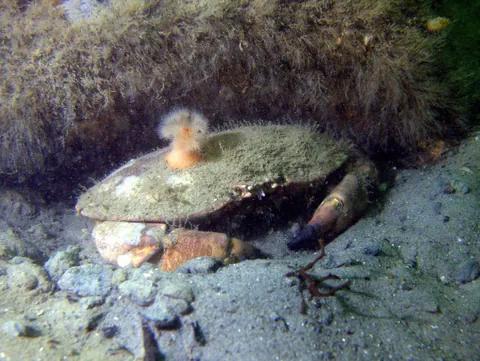
A crab has a broad, flat shell over its body and a tail that is tucked away underneath, out of sight. It has pincers on its front legs and usually four more pairs of walking legs. Size ranges from tiny, a few millimetres wide, up to giants with a leg span of several metres.
Crabs live almost everywhere along coasts and reefs, from rocky shores and sandy seabeds to open water. Some species live on land near the sea, and some even live in fresh water.
Most crabs hide in rocks or burrows and are active hunters or scavengers on the reef and seabed. Many can run quickly sideways, though some walk forwards and a few can swim.
Most crabs eat a mix of algae, small animals such as molluscs and worms, other crustaceans, and dead matter on the seabed. A few are more specialised, feeding only on algae, filtering plankton from the water, or living off a host animal.
Many crab-like animals in this group, such as hermit crabs and king crabs, are not true crabs at all. Their crab-like shape evolved independently, separate from true crabs.
Describe what you saw and we name it, then keep every species you find in your Oceandex.