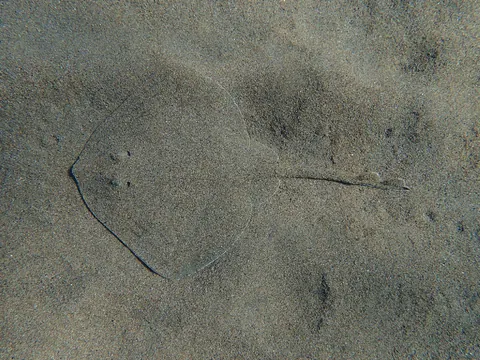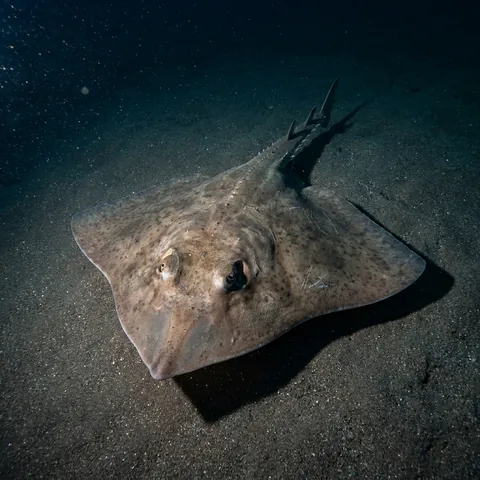
Big Skate
Beringraja binoculata
Raja montagui
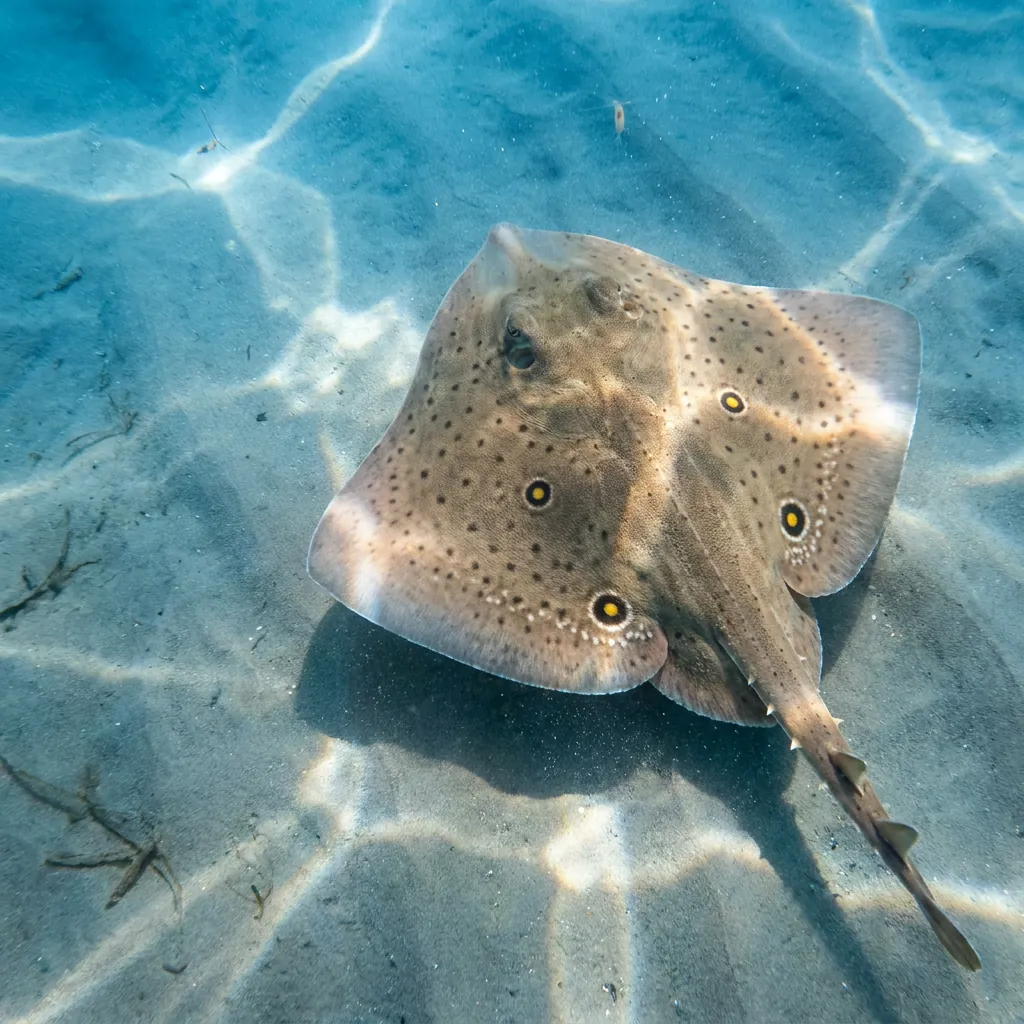
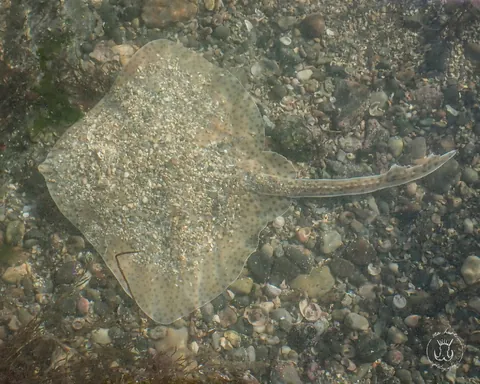
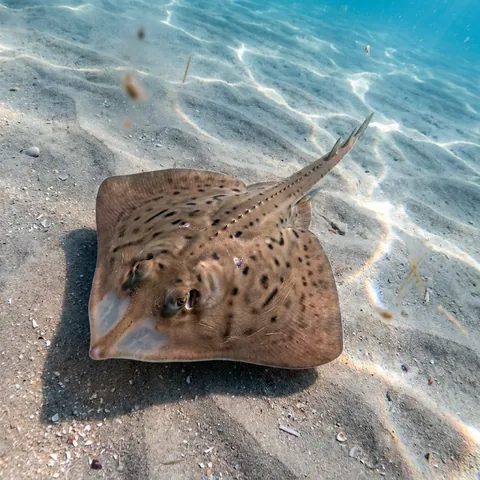
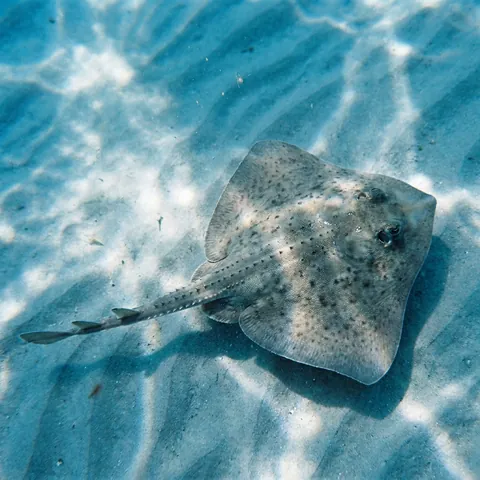
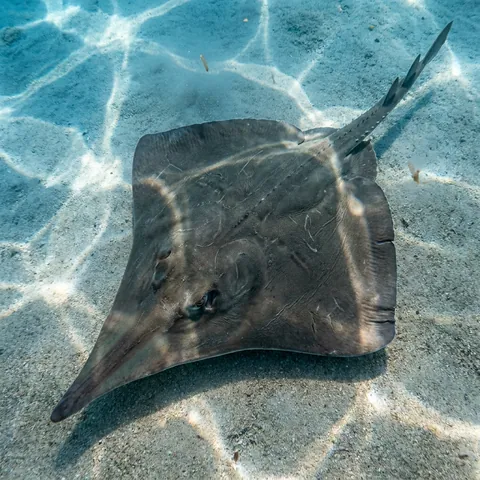
The spotted ray is a small skate that hides in the sand of the northeast Atlantic and Mediterranean. It grows to a maximum length of about 83.5 cm, though most divers will see one closer to 50 cm.
Also known as: spotted ray
It can be confused with other spotted rays sharing these waters. Look for the ring of dark spots around a pale patch near the rear of each pectoral fin, a pattern the similar species do not share.
This ray has a flat, diamond-shaped body with broad, wing-like pectoral fins and a moderately long snout with a slight point. The upper side is brown, covered in small dark spots that stop short of the fin edges, often forming a ring around a paler patch near the back of each pectoral fin. The underside is white with grey edges. Young rays have smooth skin, but the surface turns prickly with small thorns as they grow.
It lives on soft sand or sand-gravel seabeds along the continental shelf, from the Irish Sea down to Morocco and through the Mediterranean. Juveniles stay in shallow, sandy water close to shore, while adults move into deeper offshore ground. It has been found from 8 m down to 530 m, though it is most common in shallower water.
The spotted ray buries itself in sand, using the cover to ambush prey and hide from predators. It feeds mainly on crustaceans, taking worms, molluscs and small fish too, with larger prey added to the diet as it grows. It is oviparous, laying egg cases in summer; the pups hatch fully formed after five or six months, at about 11.5 cm long.
Young spotted rays tend to follow large objects nearby, such as their own mother.
Describe what you saw and we name it, then keep every species you find in your Oceandex.