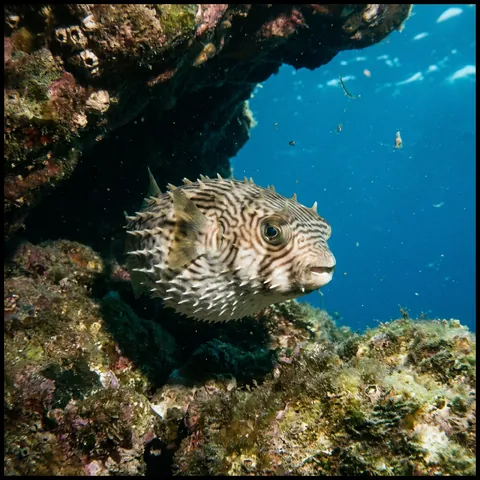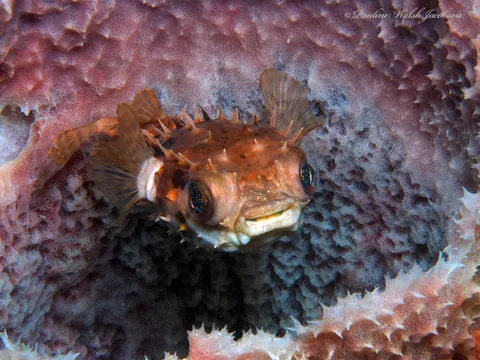
Birdbeak burrfish
Cyclichthys orbicularis
Diodon hystrix
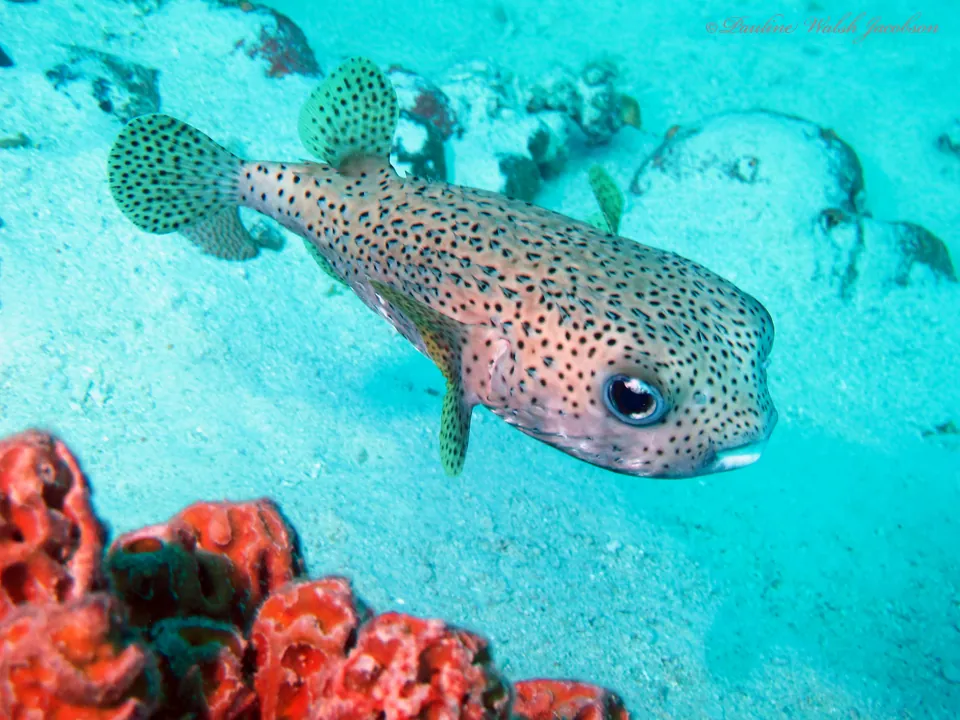
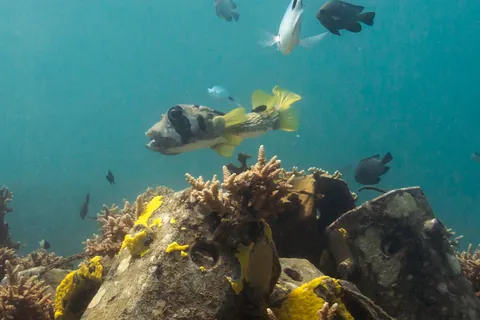
The spot-fin porcupinefish is a heavy-bodied, spiny fish with big round eyes and a permanently open mouth. It can reach 91 cm and 2.8 kg, but most you meet are around 40 cm. It lives from about 2 m down to 50 m, and usually between 3 and 20 m. It spends the day resting in a cave or under a ledge and hunts at night, mostly alone.
Also known as: ballonfish, black-spotted porcupinefish, burrfish, freckled porcupinefish, giant porcupinefish, hedgehog, hedgehog fish, porcupinefish, freckled porcupinefish, spot-fin porcupinefish, black-spotted porcupinefish, spiny puffer, hedgehog fish, giant porcupinefish, spotted porcupine, spotted percupine fish, spotted porcupinefish, spotted porcupine fish, sharptail mola, porcupine fish, black-spotted porcupine-fish, spotted porcupinefish, spotfin porcupinefish, porcupine fish
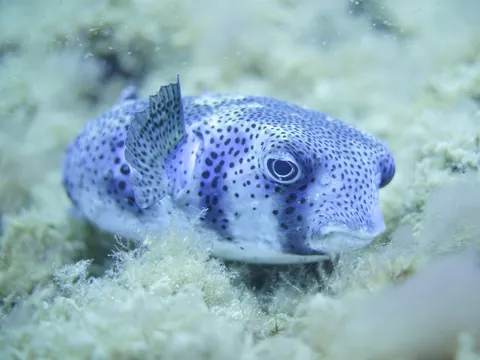
Look for a heavy-bodied, slow fish with staring round eyes, often resting in a hole or cave. The clearest mark is its spots reaching onto the fins as well as the body, a pattern some relatives lack.
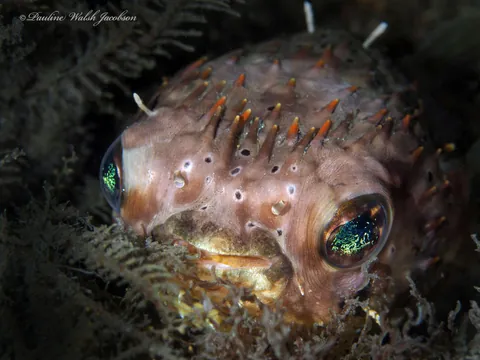
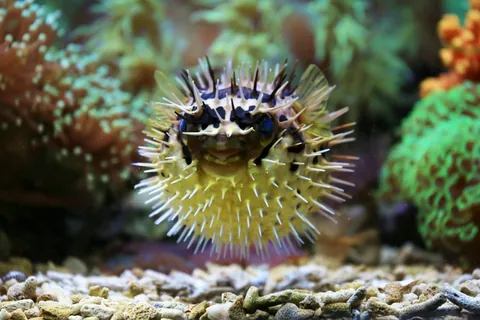
The body is long and solid, with a rounded head, large bulging eyes and a wide mouth that is rarely shut. There are no pelvic fins on the belly. The pectoral fins on the sides are large, and the fins on the back and underside sit close to the tail and beat together as the fish swims. The skin is smooth and firm, and the scales have become long, sharp spines that lie flat along the body. The colour is beige to sandy brown, covered in many small black spots, with a white belly ringed by a darker band. If threatened, the fish gulps water, swells into a ball and stands its spines on end. It also stores a strong poison, tetrodotoxin, in its skin and organs.
This fish is found in tropical and subtropical seas around the world. Adults live in lagoons, on reef tops and on seaward coral and rocky reefs. During the day they tuck themselves into caves, holes and the space under ledges, so search the dark spaces rather than open water. They are most active at sunset and sunrise and through the night. Young fish live out in open water before settling on a reef.
Describe what you saw and we name it, then keep every species you find in your Oceandex.