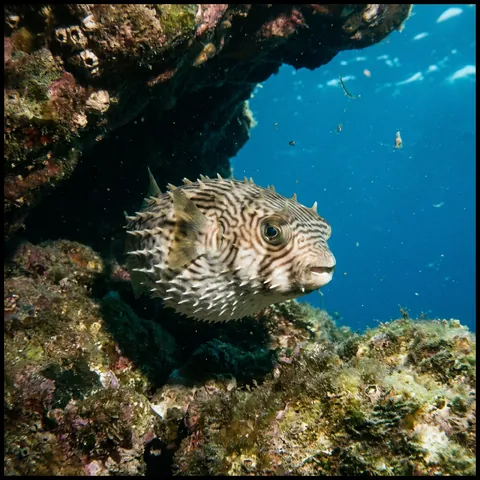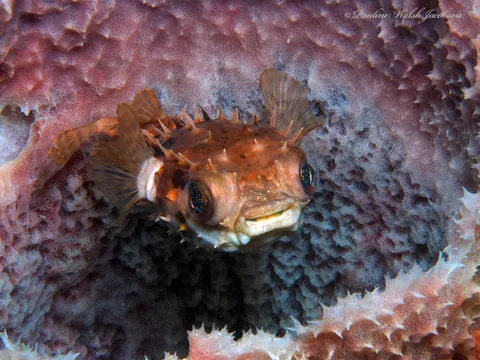
Birdbeak burrfish
Cyclichthys orbicularis
Diodon liturosus
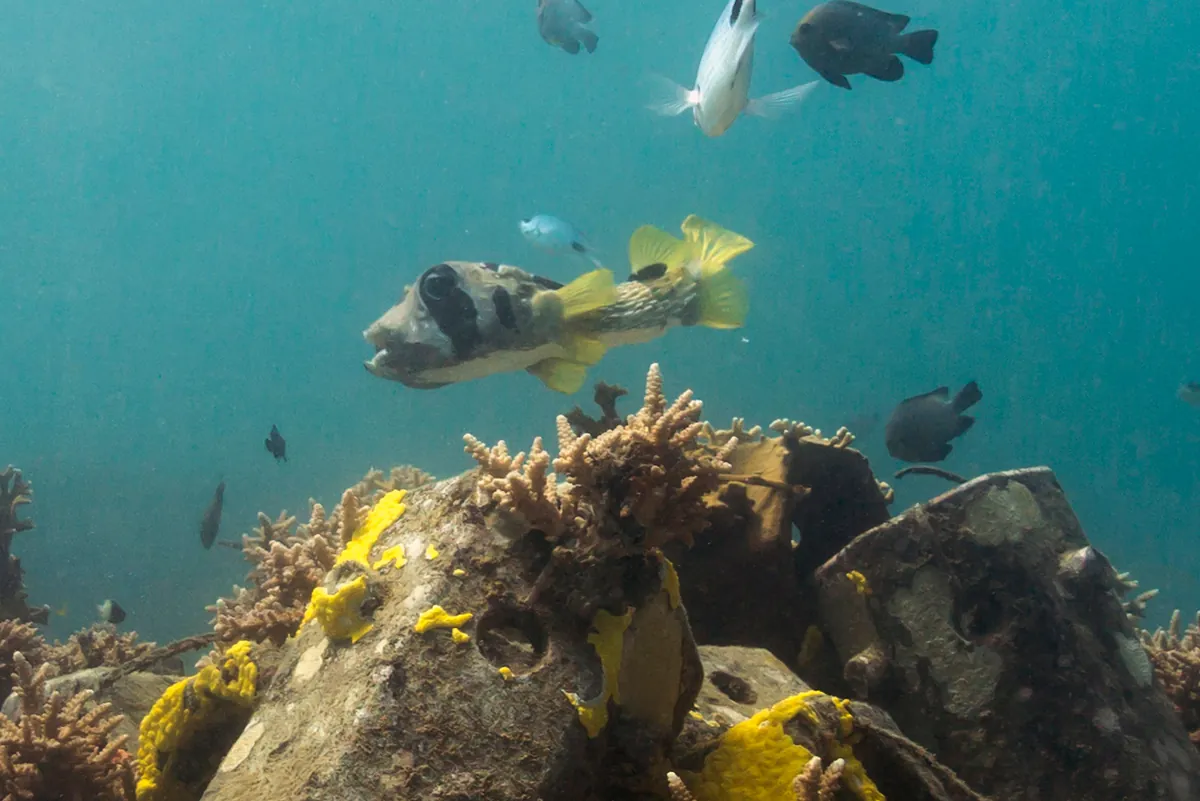
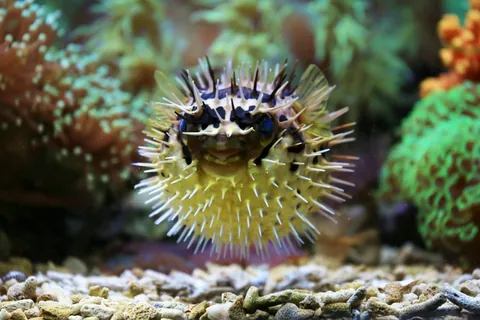
The black-blotched porcupinefish spends its days tucked into caves and ledges on the reef, only becoming active after dark. If threatened, it can gulp water to swell into a spiny ball, and it also carries a powerful nerve toxin in its skin and organs as a backup defence. It grows up to 65 cm long.
Also known as: black blotched porcupinefish, blackblotched porcupinefish, black-blotched porcupinefish, shortspine porcupine, shortspine porcupinefish, shortspine porcupinefish, longspined porcupinefish, shortspine porcupine, porcupine fish, black blotched porcupinefish, brown-backed porcupinefish, blotched porcupinefish, blackblotched porcupinefish, blotched porcupine-fish
This species is easily confused with the long-spine porcupinefish. Two marks settle it: this fish's spines are longer, and a dark streak runs between its eyes, marks the long-spine porcupinefish lacks.
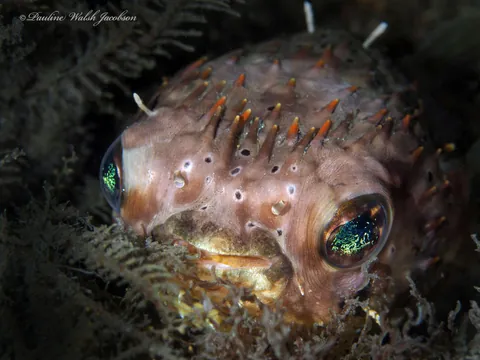
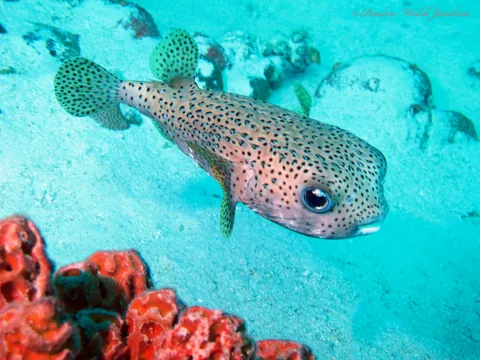
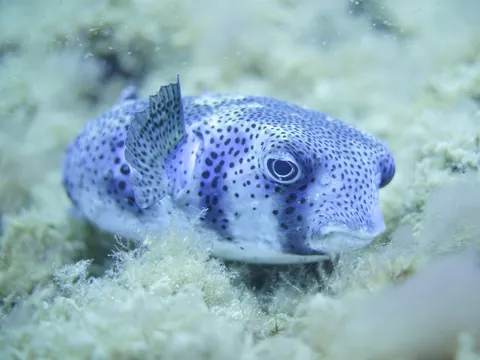
It has an elongated body and a round head with large, protruding eyes and a big mouth that is rarely fully closed. Its pectoral fins are large, and it has no pelvic fins. Body colour ranges from light brown to sandy yellow, marked with dark blotches, each ringed by a thin white line, fading to a pale belly. The skin carries short, backward-pointing spines that normally lie flat against the body.
It lives on lagoon, reef-top, and seaward coral or rocky reefs, from shallow water down to 90 m, though it is most often seen between 15 and 30 m. By day it often shelters under plate corals. Young fish grow up in lagoons and estuaries.
Describe what you saw and we name it, then keep every species you find in your Oceandex.