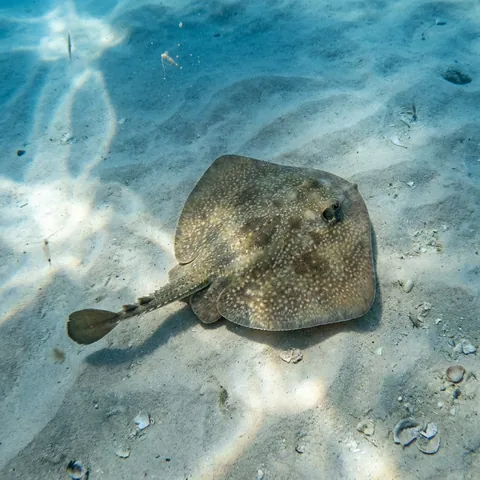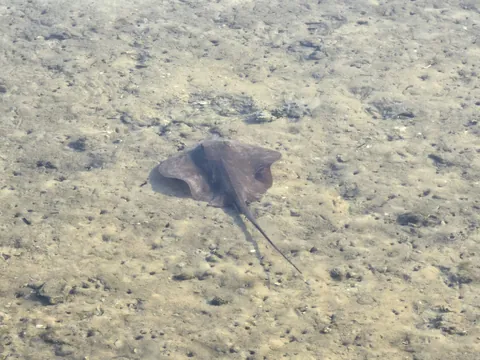
Atlantic Stingray
Hypanus sabinus
Hypanus americanus
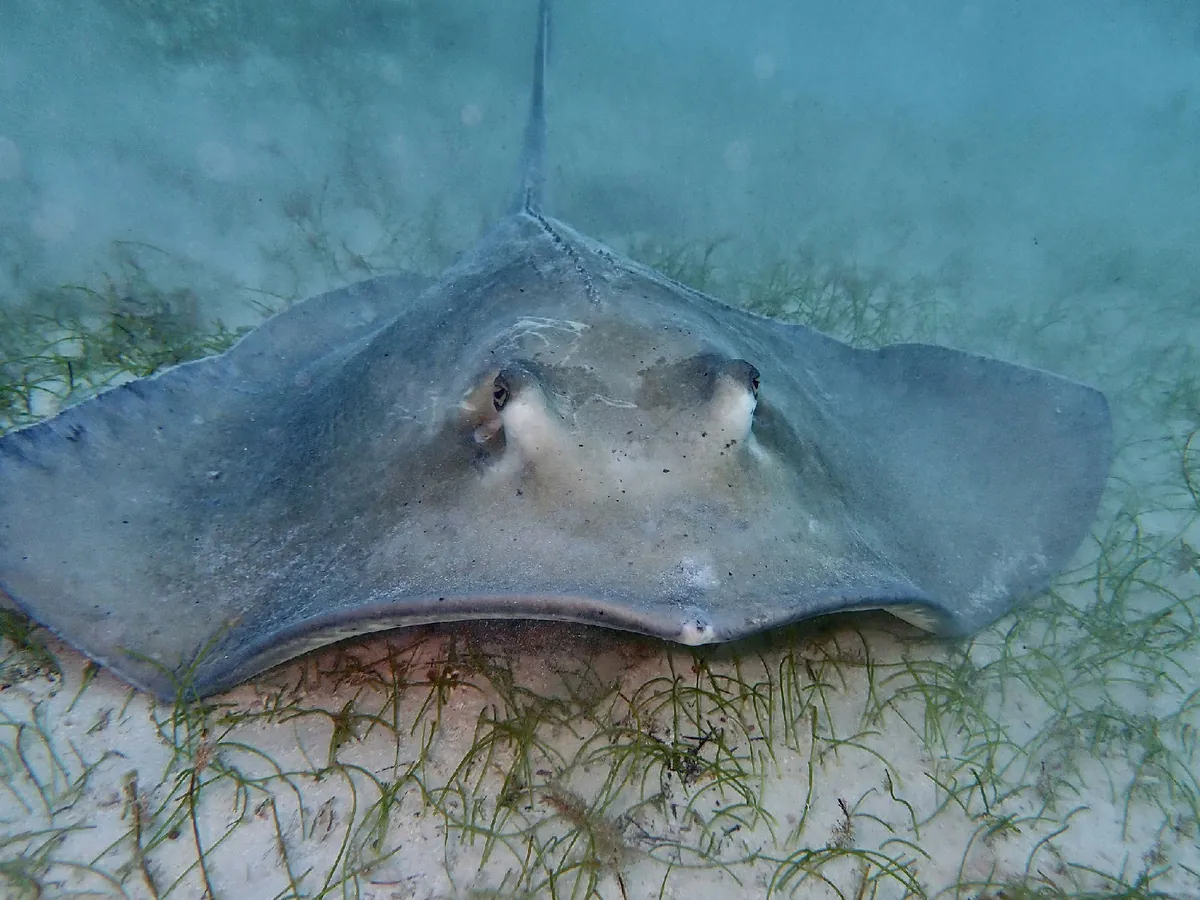
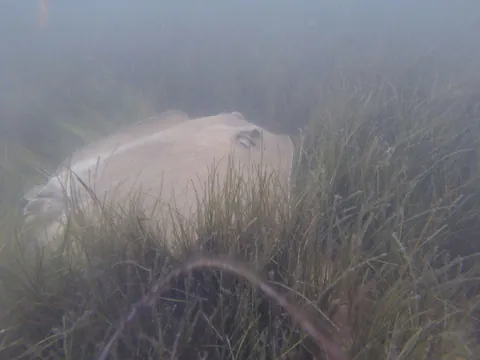
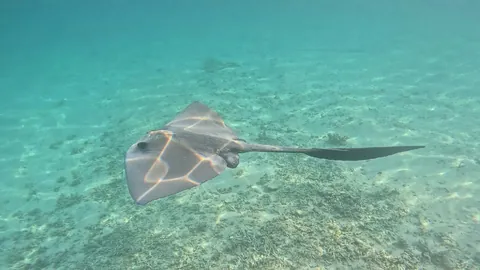
The southern stingray is a calm, familiar sight resting on sand across the Caribbean, often letting divers approach for a close look. Its flattened, diamond-shaped body can weigh up to 135.6 kg.
The southern stingray can be confused with other large stingrays resting on sand. Its sharp, angular disc corners, more pointed than the rounder discs of similar rays, are the mark to check.
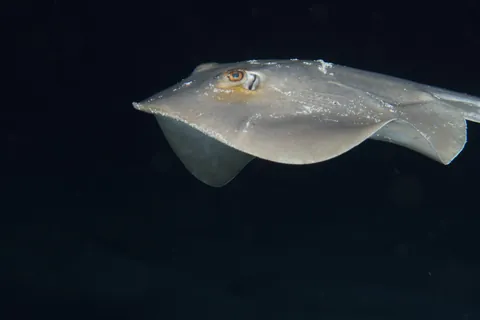
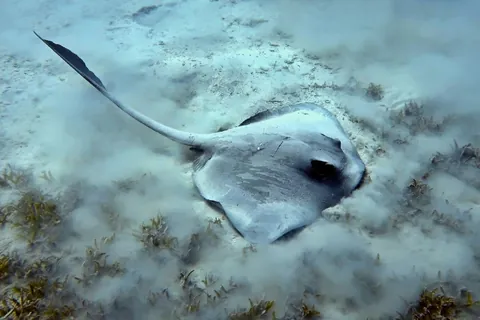
The body is flattened and diamond-shaped, with sharp outer corners and wing-like pectoral fins used to glide over the bottom. The top is olive-brown to green in adults and dark grey in young rays, while the underside is white. The eyes sit on top of the head, next to small openings called spiracles that let it breathe while lying still. A long, slender tail carries a serrated, venomous spine near the base.
This ray feeds mainly at night, resting buried in sand by day. It flaps its fins or blows water from its mouth to stir up the bottom and flush out hidden prey. It is usually seen alone or in pairs, though groups gather to mate, rest, or for safety from predators. Southern stingrays visit cleaning stations, where wrasses and hogfish pick parasites off their skin.
It feeds mainly on bivalves and worms, and also takes shrimp, crabs, and small fish. It creates shallow pits in the sand to expose buried prey, and will eat almost any suitable animal it comes across.
Females carry their young inside the body and give birth to live pups after a pregnancy of about seven to eight months. Early on, embryos live off a yolk sac, then switch to nutrients from the mother's uterus. A litter numbers between two and ten pups, and females can mate again soon after giving birth.
In parts of the Caribbean, such as Stingray City in the Cayman Islands, wild southern stingrays have grown so used to divers hand-feeding them that some can be held and stroked, much like an overfed pet dog.
Describe what you saw and we name it, then keep every species you find in your Oceandex.