Bluntnose Stingray
Hypanus say
Hypanus sabinus
The Atlantic stingray is a small, adaptable ray equally at home in salt water, brackish creeks, and even rivers far from the sea. It can weigh up to 4,870 g.
Other stingrays share the same disc shape, but this species' longer, more pointed snout is the easiest mark to check against.
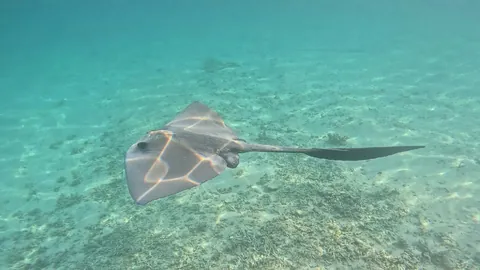
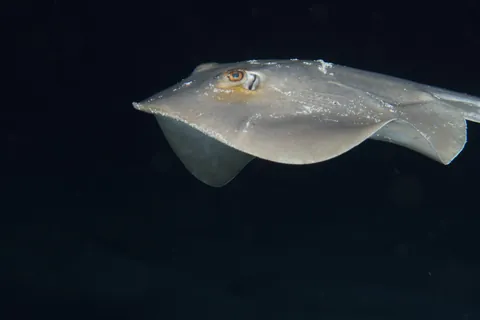
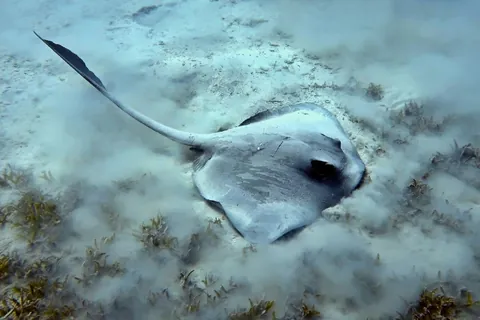
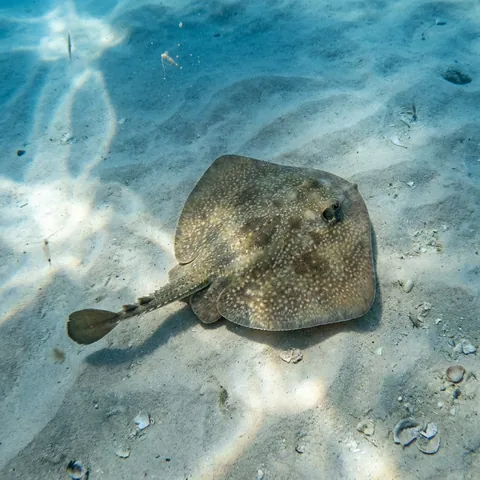
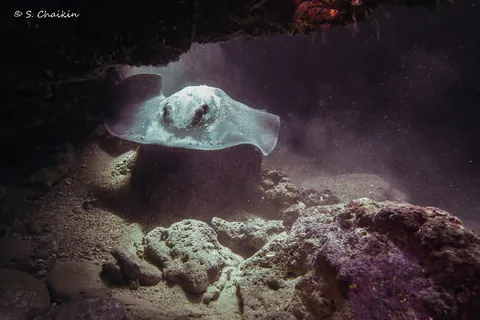
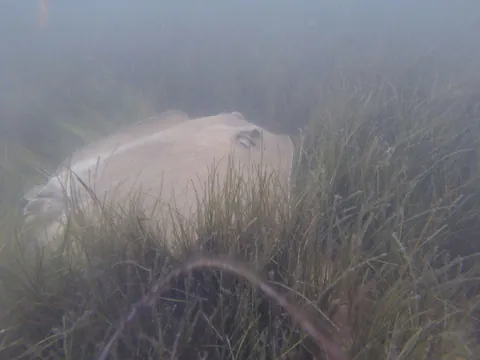
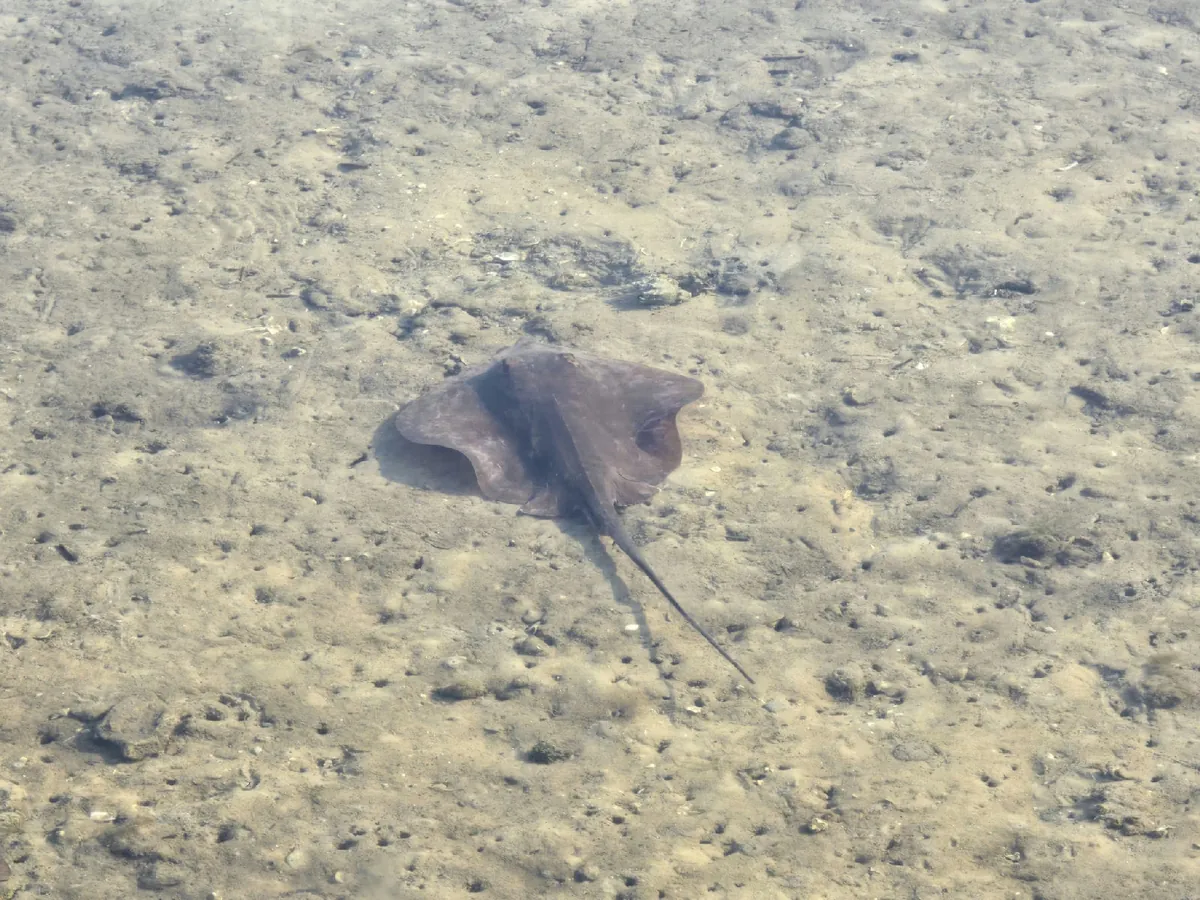
Its pectoral fin disc is spade-shaped, slightly wider than long, with rounded corners and a long, pointed snout. Colour is brown or yellowish-brown on top, fading to lighter tones near the disc's edge, with a white or light grey underside. The tail is long and whip-like, carrying a serrated spine and yellowish fin folds along its length. Larger rays grow small thorn-like bumps along the midline of the back.
It lives over sandy or silty bottoms in shallow coastal waters, estuaries, and lagoons, usually at depths of 2 to 6 m, though it can be found as deep as 25 m offshore in winter. It tolerates a wide range of salt levels and is one of the few stingrays that regularly enters rivers and lakes. Its range runs along the Atlantic coast of North America from Chesapeake Bay to the Gulf of Mexico.
It feeds on bottom-living animals such as clams, worms, and small crustaceans, sensing them through special pores on its snout that detect faint electrical signals. When feeding, it faces into the current so moving water clears away sand and exposes prey. In colder months it migrates to deeper, warmer water.
A population of this stingray lives permanently in Florida's St. Johns River, the only freshwater population of any shark or ray species known in North America.
Describe what you saw and we name it, then keep every species you find in your Oceandex.