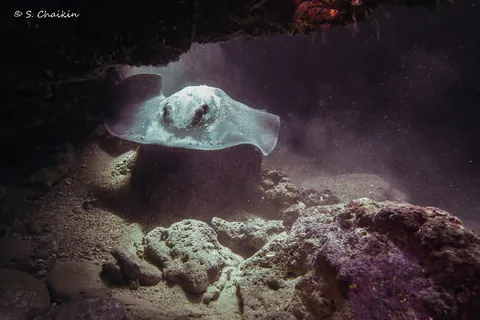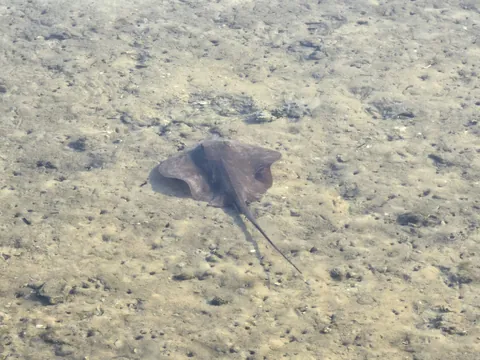
Atlantic Stingray
Hypanus sabinus
Pastinachus sephen
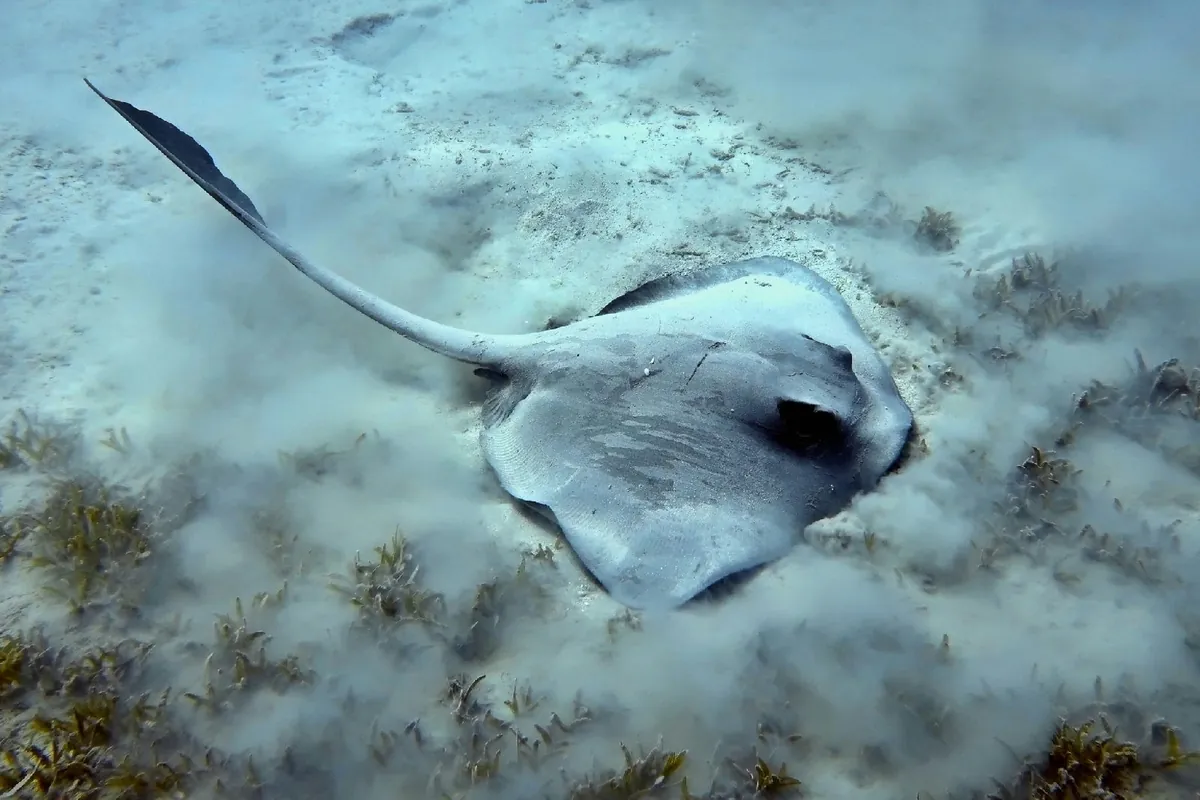
The feathertail stingray, also called the cowtail stingray, is a large, sandy-bottom ray best known for the tall, flag-like fold running along the underside of its tail. It glides over reef sand and river mouths across a huge stretch of the Indo-Pacific.
Also known as: feathertail stingray, feathertail ray, cowtail stingray, cowtail ray, fantail ray, banana-tail ray, Pastinachus sephen
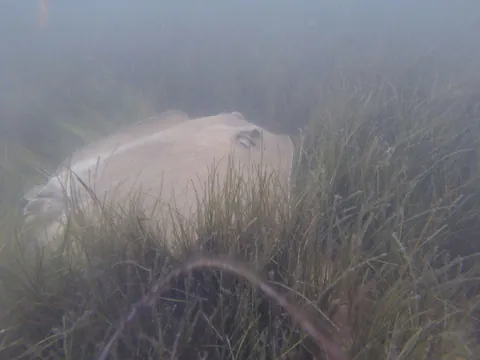
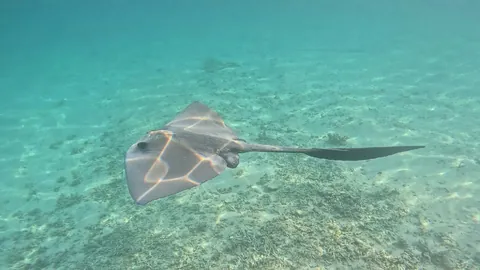
Several large sandy-coloured stingrays share this thick, rounded disk shape. The tall, flag-like fold running along the underside of the tail is unusually prominent in this species and is the clearest way to identify it.
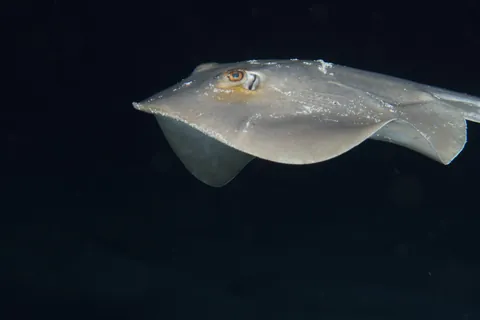
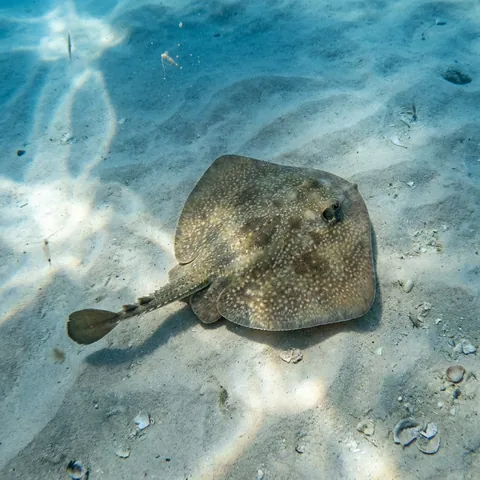
This ray has a thick, rounded pectoral fin disk with a blunt, broadly rounded snout and small, widely spaced eyes. Its skin is grayish brown to black on top and mostly white underneath. The tail is broad at the base with a whip-like tip and carries a tall fold along its underside, which is black along with the tail tip. A single venomous spine sits well back on the tail. It grows to 183 cm, though most seen are closer to 65 cm.
It lives on sandy bottoms in coastal waters and on coral reefs, usually between 1 and 30 m deep but recorded to 60 m. Its range covers the tropical Indo-Pacific, from the Red Sea and East Africa to Japan and Australia. It also swims into estuaries and rivers, making it one of the few stingrays regularly found far upstream in fresh water.
This stingray forages alone over sand for fish, crustaceans, worms, and molluscs. When threatened, it flees at a steady angle away from the predator rather than straight ahead, which lets it cover ground while keeping the danger in sight. During the day it often rests in shallow, sandy areas, sometimes in small groups arranged in a circle with their tails pointing outward, watching for predators from every direction. It also rests alongside reticulate whiprays, another stingray species, likely because their longer tails help spot danger sooner.
Do not touch or corner it. It carries a large venomous sting at the base of the tail and can drive it home hard if it is trodden on or pinned. Give it room and it is no threat.
When resting in groups, feathertail stingrays arrange themselves in a circle with their tails pointing outward, giving every animal a clear view for predators approaching from any direction.
Describe what you saw and we name it, then keep every species you find in your Oceandex.