American Eel
Anguilla rostrata
Anguilla australis
The short-finned eel spends most of its life hidden in freshwater, then undertakes one of the great unseen journeys of the ocean to spawn far out at sea.
Also known as: shortfin eel
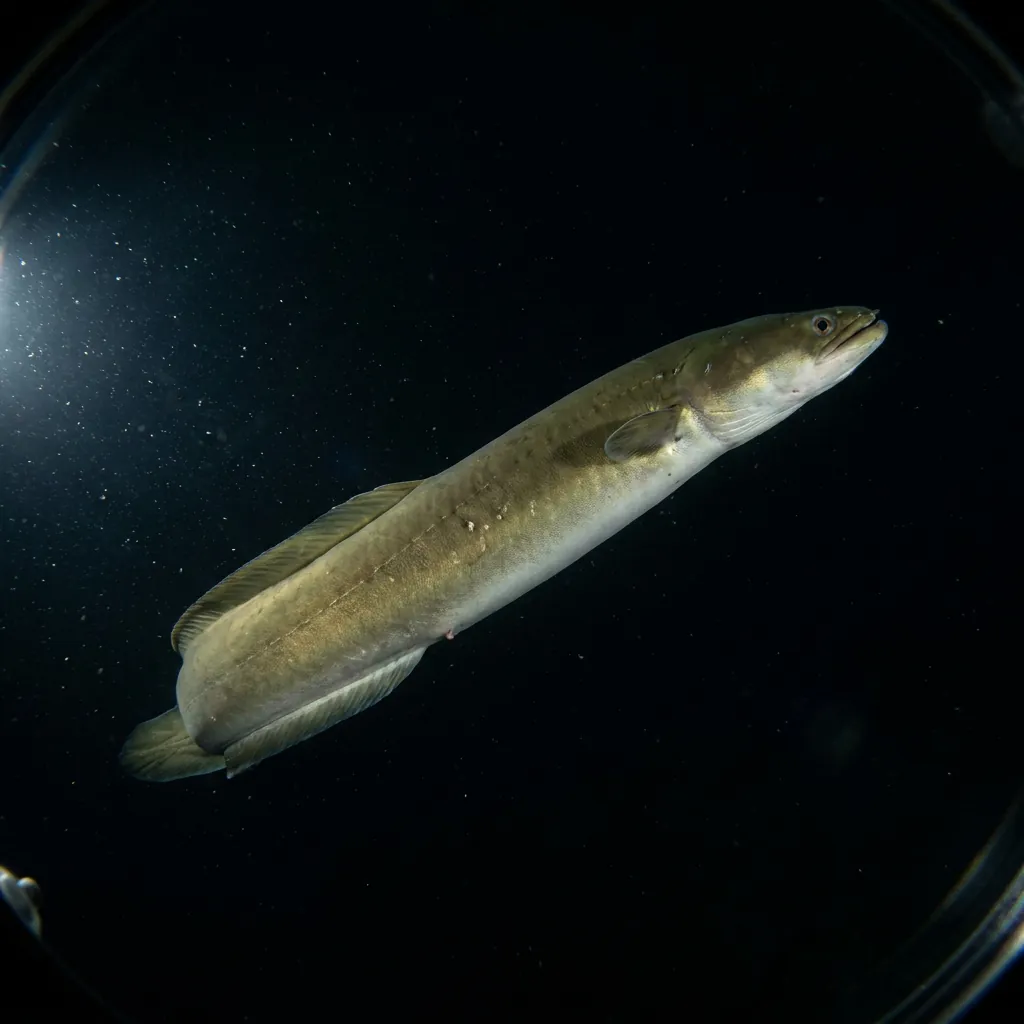
This species is often confused with the New Zealand longfin eel, which shares the same tubular body and shifting colour. The key difference is the dorsal fin. On the short-finned eel, it starts well back and is about the same length as the anal fin. On the longfin eel, it starts much further forward and is clearly the longer of the two fins.
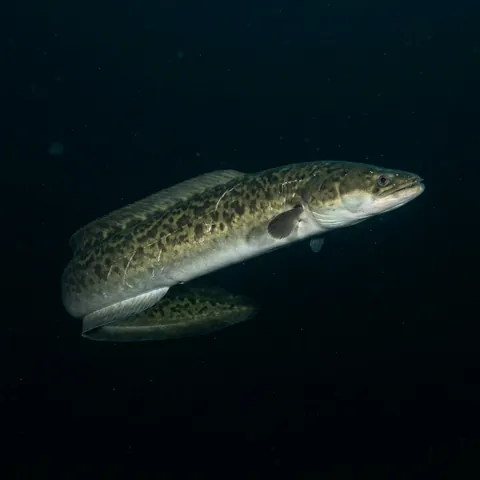
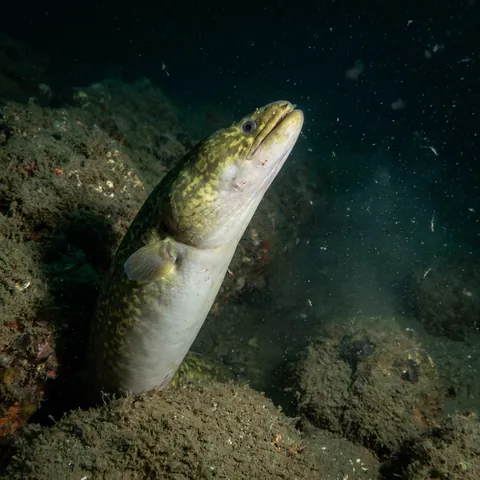
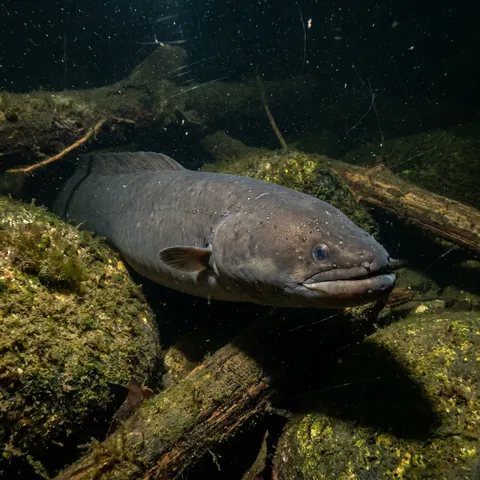
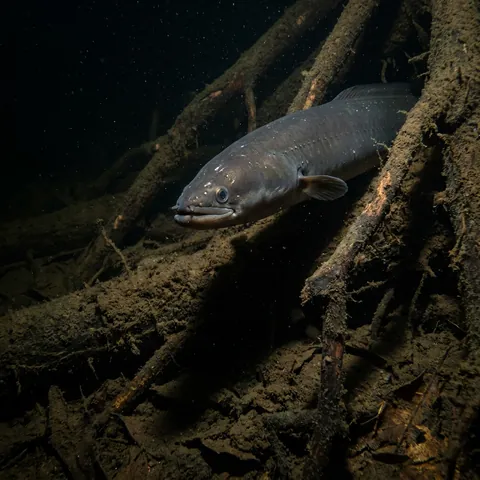
This eel has a long, snakelike, roughly tube-shaped body and a small head, with jaws that reach back to below the eye or further. Its dorsal (top) and anal (bottom) fins run along the body and are roughly equal in length. Colour varies a lot between individuals, typically a deep olive-green but sometimes much lighter, golden, or occasionally yellowish, with a pale, often silvery underside and greenish fins. It has no distinctive markings.
This species lives in lakes, dams, and coastal rivers of south-eastern Australia, New Zealand, and islands across the South Pacific. It stays in lowland freshwater and coastal waterways, rarely pushing far inland, and some populations live mainly in estuaries rather than freshwater.
This eel is an ambush predator, hunting crustaceans, fish, frogs, and even waterbirds and small mammals from cover. When adults are ready to breed, they stop feeding entirely and migrate downstream to the sea. On their way upstream as young eels, they can climb past obstacles and even leave the water to cross short stretches of wet ground. They can absorb some of the oxygen they need directly through their skin.
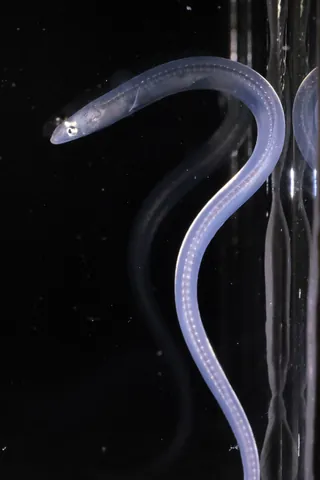
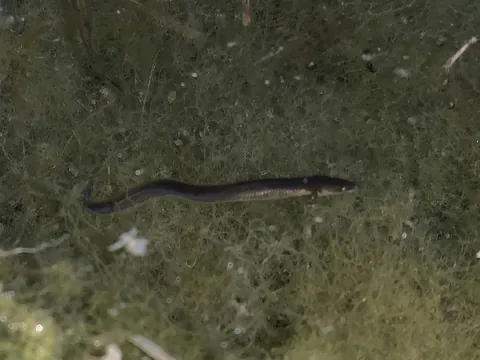
Mature eels leave freshwater and swim out to a deep-water spawning ground in the Coral Sea. After spawning, the tiny, transparent larvae drift on ocean currents back toward the coast. There, they change into small, see-through young called glass eels, and only then are they able to feed again. Glass eels move into estuaries and rivers, darken into a stage called elvers, and migrate upstream to grow into adults.
Long before Europeans arrived, the Gunditjmara and Djab wurrung peoples of western Victoria, Australia, farmed short-finned eels on a large scale, smoking the catch to trade with communities far away.
Describe what you saw and we name it, then keep every species you find in your Oceandex.