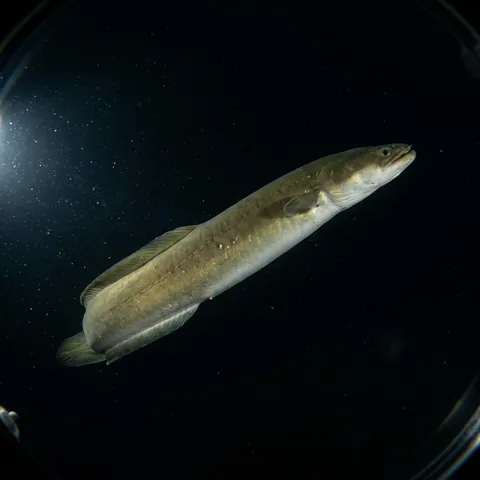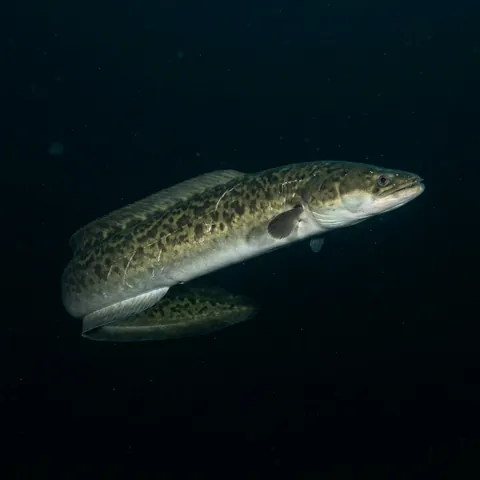
Australian Long-finned Eel
Anguilla reinhardtii
Anguilla rostrata
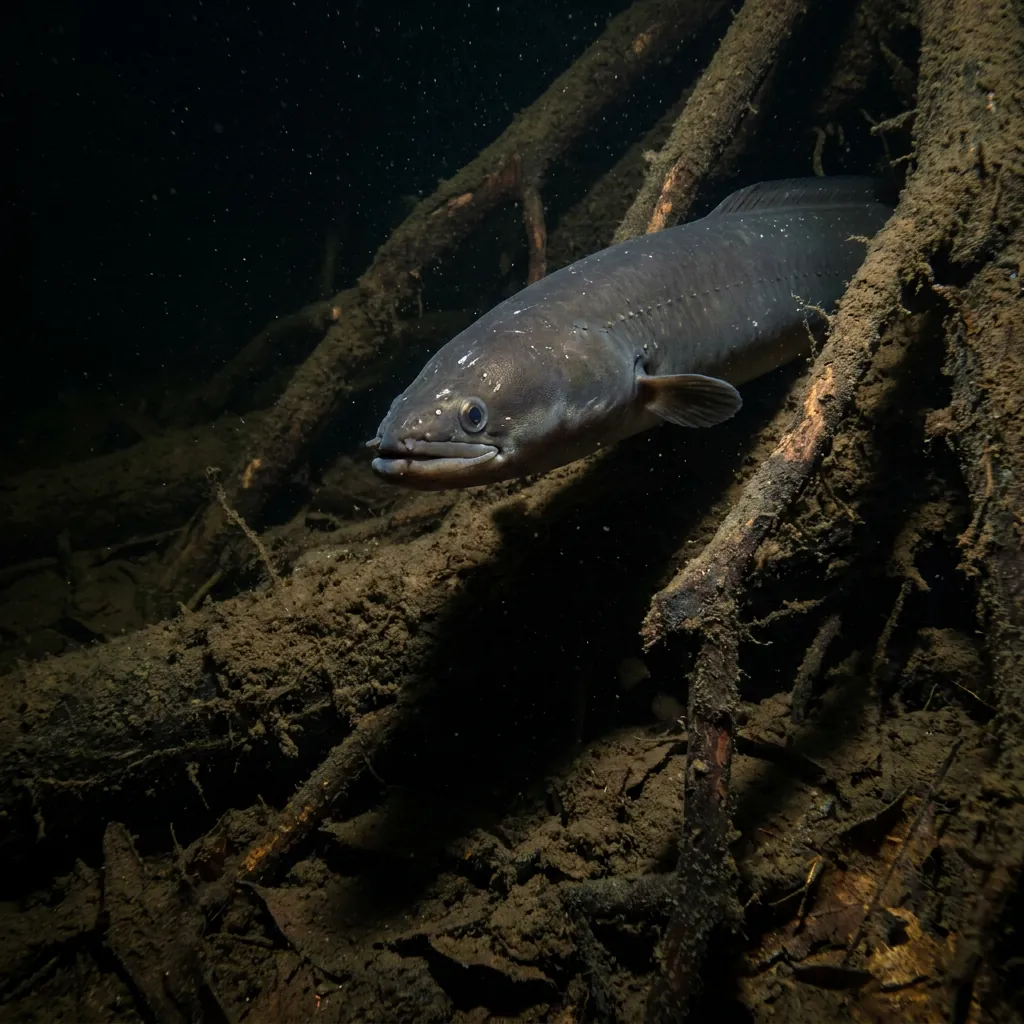
The American Eel lives an extraordinary double life, spending years in rivers and lakes before returning to the open ocean to spawn just once, far out in the Sargasso Sea.
Also known as: common eel, boston eel, atlantic eel, freshwater eel
Long, snake-like fish are easy to lump together. The single fin margin described above, running unbroken from the back around the tail to the belly, is the clearest sign of a true eel rather than another elongated fish.
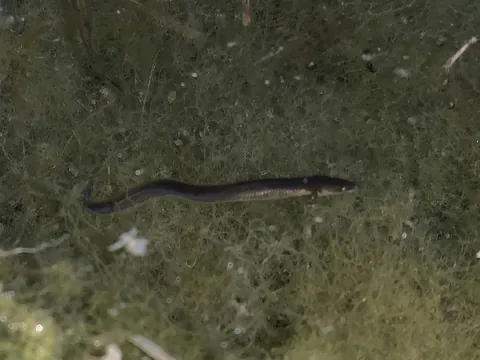
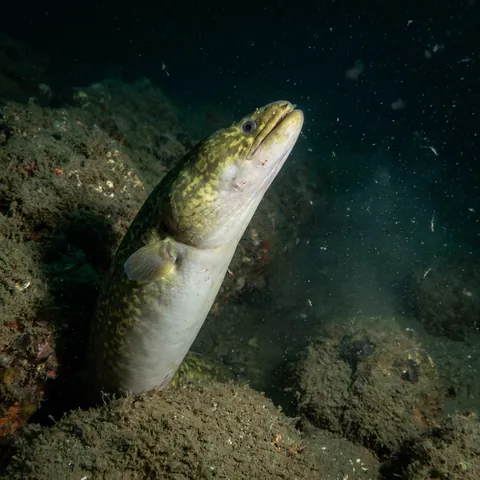
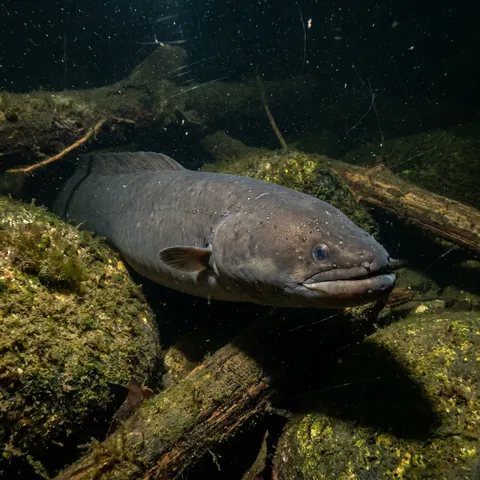
Its body is long, slender, and snake-like. A single continuous fin runs from partway down the back, around the tail, and forward along the belly, with no separate tail fin standing apart from it. It has small pectoral fins just behind the head but no fins underneath. The scales are tiny and sit so deep in the skin that they are nearly impossible to see without magnification. Females are usually larger than males, paler, and have smaller eyes.
This eel lives in almost any freshwater it can reach, from streams and lakes to the Great Lakes and the Mississippi River system. It is also found in estuaries and coastal seas along the western Atlantic, from Venezuela to Greenland. It is a bottom dweller, hiding in burrows, snags, and plant cover, and moves freely between fresh, salt, and brackish water. In cold winter water it burrows into the mud and becomes largely inactive.
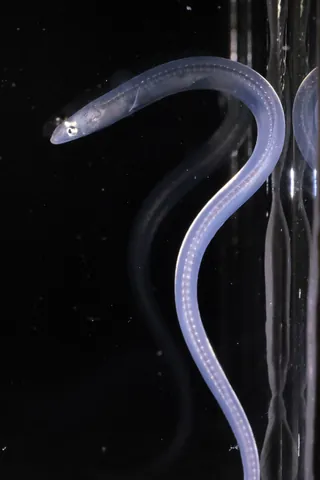
American Eels are born far offshore in the Sargasso Sea, and the larvae drift for months on ocean currents before reaching the coast and turning into small, see-through glass eels. From there they push inland, sometimes over great distances, and spend roughly ten to twenty-five years feeding and growing in fresh water. Eventually they migrate back out to the Sargasso Sea, spawn once, and die.
This is a nocturnal, generalist feeder that relies heavily on smell to find food at night. It eats worms, small fish, clams and other molluscs, crabs and other crustaceans, and a wide range of aquatic insects and their larvae. Smaller eels feed mostly on insect larvae, while larger ones take more fish and crayfish. Feeding slows or stops in winter and before the spawning migration.
The American Eel is sensitive to low oxygen levels, often found below dams, and can build up harmful levels of heavy metals and other pollutants in its fat. In the United States, wildlife regulators have twice reviewed the species and decided against listing it for federal protection. Canada closed commercial and sport eel fishing in Ontario. After a further review, Canada chose not to list the species as at risk, citing a stable population over the past two decades.
In the 1980s, the American Eel was one of the top three species in Ontario's commercial fishery. Since then the catch has crashed, from about 223,000 kg a year in the early 1980s to just 11,000 kg by 2002.
Describe what you saw and we name it, then keep every species you find in your Oceandex.