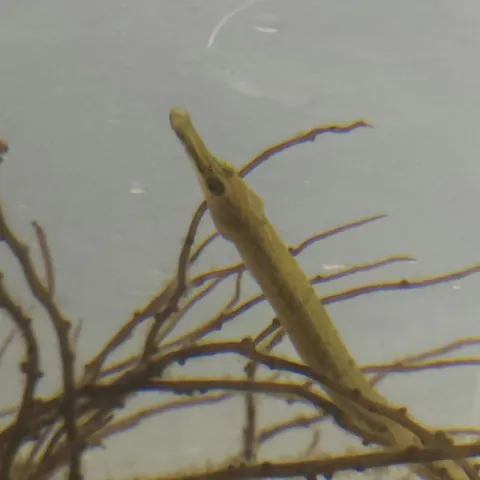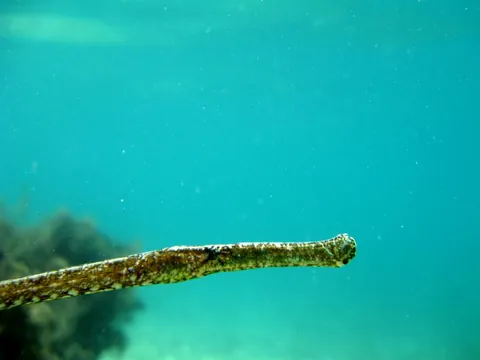
Broadnosed Pipefish
Syngnathus typhle
pipe_fish
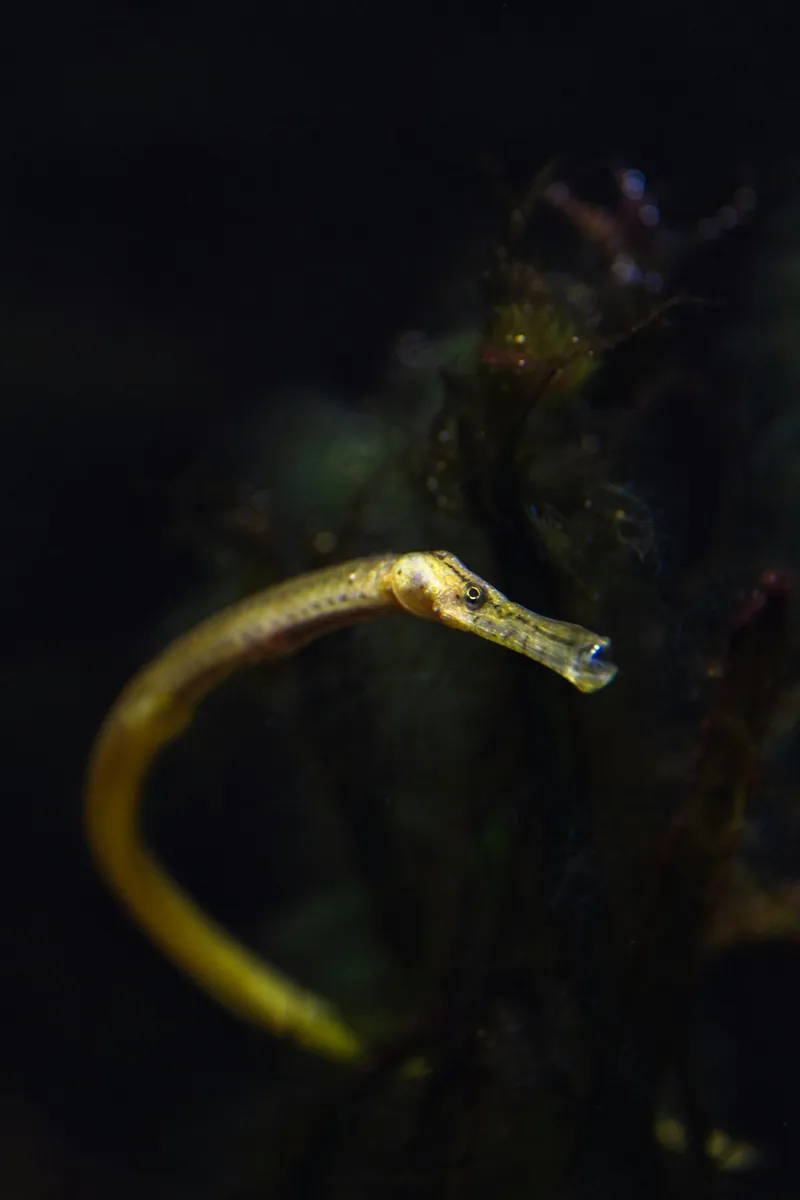
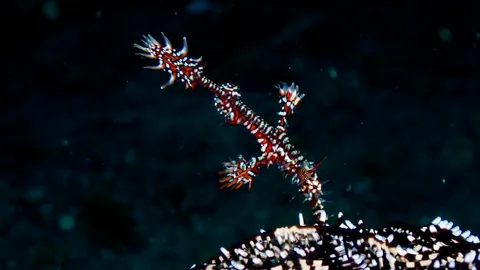
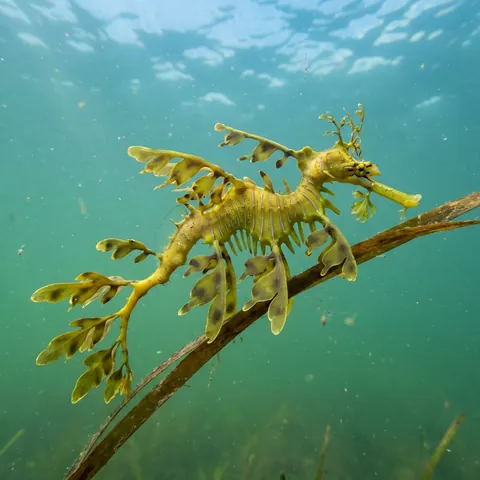
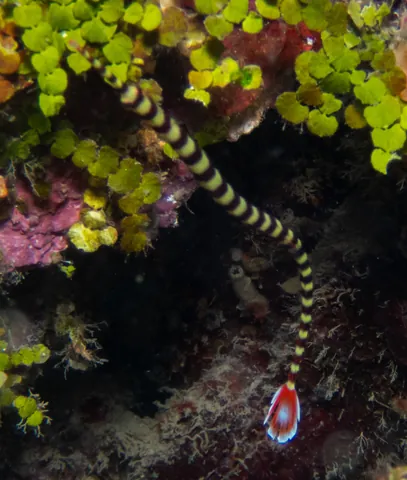
Pipefish look like straight, thin seahorses with a long tube-shaped snout. In this app the group includes the Ghost Pipefish, the Bentstick Pipefish, and the Ringed Pipefish.
A straight, thin body with a tube snout and bony armour plating sets a pipefish apart from true eels and worms, which have soft, smooth bodies. Most pipefish are weak swimmers that move by rippling the fin on their back, rather than swimming strongly like most reef fish.
Pipefish have a long, thin, snake-like body and tail, covered in bony, armour-like plates instead of scales. This makes the body look angular rather than round in cross-section. The snout is a long tube ending in a small, toothless mouth that opens upward. A fin on the back is usually the main or only way they move; fins on the underside are always missing. Most species measure around 35 to 40 centimetres long.
Most pipefish live in the sea, with only a few in fresh water. They are common on tropical and temperate coasts, usually sheltering in coral reefs or seagrass beds.
As with their seahorse relatives, male pipefish carry the young. The male holds fertilised eggs on his body or inside a brood pouch, feeding and protecting them until they are ready to be released. Courtship often involves a slow, wriggling dance between male and female before mating.
harmless to humans
In pipefish, it is the male, not the female, that carries and cares for the developing young, holding the eggs in a pouch or against his body until they are ready to hatch.
Describe what you saw and we name it, then keep every species you find in your Oceandex.