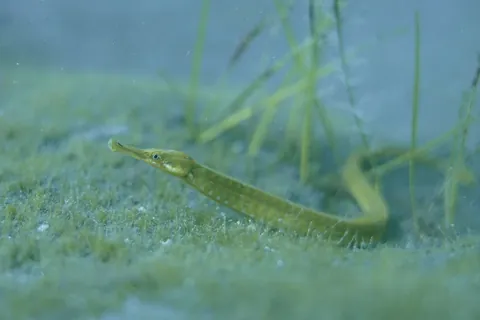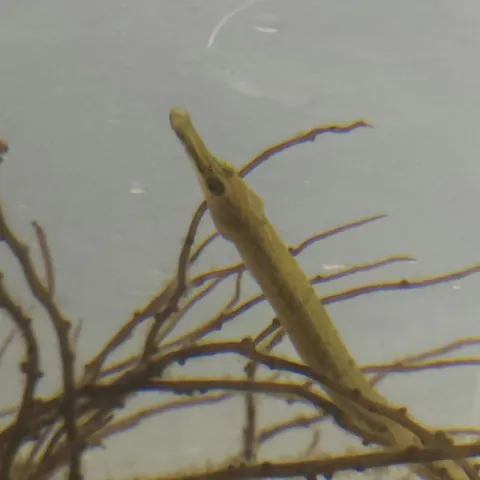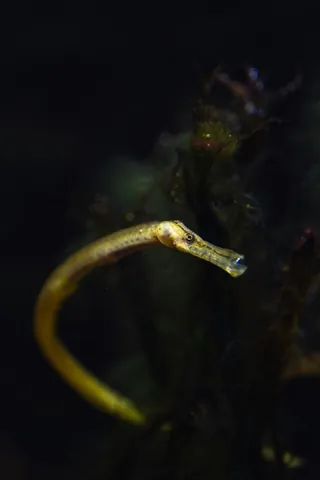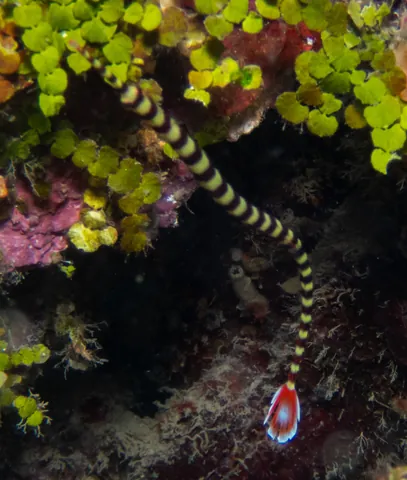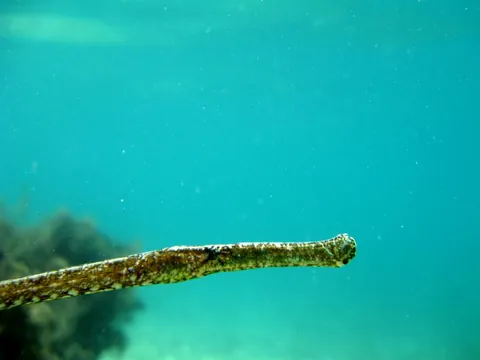
Broadnosed Pipefish
Syngnathus typhle
Phycodurus eques
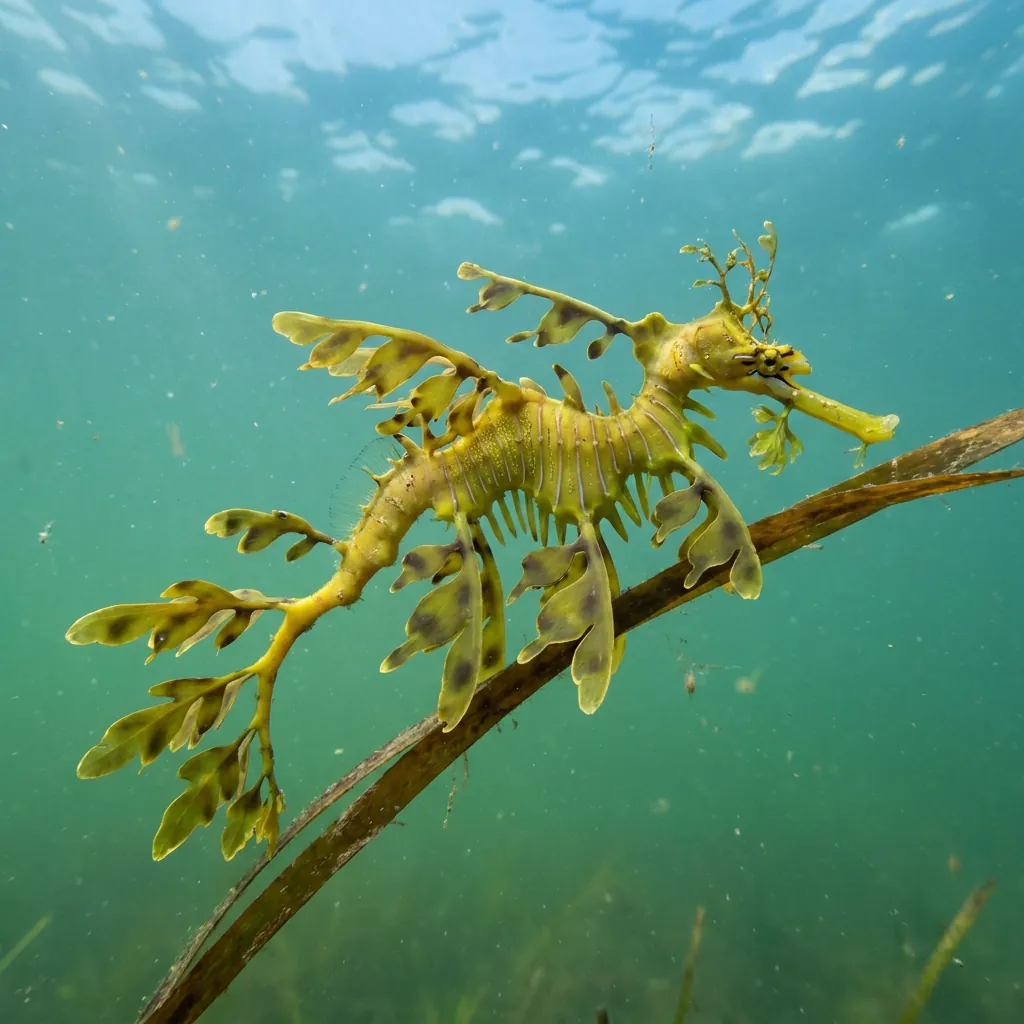
The leafy seadragon looks less like a fish and more like a drifting scrap of seaweed. Named for its dragon-like shape, it grows up to 35 cm long and is one of the most striking camouflage artists in the sea.
Also known as: glauert's sea-dragon, glauerts seadragon, phycodurus eques
Its closest lookalike is the weedy seadragon. Use size and colour to tell them apart: the weedy seadragon is multicoloured and never grows as large as the leafy seadragon described above.
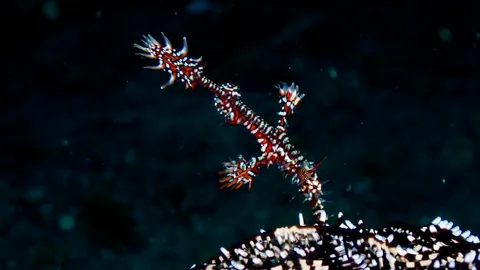
Long, leaf-shaped lobes of skin cover its body from head to tail, mimicking strands of seaweed. It swims by rippling small fins near its head, drifting and swaying so it moves like floating weed rather than a fish. It can shift colour slightly, though this depends on its diet, age, and stress levels, and its skin is stiff rather than smooth. Small round gill openings sit on the sides of its head, unlike the crescent-shaped gills of most fish.
The leafy seadragon lives only in the cool waters of southern Australia. Divers find it over sand patches next to kelp-covered rocks and seagrass beds, at depths from 4 to 30 metres. Individuals tend to stay near one spot, though they can range several hundred metres and still find their way back.
It steers with the small fins on its head, but its stiff, armoured skin limits how much it can bend or twist. It often stays in one place for hours at a time, though it can also travel steadily when it needs to. It usually lives alone, only pairing up to breed.
The female passes up to 250 bright pink eggs onto the male's tail, where they attach to a patch of skin that supplies them with oxygen. The male carries them there until they hatch, about nine weeks later, and helps the young break free by shaking his tail. Only a small fraction of the eggs survive to become independent young.
harmless
This species is currently listed as of least concern. Even so, it faces pressure from pollution, coastal runoff, and collection for the aquarium trade, and slow swimming makes young seadragons especially vulnerable to predators. It has been fully protected under Australian state law since the late 1980s and 1990s.
Despite being one of the most popular sights in public aquariums worldwide, no one has ever managed to breed a leafy seadragon in captivity.
Describe what you saw and we name it, then keep every species you find in your Oceandex.