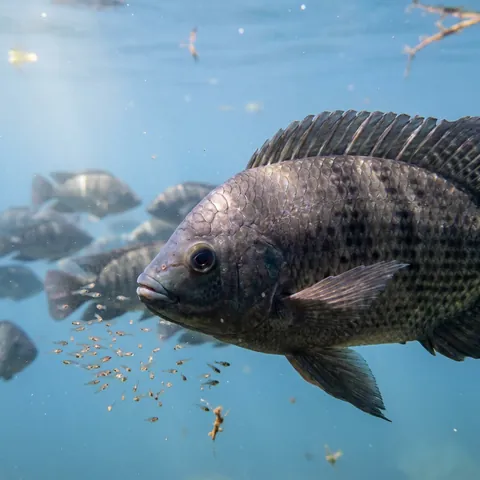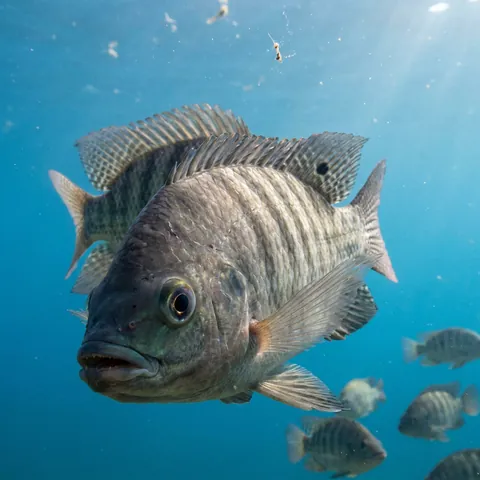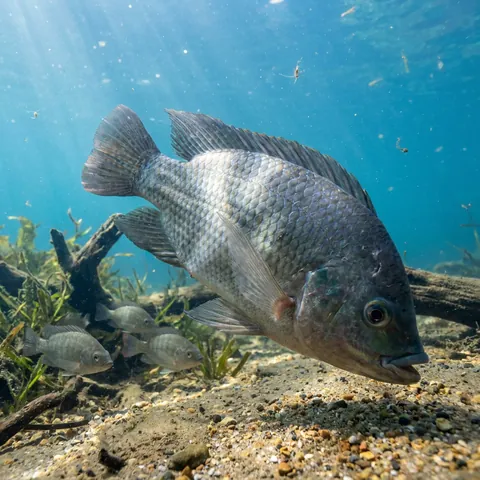
Blue Tilapia
Oreochromis aureus
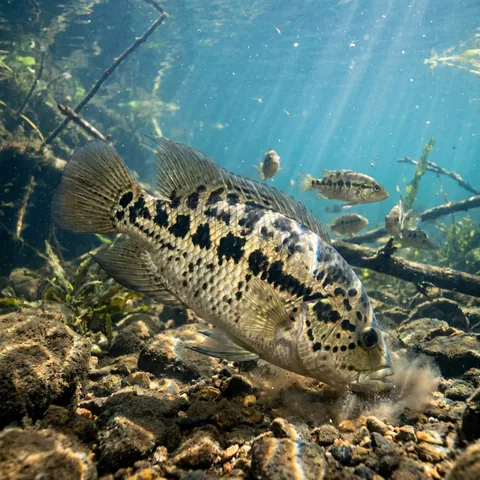
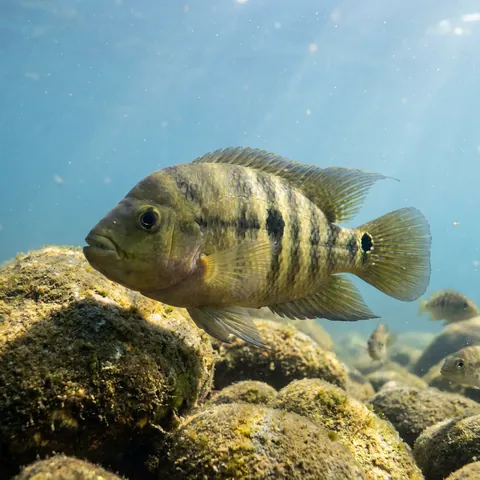
Astronotus ocellatus
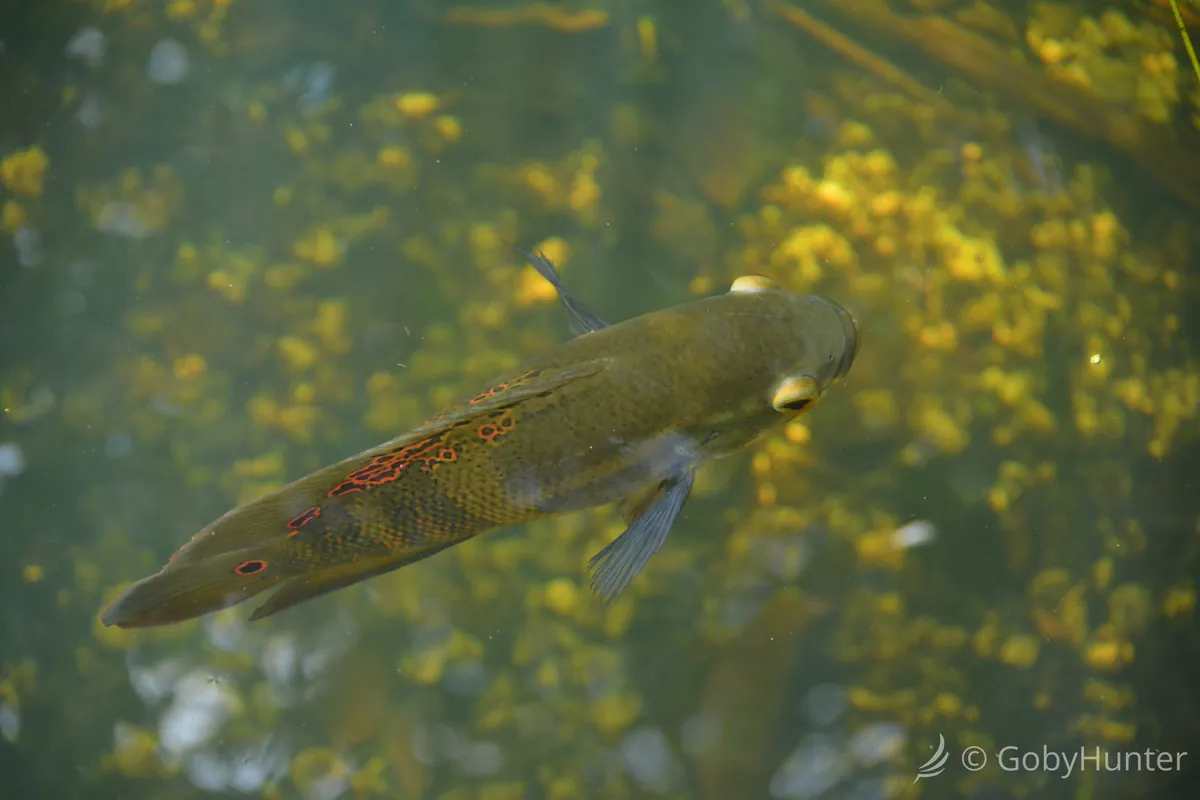
A big, bold cichlid of slow Amazon rivers, the oscar typically reaches about 24 cm long, though the largest grow to 45.7 cm and can weigh up to 1.58 kg.
Also known as: astronotus ocellatus, marble cichlid, red oscar, velvet cichlid
Other dark cichlids share these same slow rivers. Check the base of the tail: the oscar's rounded black spot there, rimmed in orange like a false eye, is the mark to look for.
Wild oscars are darkly coloured, with a bright orange rim along the edge of the gill cover and on the lower sides of the body. Several yellow-ringed spots, called ocelli, mark the dorsal fin and the base of the tail. This fish can change its colour quickly, which it uses during territorial standoffs with other oscars. Young oscars look nothing like adults: they are striped with wavy white and orange bands and have spotted heads.
It lives in slow-moving, silty rivers of the Amazon basin, sheltering under submerged branches, and also turns up in quiet, shallow mud- or sand-bottomed canals and ponds. It needs warm water, generally between 22 and 25°C, and does poorly anywhere the water turns cold.
An oscar will claim a patch of habitat as its own and defend it vigorously, chasing off other fish that come too close. The size of the territory it holds depends on the fish's own size and how aggressive it is.
The oscar is an omnivore. In the wild it mainly hunts slow-moving catfish, using a strong suction bite to pull prey in, and also eats shrimp, snails, insects and their larvae, along with fruit and nuts when in season. It has even been seen lying on its side, apparently playing dead, a trick that may help it ambush prey.
Oscars are biparental substrate spawners: a mated pair chooses and cleans a flat surface, lays their eggs there together, and both parents care for the resulting brood. Spawning may be timed to coincide with rainfall.
harmless
The orange-ringed spot near the oscar's tail may work as a decoy eye, drawing bites from fin-nipping piranhas away from its real head.
Describe what you saw and we name it, then keep every species you find in your Oceandex.