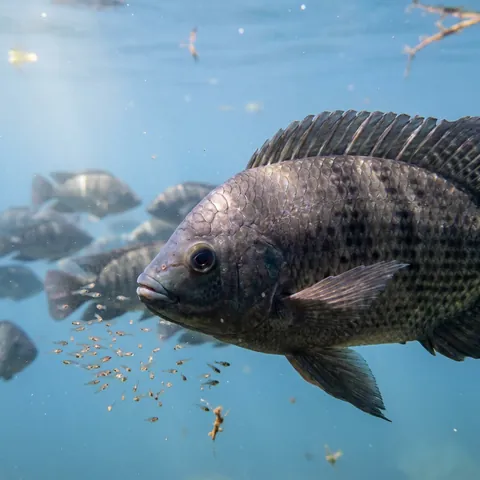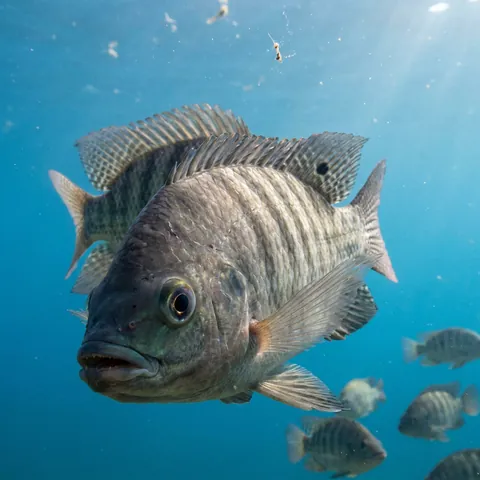
Blue Tilapia
Oreochromis aureus
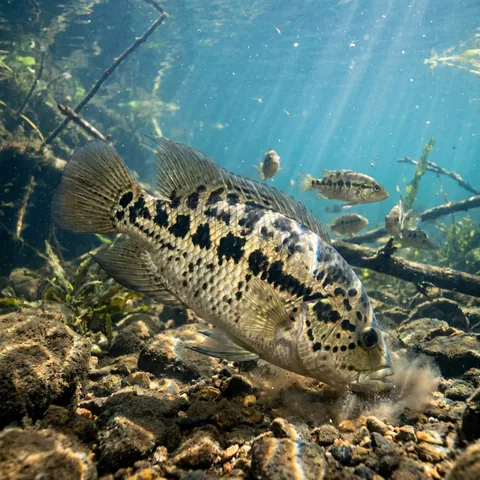
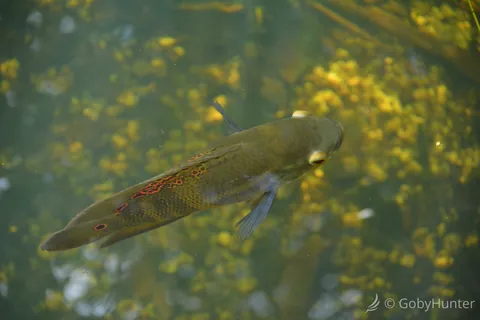
Mayaheros urophthalmus
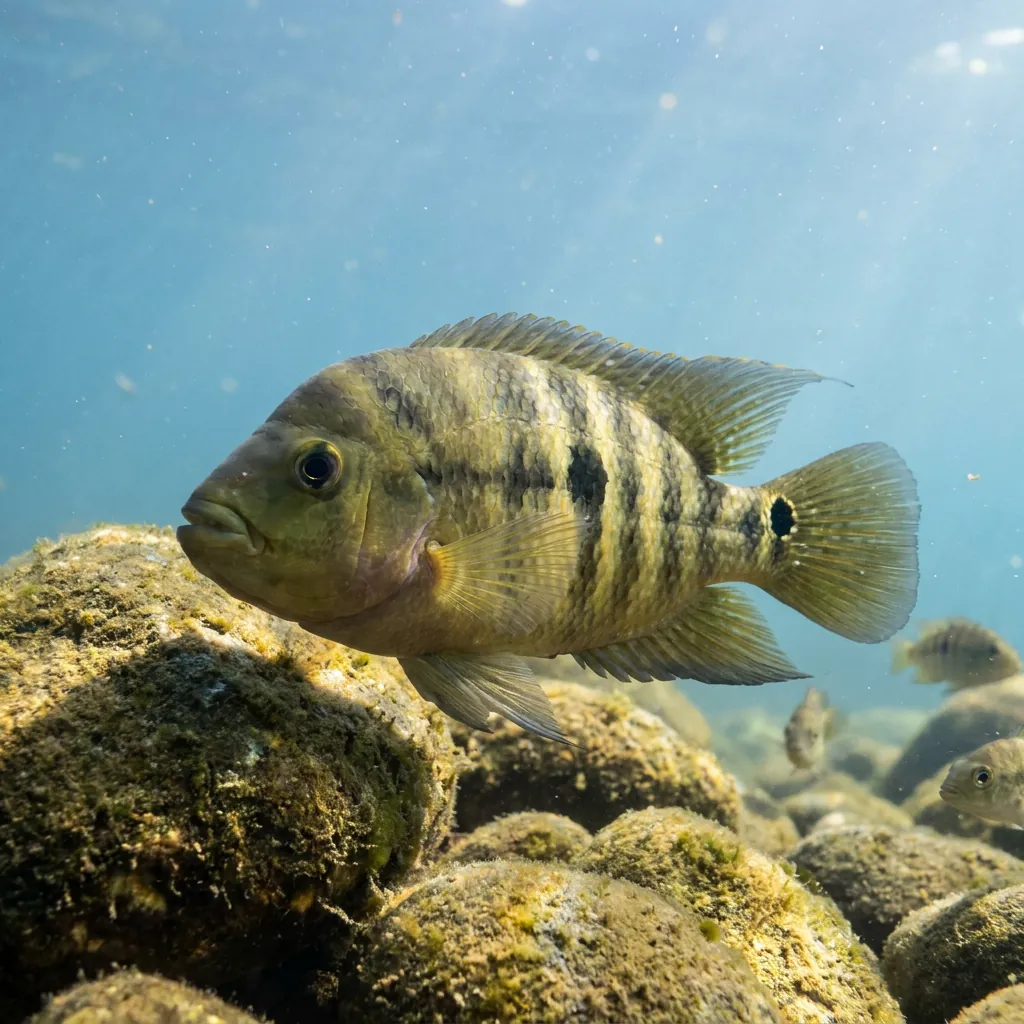
The Mayan cichlid is one of the larger cichlids, a tough freshwater fish that copes with conditions that would drive off most reef fish. It turns a striking red when ready to breed, and its heavy, oval body is easy to spot cruising over muddy bottoms.
Also known as: mexican mojarra, orange tiger, atomic sunfish
The Mayan cichlid can be confused with other large cichlids sharing its range. The black eyespot ringed in blue-green at the base of the tail is the mark to check.
The body is oval and flattened side to side, with a head that narrows toward the mouth and spiny fins. Colour ranges from yellow-brown to grey-brown, with a reddish head, throat, and tail during breeding. Six wide, green-black bars cross the sides from the pectoral fin to the tail. A large black eyespot ringed in blue-green sits at the base of the tail. Colour can vary across its wide range.
Lives in freshwater marshes, mangrove swamps, lakes, rivers, rocky shorelines, lagoons, and estuaries, usually over muddy bottoms near submerged plants. Adults favour coastal lagoons and rivers and can tolerate brackish or even marine conditions. It has also turned up in cenotes, the flooded limestone sinkholes of the Yucatan Peninsula.
This fish stays within a home range and does not migrate. It tolerates a wide range of salinity and can survive very low oxygen by slowing down its activity, holding on for up to two hours in near-anoxic water. It is a generalist feeder, eating plant matter, small fish, algae, detritus, snails, crustaceans, and insects.
Pairs are monogamous and both parents guard the young, defending their territory aggressively while breeding. In Mexico, spawning runs for nine months, peaking during the wet season from June to September. A pair can raise several broods a year and guards its fry for up to six weeks. Newly hatched fry swim straight down and stick to the bottom using mucous glands.
Its fry stick themselves to the bottom right after hatching, using three pairs of mucous glands, instead of drifting free like most young fish.
Describe what you saw and we name it, then keep every species you find in your Oceandex.