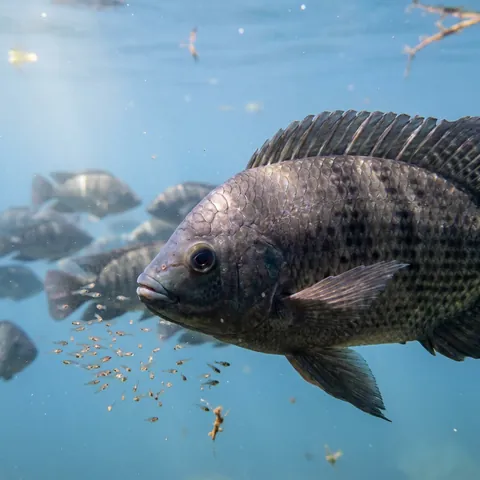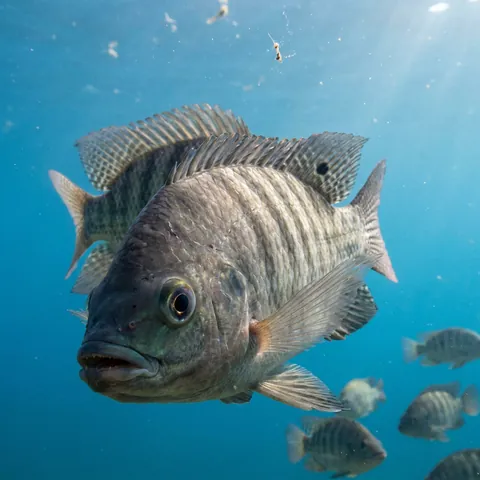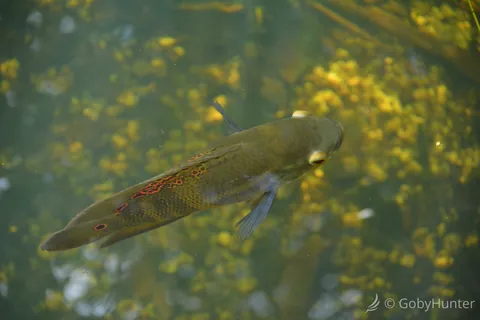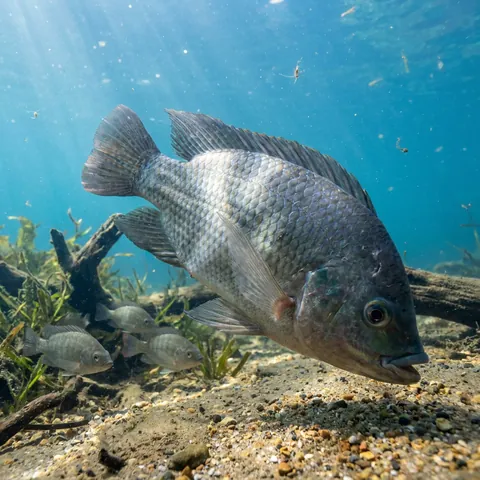
Blue Tilapia
Oreochromis aureus
Cichla ocellaris
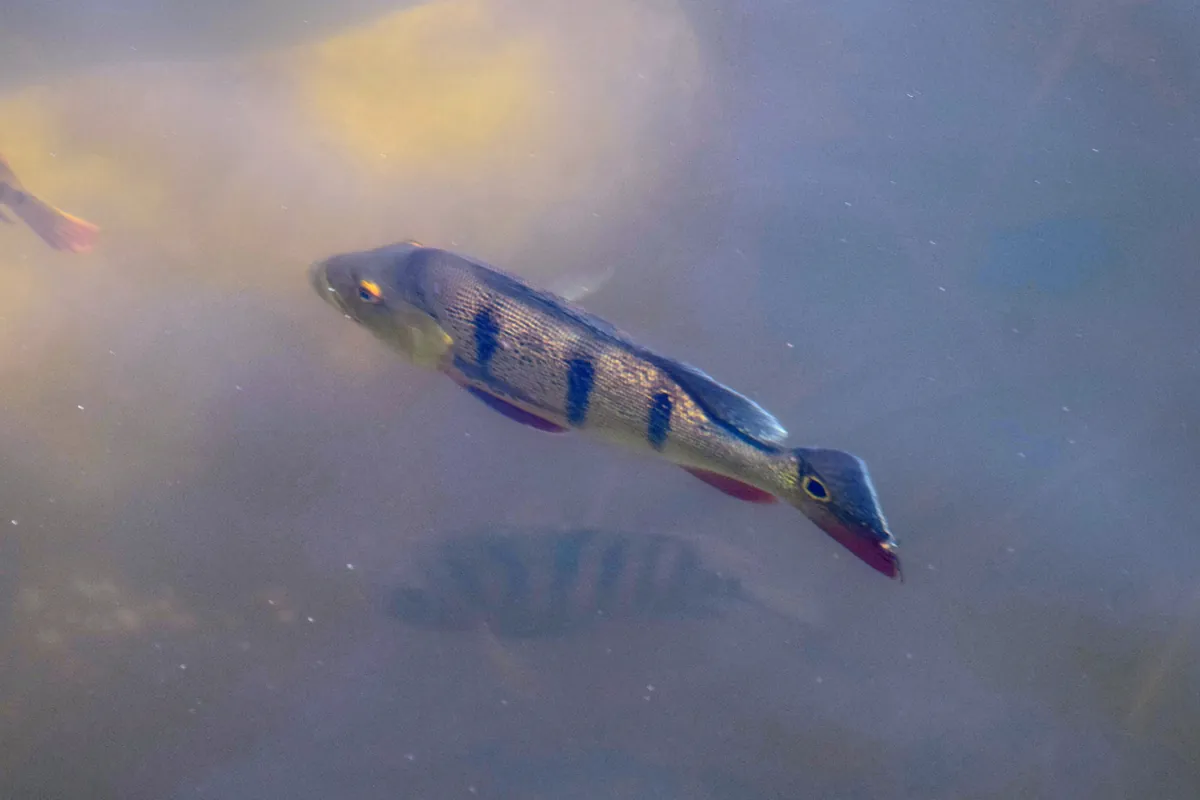
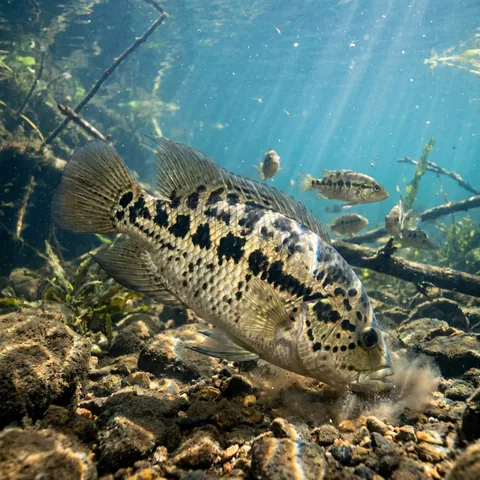
The peacock cichlid is a bold freshwater hunter named for the eye-like spot on its tail. It can grow to 74 cm and weigh up to 6.8 kg, making it one of the larger fish you will meet in tropical rivers and lakes.
Also known as: cichla ocellaris, butterfly peacock bass, peacock bass, tucunare
It can be confused with the largemouth bass, which has a similar body shape. Look for the black, yellow-ringed spot on the tail fin — bass do not have this marking.
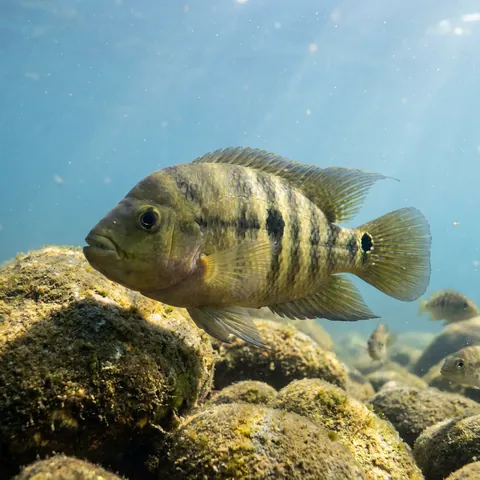
Body and fin colour is variable, ranging through yellow, green, and light red to orange. Three vertical black bars run down the sides of the body, though these can fade and disappear on older fish. The clearest mark is a black spot ringed in yellow on the tail fin, which gives the species its common name.
This fish lives in warm, slow-moving fresh water such as lakes, ponds, canals, and rock pits, often in the rapids or in calm water over rocky bottom. It favours shaded spots under trees, bridges, and culverts, usually from about 5 m down, in water between 24 and 27 C.
The peacock cichlid feeds only on other fish, hunting mainly during the day when it can see its prey. It relies on speed and a large mouth to catch smaller fish such as shad, mosquitofish, tilapia, and bluegill.
Spawning happens between April and September, with a peak in May and June. Both parents prepare a flat, hardened surface near the shore for the eggs and guard them together once they are laid.
potential pest
This species was deliberately introduced to the canals and lakes of Miami-Dade County, Florida, in 1984 to help control booming populations of invasive tilapia and oscars.
Describe what you saw and we name it, then keep every species you find in your Oceandex.