Blue Tilapia
Oreochromis aureus
Oreochromis niloticus
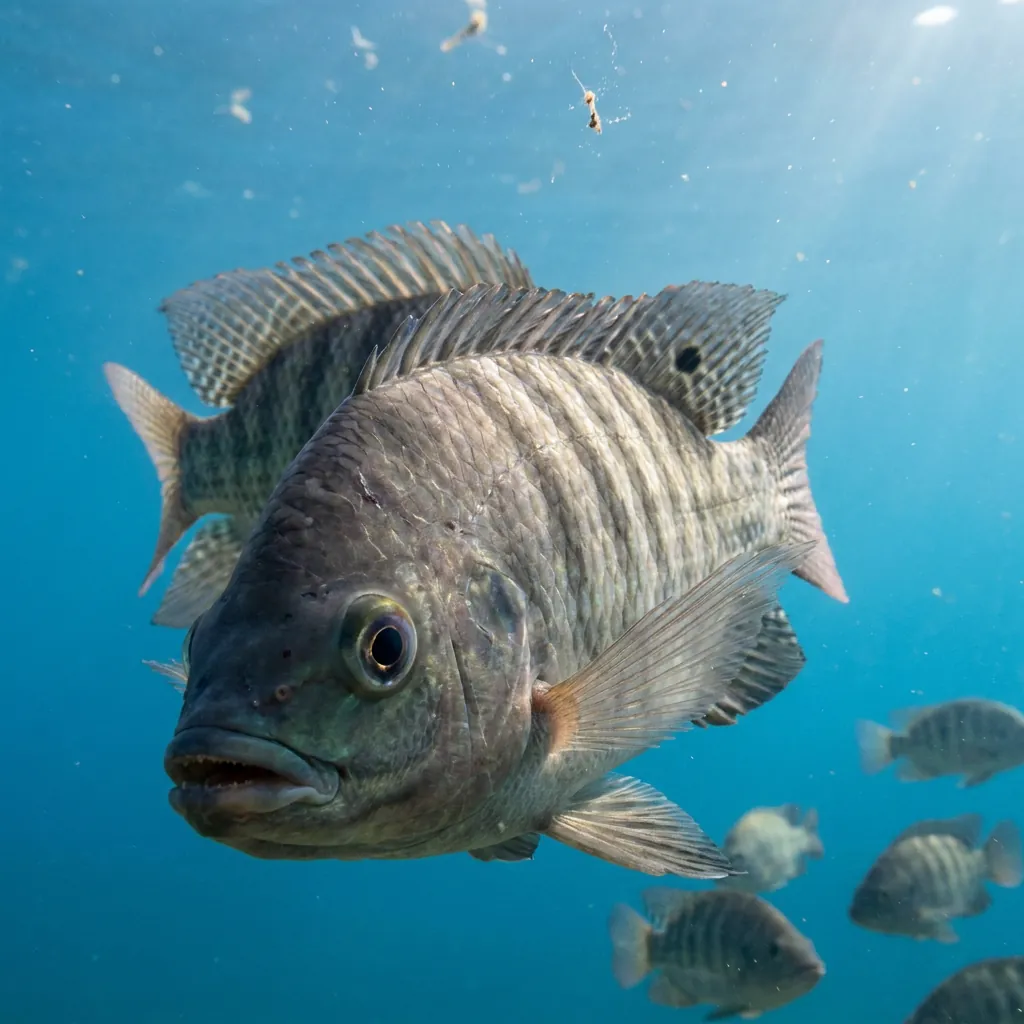
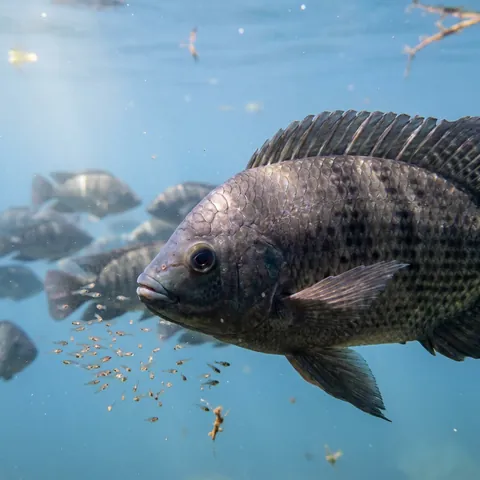
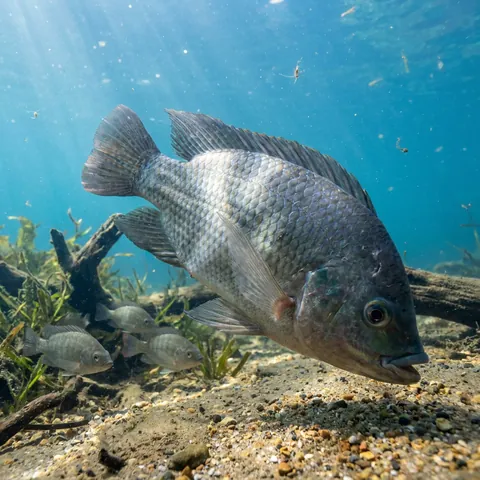
The Nile Tilapia is a freshwater cichlid native to the Nile system and other African waters, prized worldwide as a farmed food fish. That popularity has carried it far beyond its native range, and it now turns up as an invasive species on several continents.
Also known as: mango fish
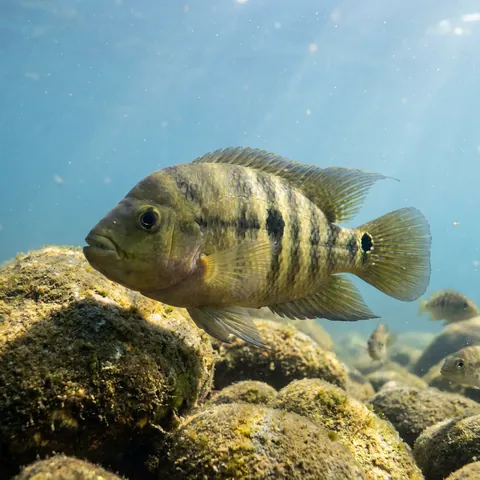
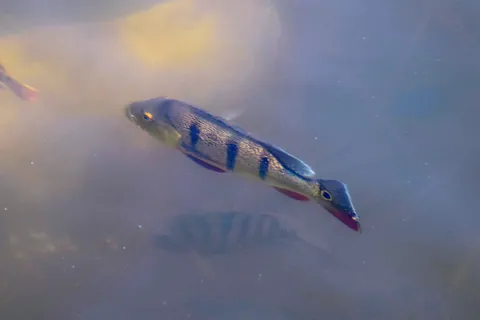
Nile Tilapia is often confused with the blue tilapia. The tail is the mark to check: Nile Tilapia has vertical stripes running across it, while the blue tilapia's tail is plain.
Wild Nile Tilapia are brownish or grayish, often with faint banding along the body and vertical stripes on the tail. Breeding males turn reddish, especially on the fins. Farmed and introduced populations are often selectively bred or hybrid forms, so they may not match this natural coloring.
It lives in most kinds of fresh water, including rivers, streams, canals, lakes, and ponds, from sea level up into highland waters. It also tolerates brackish water for a time, though it cannot survive long-term in full seawater. Nile Tilapia is native to large parts of Africa, including the Nile system and West Africa, and to the Levant, but has been introduced widely elsewhere and often outcompetes native fish.
Nile Tilapia travel in schools and form clear social hierarchies among males. Dominant males build circular nests by digging with their mouths, then defend them and get first access to food and mates. Rival males first size each other up with displays and tail beats before resorting to fighting.
It is mostly a plant eater, grazing on phytoplankton and algae, though young fish also take detritus and insect larvae, including mosquito larvae. It typically feeds during the day.
Spawning happens in the nest a male has built, where many females may lay eggs. The mother then carries the fertilised eggs and young in her mouth for about twelve days to protect them. Nile Tilapia reach breeding age within just a few months of birth, one reason populations can grow and become stunted so quickly.
Because it eats mosquito larvae, the Nile Tilapia has been used as a tool to help fight malaria in parts of Africa.
Describe what you saw and we name it, then keep every species you find in your Oceandex.