Blue Tilapia
Oreochromis aureus
Oreochromis mossambicus
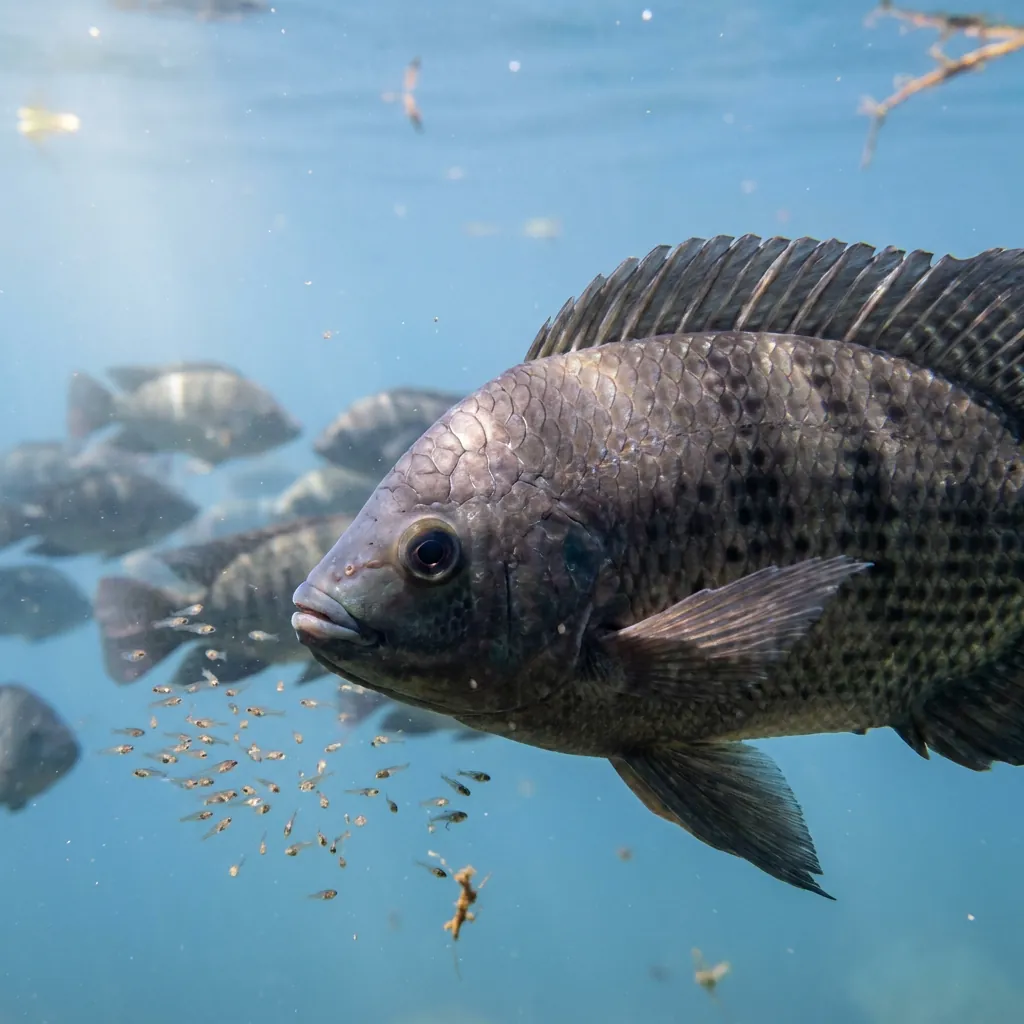
The Mozambique Tilapia is a tough, adaptable cichlid (a type of freshwater fish) from Africa. It has a strange split story: it is under pressure in its home rivers, but has become one of the most successful invasive fish anywhere else in the world.
Also known as: common tilapia, mouth-brooder, mozambique cichlid, tilapia, mozambique mouthbrooder, mozambique bream, blue bream, african mouthbrooder, african perch, hawaiian perch, hawaiian sunfish, java fish, java tilapia, kurper bream, largemouth kurper, largemouth tilapia, mossambique tilapia, mozambique mouth-brooder, redfin tilapia
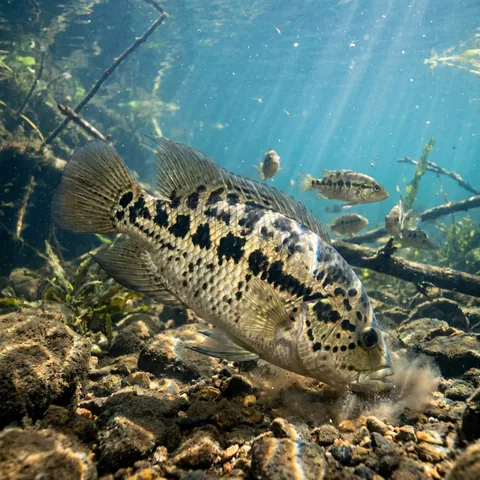
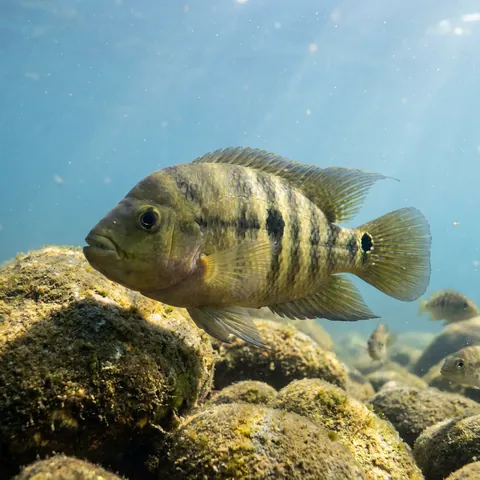
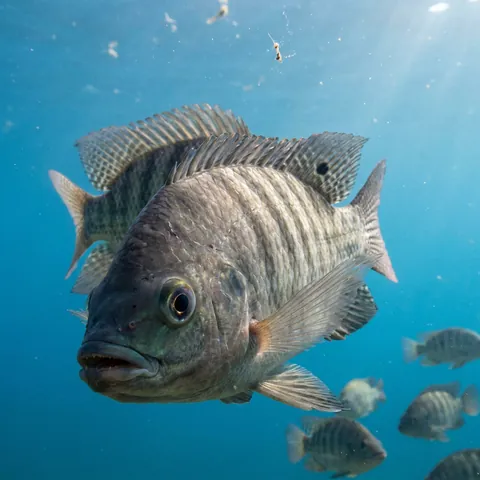
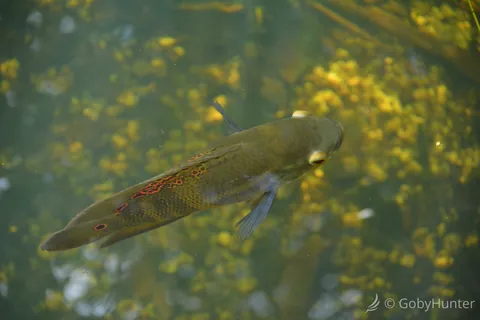
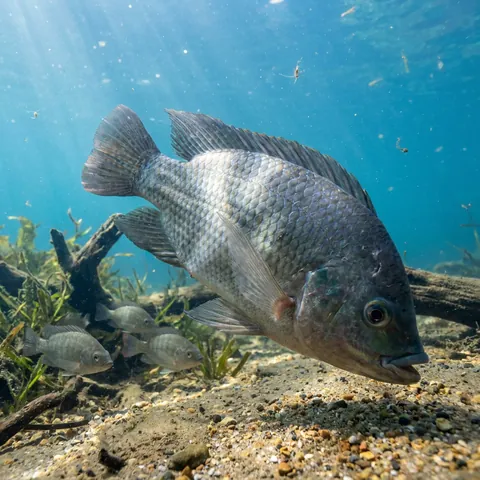
This is a deep fish, flattened from side to side, with long fins on its back (dorsal fins), the front part lined with spines. In the wild, its colour is dull green or yellow, sometimes with faint bands along the body.
It is native to inland and coastal waters of southeast Africa, from the Zambezi basin south to the Bushman River in South Africa's Eastern Cape. It lives in rivers, streams, canals, ponds, lakes, swamps, and estuaries (where rivers meet the sea). It avoids fast-flowing water, high mountain streams, and the open sea. In its home range it is losing ground to the introduced Nile Tilapia, which competes with it and often breeds with it. Outside Africa, escaped or introduced groups have spread far and wide. They are now seen as some of the world's most harmful invasive fish.
Males compete for territory and rank using sight, sound, and physical signals that can turn into fights. During the breeding season, top males gather together in shallow water, forming a display ground that females visit to pick a mate. A male's rank in the group is closely tied to how much of a scent signal, carried in his urine, he gives off.
This is an omnivore (an animal that eats both plants and animals). It eats almost anything it can find, from detritus (bits of dead plant and animal matter), algae, and plants to small invertebrates (animals without a backbone) and fish fry. It breeds and feeds so well that it often becomes the top fish in a habitat. When food runs low and crowding grows, adults will sometimes eat their own young.
A male digs a nest, and a female lays her eggs in it. He then fertilizes them. She carries the fertilized eggs and young in her mouth until they hatch. This is called mouthbrooding. The most dominant males mate most often. They build bigger nests and use sound to attract females.
This is one of the few fish species ever sent to space: Mozambique tilapia flew aboard Russia's Bion-M No. 1 spacecraft in 2013, though all of them died when equipment failed.
Describe what you saw and we name it, then keep every species you find in your Oceandex.