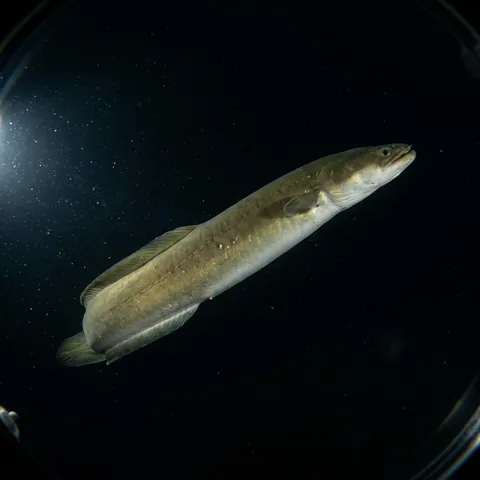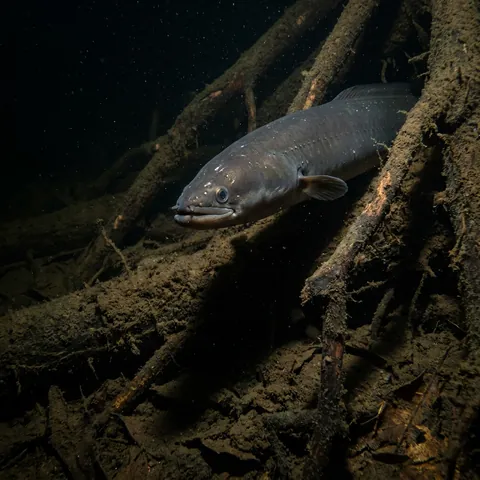
American Eel
Anguilla rostrata
Anguilla marmorata
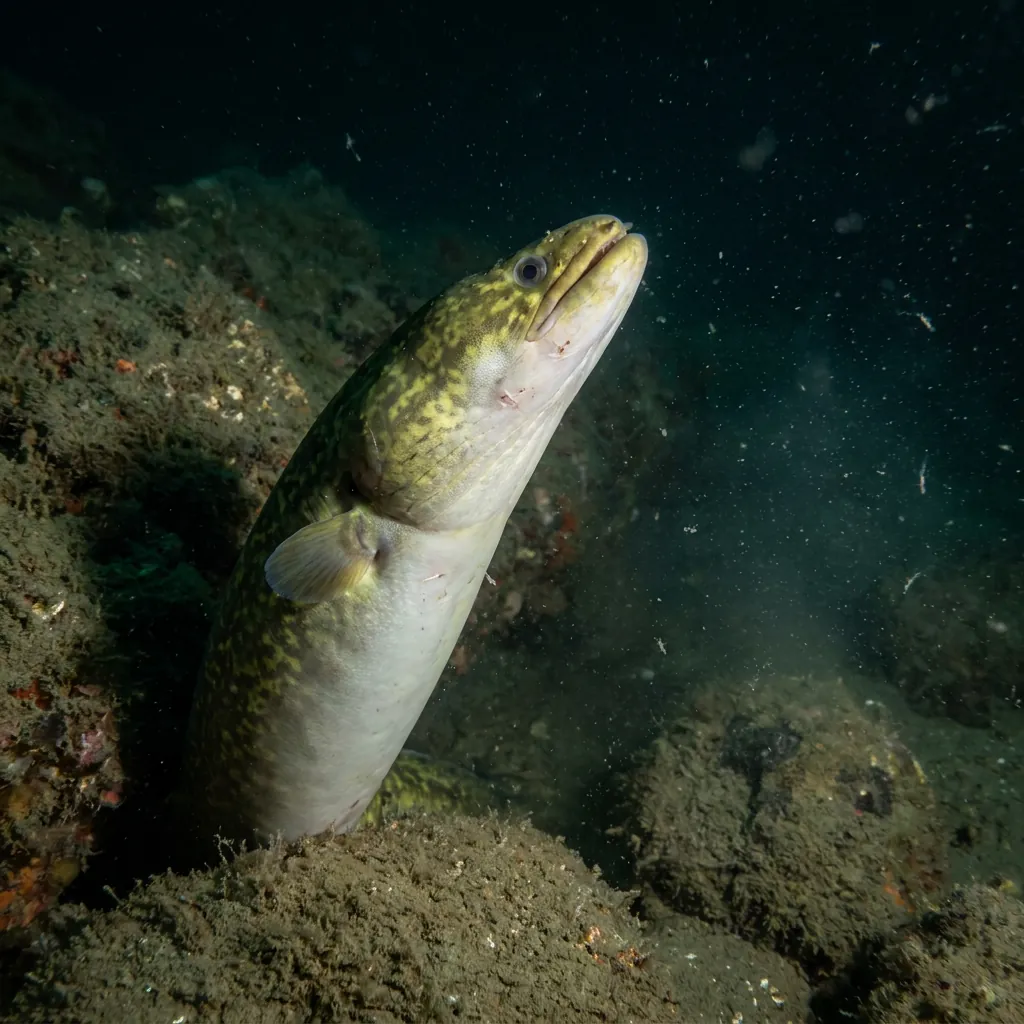
The marbled eel spends most of its life far from the sea, hiding in rivers and lakes, before making one last journey back to the ocean to breed and die.
Also known as: giant mottled eel, madagascar eel
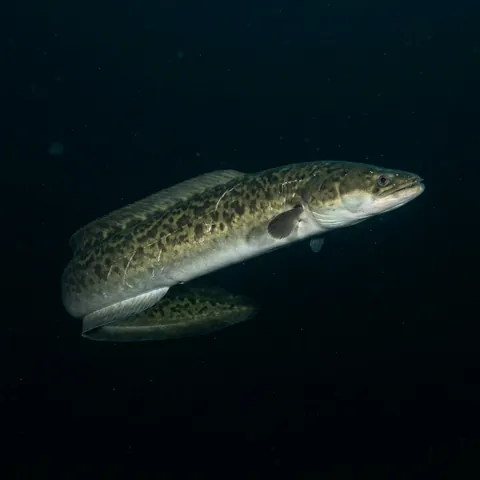
Several eel species share this same long, jawed body shape, so colour is the giveaway. Most other freshwater eels are a fairly even colour, but the marbled eel has an obvious mottled pattern of greenish-brown to black blotches over a yellow body. That marbling is the one thing to check.
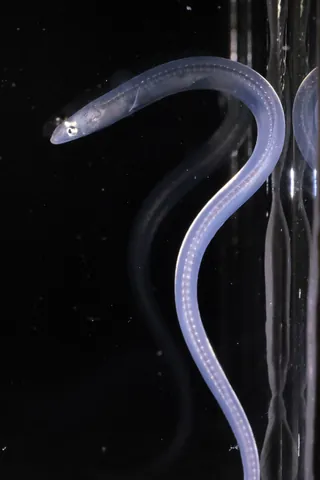
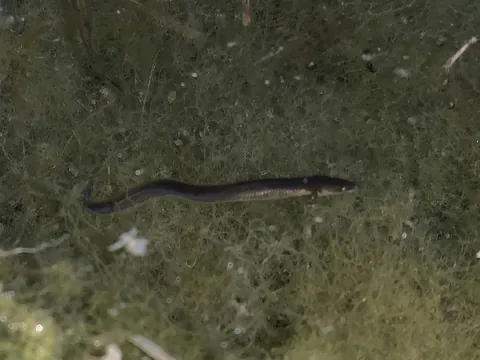
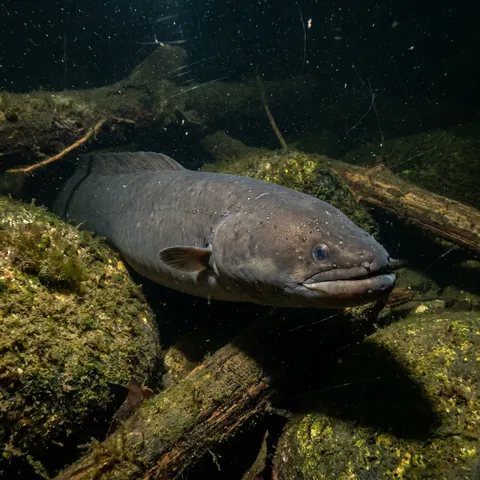
This eel has the classic long, cylindrical eel shape, with small, well-developed pectoral fins just behind the head and no pelvic fins at all. Its lower jaw juts out slightly past the upper one, and both lips are thick and fleshy. The dorsal and anal fins run along most of the body and join up around the tail, so the whole animal looks like it has one continuous fin from mid-back to mid-belly. Its skin has tiny, oval scales embedded in it rather than sitting on top, giving it a smooth, almost scaleless look. The colour is what sets it apart: adults are yellow with a greenish-brown to black marbled pattern over the back, and a plain white belly. Young eels, called elvers, are grey to yellow with much fainter marbling.
The marbled eel lives on the bottom of rivers, lakes and tributaries across the tropical Indo-Pacific, from East Africa to French Polynesia. It is catadromous, meaning it lives in fresh or brackish water as an adult but swims far out into the open ocean to spawn over deep water. After hatching, the young drift with ocean currents for months before entering estuaries and swimming upstream into freshwater.
It is the largest species of freshwater eel in its genus.
Describe what you saw and we name it, then keep every species you find in your Oceandex.