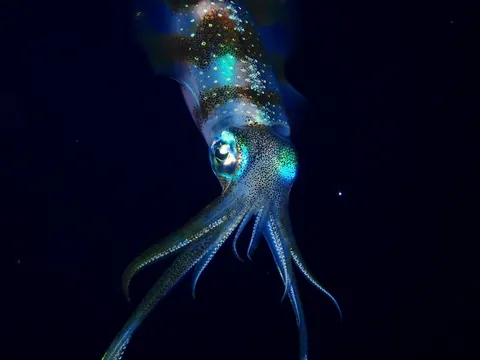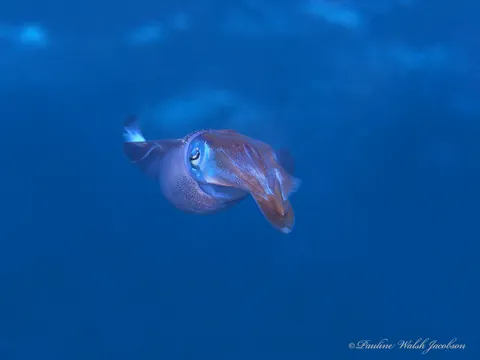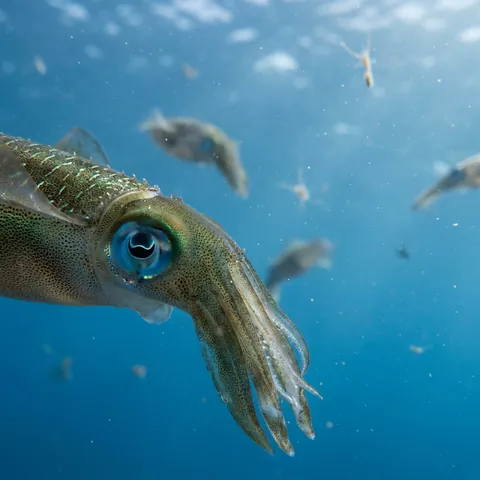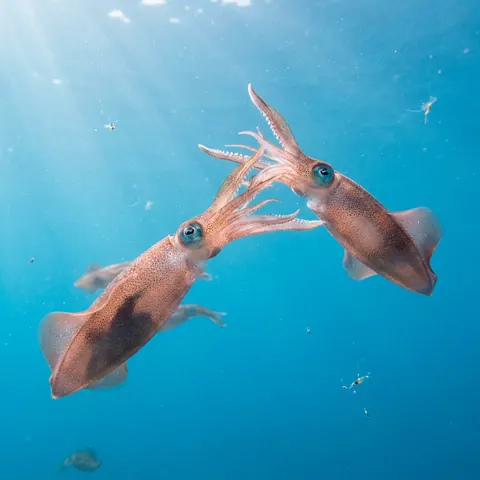
Atlantic brief squid
Lolliguncula brevis
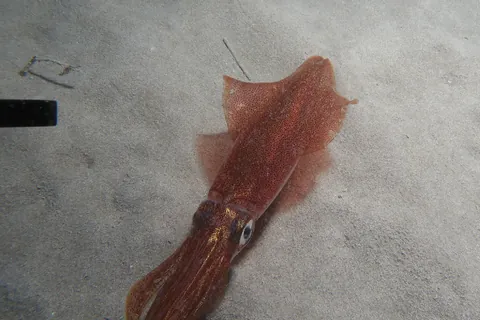
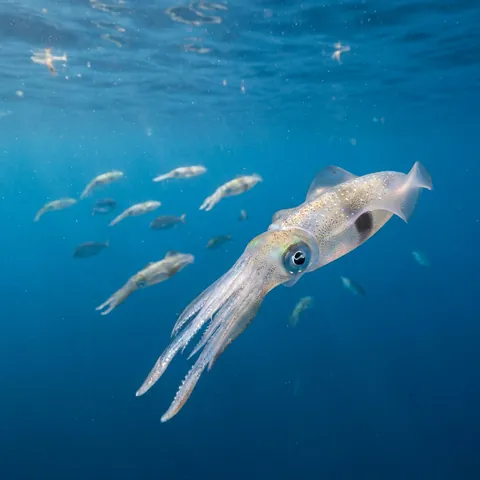
Doryteuthis pealeii
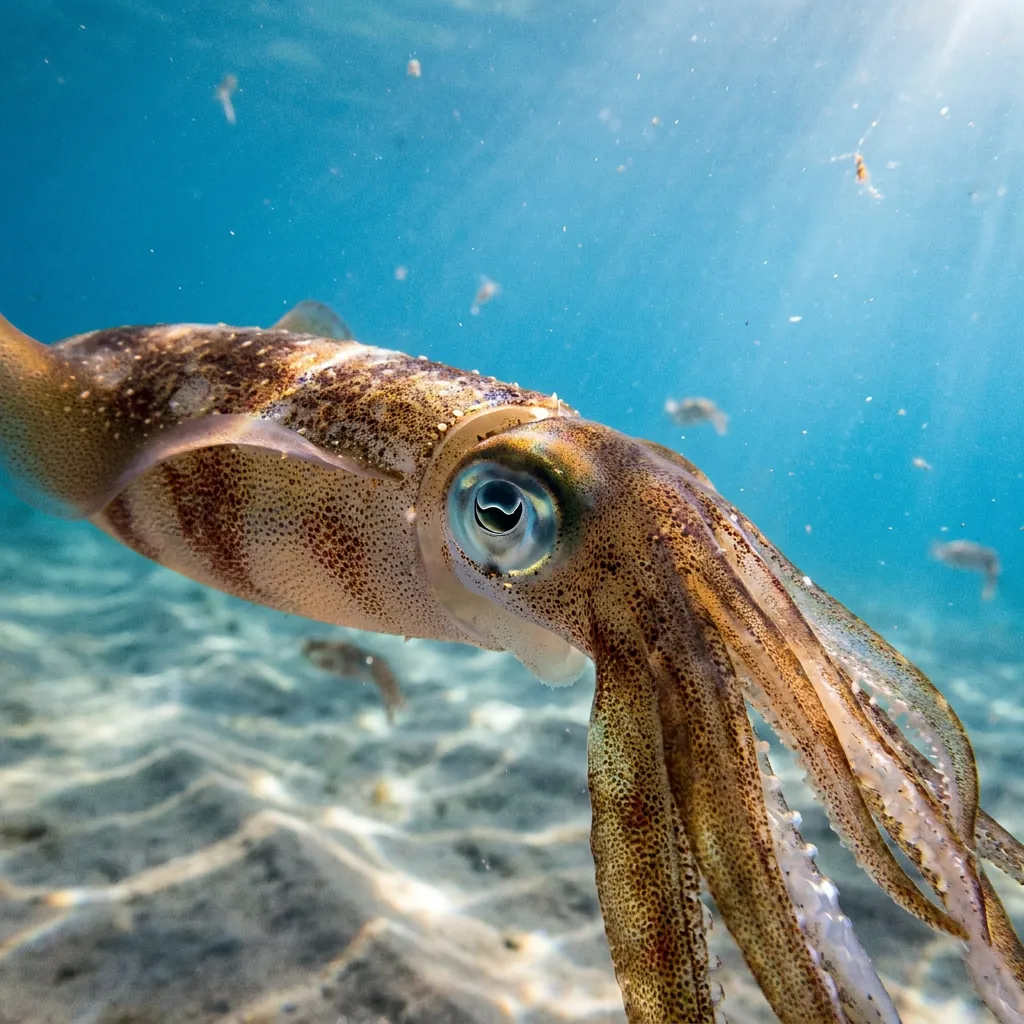
The longfin inshore squid moves through coastal water in schools, flashing between red and pink as it goes. It lives less than a year but plays an outsized role in science thanks to its unusually large nerve fibres.
Also known as: common squid, long-finned inshore squid, summer squid, woods hole squid, atlantic long-finned squid, atlantic long-fin squid, bone squid
This squid often shows a reddish hue but can shift its skin colour, from deep red to soft pink, using colour cells in its skin. Males tend to grow faster and larger than females.
This squid lives over the continental shelf and slope, from sandy bottoms up through the water column, down to about 400 m. It moves offshore in autumn to spend winter along the shelf edge, then returns inshore in spring and summer.
Longfin inshore squid swim using jet propulsion, pushing water out to move quickly and escape predators. Many fish, marine mammals, and diving birds hunt them, including dolphins, cod, and mackerel.
Young squid eat plankton, while larger ones switch to crabs, worms, and shrimp. Adults add fish and smaller squid to their diet, and squid over 5 cm long will even eat their own kind.
This squid's giant nerve fibre, the largest known in any animal, let scientists Hodgkin and Huxley work out how nerve signals travel, work that later won a Nobel Prize.
Describe what you saw and we name it, then keep every species you find in your Oceandex.