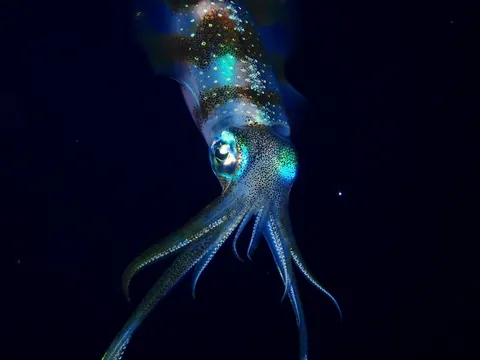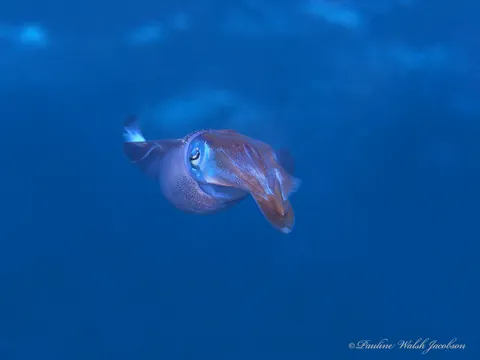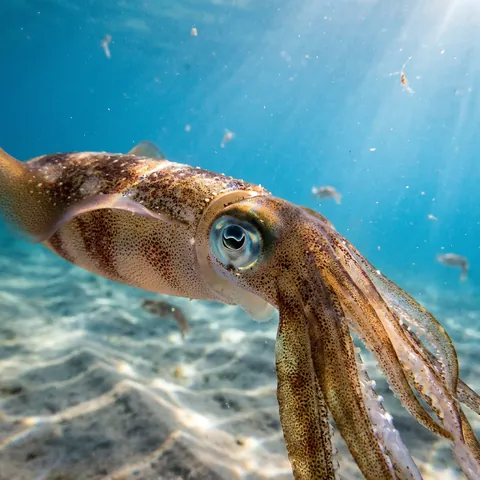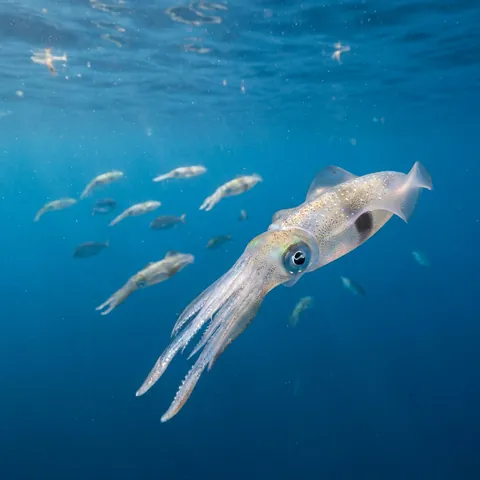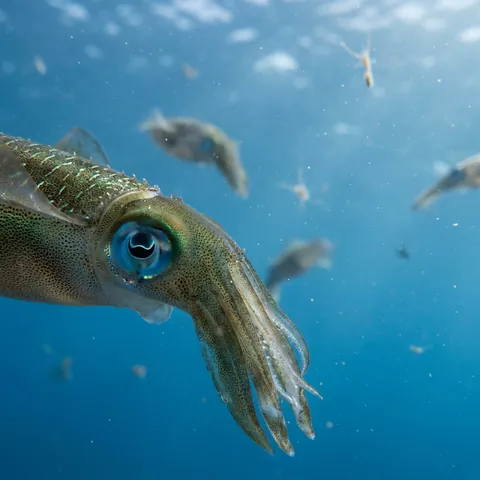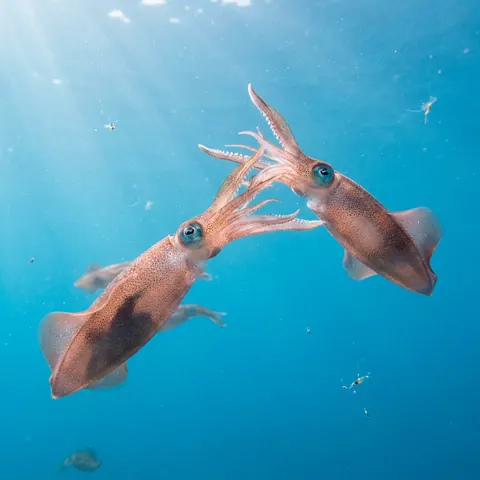
Atlantic brief squid
Lolliguncula brevis
Loligo vulgaris
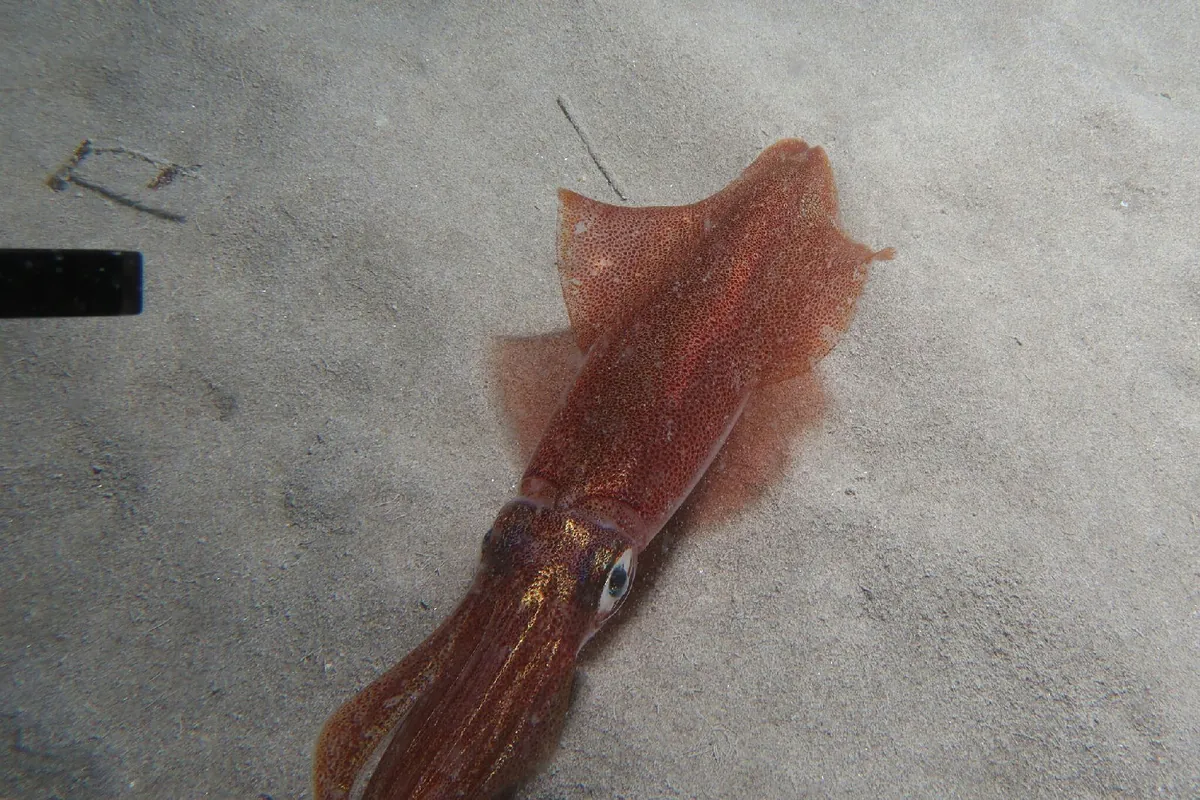
The European squid is a fast-moving, jet-propelled hunter of coastal waters, ranging from the North Sea down to West Africa. It can weigh up to about 1.5 kg.
It is easily confused with other slender, open-water squid, including the closely related Cape Hope squid. Look for fins running along roughly two-thirds of the body's length, longer than on many similar squid.
It has a long, slender, cylindrical body with a small head and large eyes covered by a clear membrane. Diamond-shaped fins run along about two-thirds of the body's length. Ten arms surround its mouth: eight short ones and two much longer tentacles used to grab prey. Its colour shifts between greyish-transparent and reddish as it changes the skin cells that control its colour.
It lives over sandy to muddy bottoms in coastal waters, from close to the surface down to 500 m, though it is most common between 20 and 250 m. It moves between deeper and shallower water through the year, following the seasons.
This squid migrates with the seasons, moving into deeper offshore water for winter and heading toward the coast to spawn in spring and summer. Its diet shifts as it grows: young squid eat tiny drifting animals like copepods, while adults hunt mainly fish, along with some other squid and crustaceans.
Squid from the northeast Atlantic spend winter in deep water off Portugal, then swim north along the coast of France and on into the North Sea to spawn by early summer.
Describe what you saw and we name it, then keep every species you find in your Oceandex.