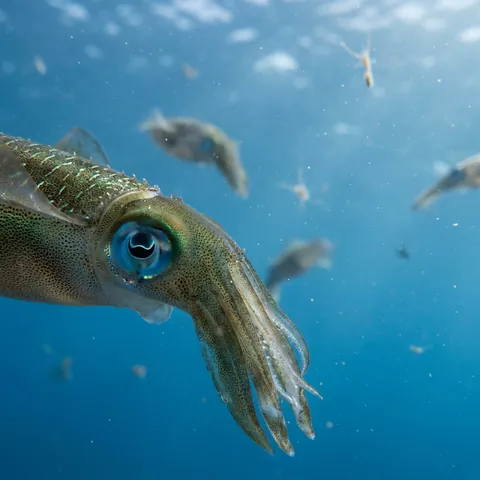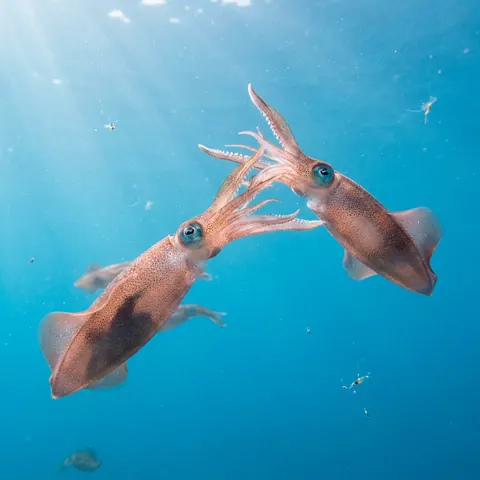
Atlantic brief squid
Lolliguncula brevis
Sepioteuthis sepioidea
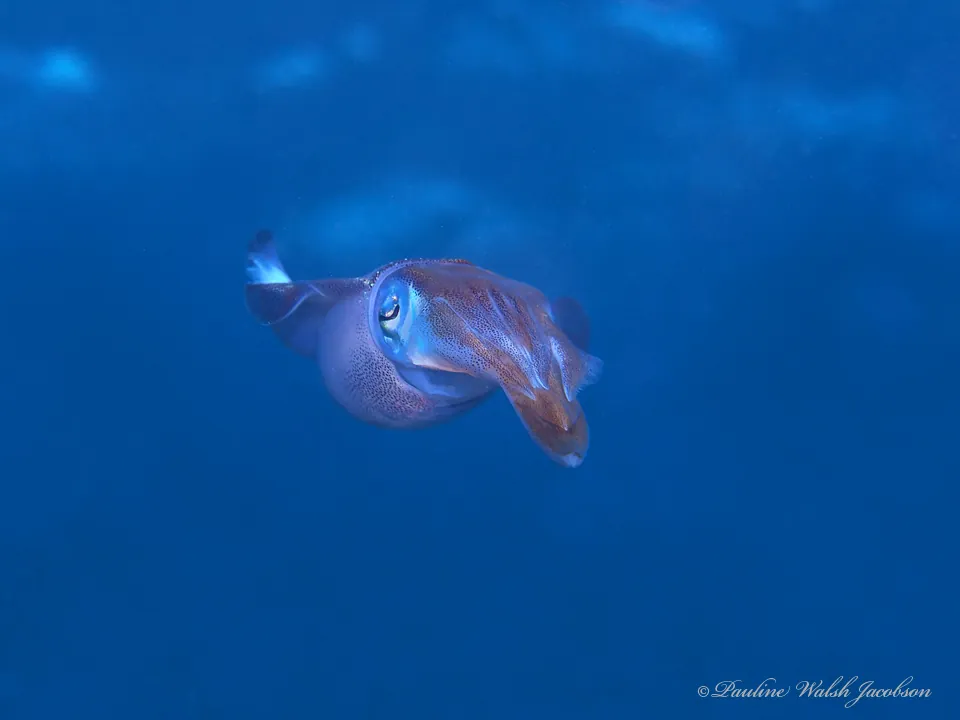
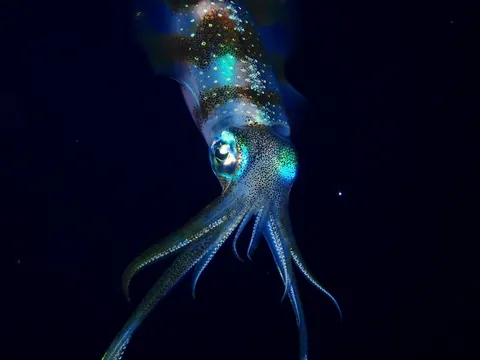
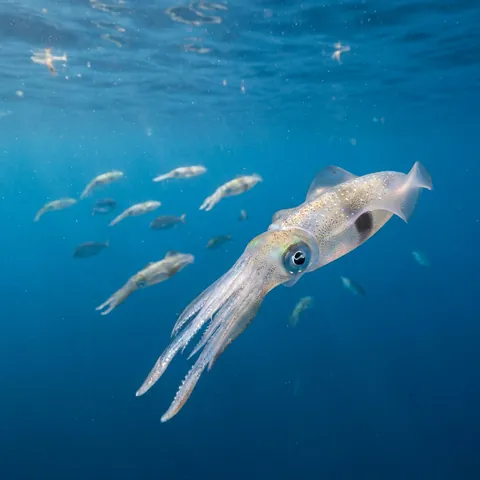
The Caribbean reef squid moves through the water in tight, coordinated schools, its skin flickering with colour as it goes. It is a small species, reaching about 20 cm long, but it packs remarkable communication skills into that small body.
Also known as: atlantic oval squid
In Florida, the Bahamas, and the Caribbean, this is the only squid divers commonly encounter over shallow inshore reefs, so a squid seen here is almost certainly this species.
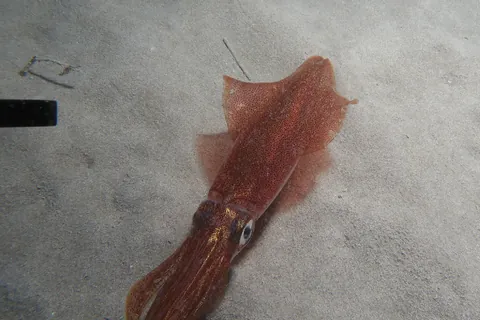
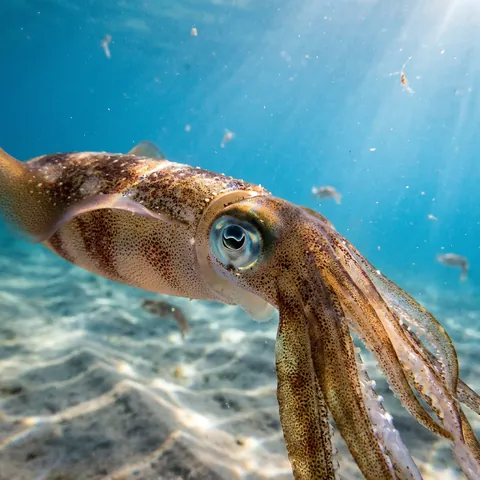
This is a small, torpedo-shaped squid with undulating fins that run almost the full length of its body. Its eyes have a distinctive W-shaped, asymmetric pupil. Its skin can shift rapidly through different colours, patterns, and textures.
It lives throughout the Caribbean Sea and off Florida, usually in small schools of four to thirty animals over shallow reefs. It is typically found between about 3 and 7 metres deep, though it can range down to 20 metres. Young squid shelter in turtle grass meadows near islands, while adults move out over open reef to mate.
This squid is a voracious eater, taking in 30 to 60 percent of its own body weight in a day, mainly small fish, molluscs, and crustaceans. It grabs prey with the club-shaped tips of two long tentacles, pulls it in with its shorter arms, and cuts it apart with a strong beak. Its skin holds colour-changing cells it can control instantly, letting it camouflage, look larger to scare off a threat, or signal to other squid nearby.
A Caribbean reef squid can flash one colour pattern to a squid on its right while showing a completely different message to one on its left, holding two conversations across its own body at once.
Describe what you saw and we name it, then keep every species you find in your Oceandex.