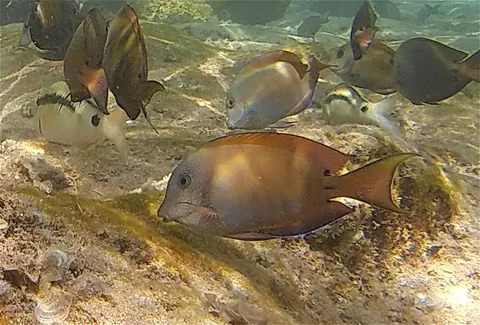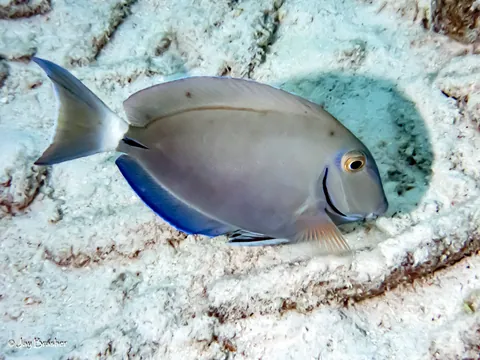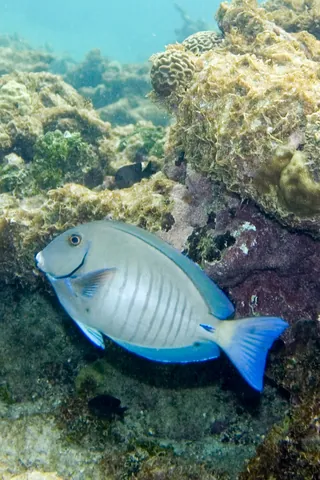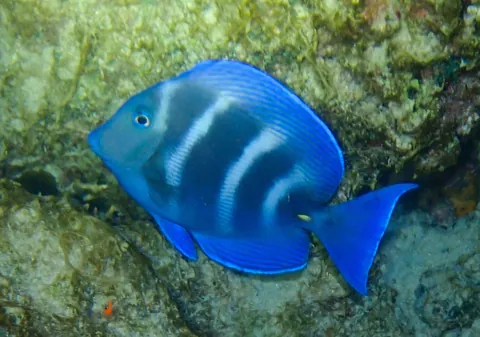
Atlantic Blue Tang
Acanthurus coeruleus
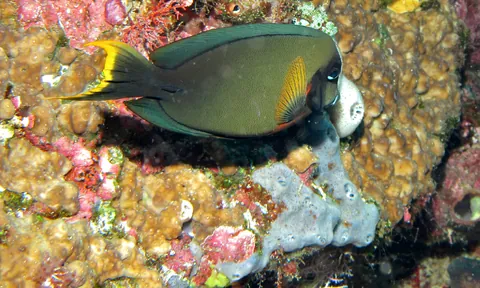
Acanthurus tennentii
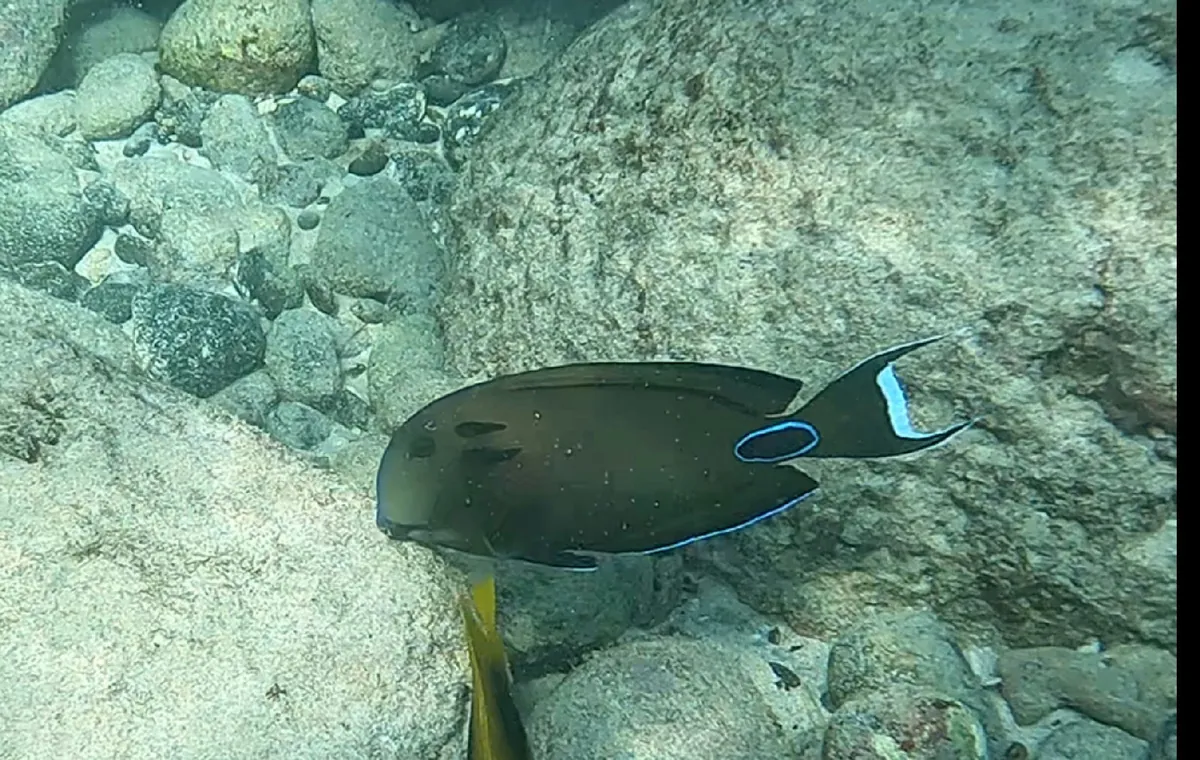
The lieutenant surgeonfish is a deep-bodied reef fish that can shift its colour with mood, turning a darker brown with red or purple hints when stressed. It grows up to 31 cm long.
Also known as: doubleband surgeonfish, leutenant surgeonfish, lieutenant surgeon
It can be confused with other tangs and surgeonfish. Look just behind the eye: this species carries two dark streaks there, a mark most similar reef fish lack.
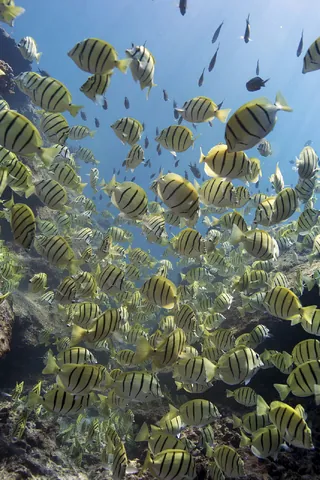
Its body is deep and flattened side to side, more than half as deep as it is long. Colour varies from orange-beige to olive-tan or steely grey. A dark line runs along the base of the dorsal fin and another along the base of the anal fin, both of which stretch back to the tail base. Two dark streaks sit just behind the eye. A sharp, blade-like spine on the tail base sits inside a large black spot with a bluish-white border, and the crescent-shaped tail fin carries a bluish-white rim.
It lives on rocky and coral reefs, on reef slopes and in the channels between reefs, across the tropical and subtropical Indo-Pacific from East Africa to Southeast Asia. It is usually found between 3 and 25 m deep, though it can range from 1 to 40 m.
Breeding season runs from July to August, with the fish preparing for it from around April. Females release eggs near the reef surface while males follow and release sperm to fertilize them. The larvae then drift in open water for about seven weeks before settling back onto the reef.
It is listed as Least Concern and remains common through much of its range. It is caught for food and collected for the aquarium trade, and can suffer where its reef habitat is damaged, though it also occurs in several marine protected areas.
Young fish start out black or yellow with a horseshoe-shaped black ring around the eye, a marking that breaks into two curved bands as the fish grows toward adulthood.
Describe what you saw and we name it, then keep every species you find in your Oceandex.