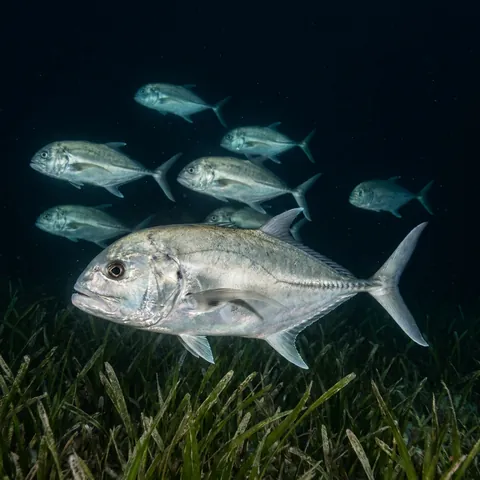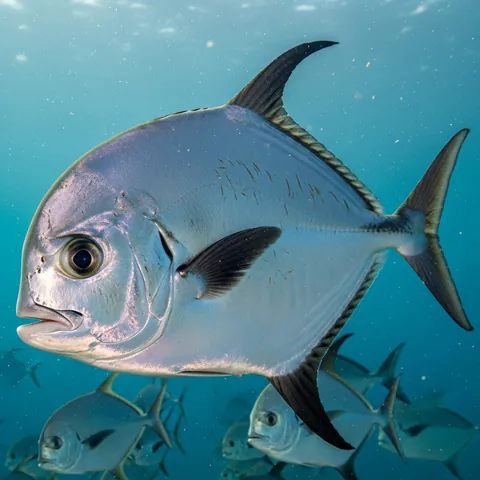
Alexandria pompano
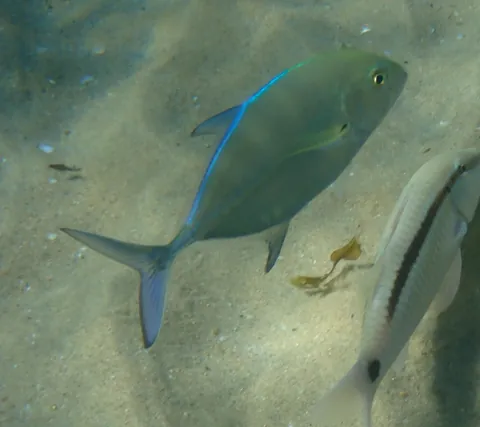
Alectis alexandrina
Pseudocaranx dentex
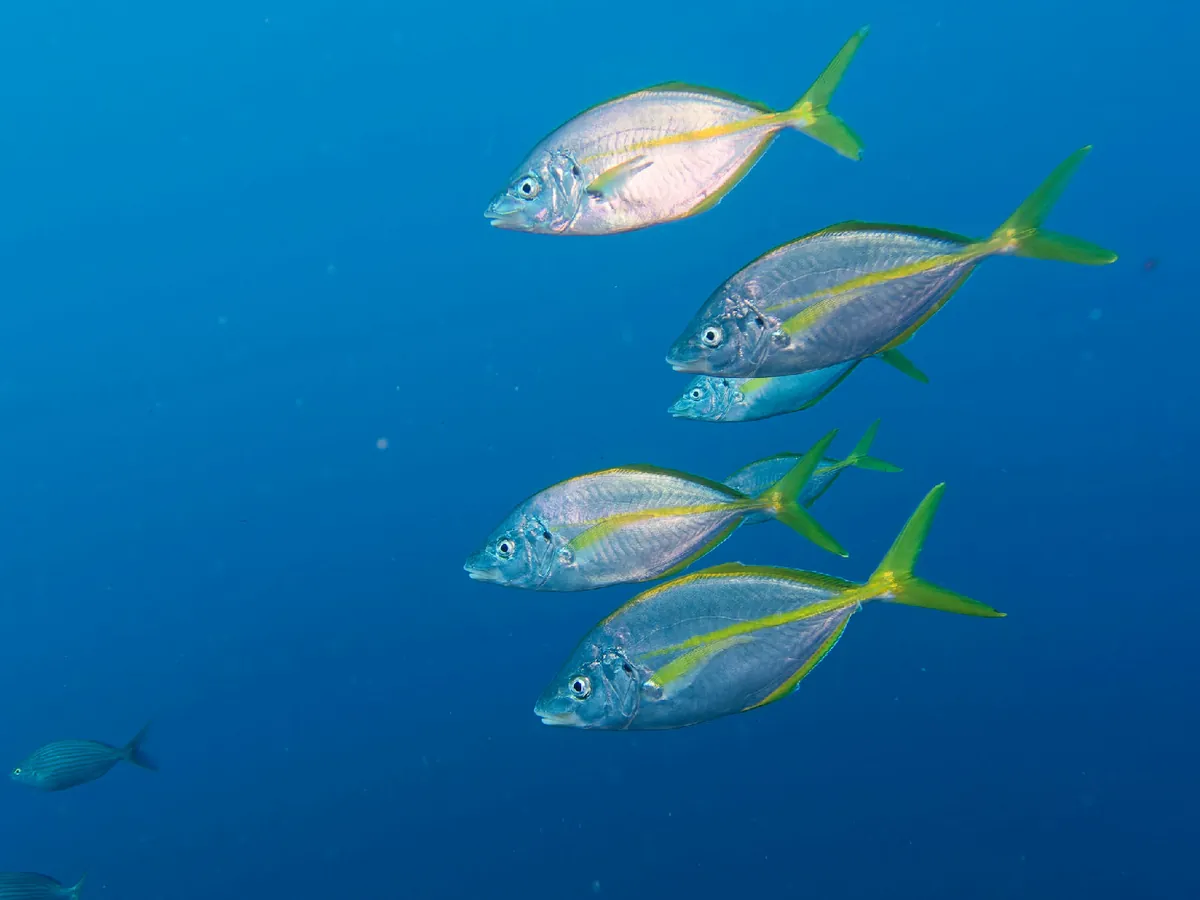
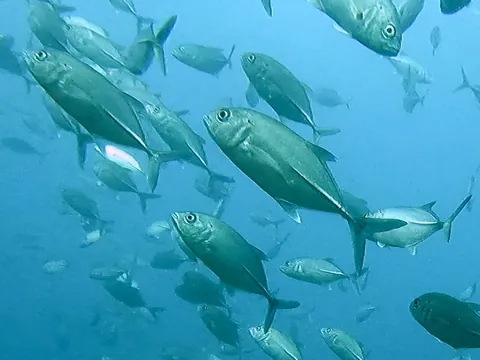
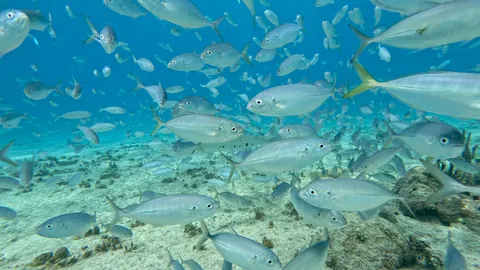
The jack is a strong-swimming, deep-bodied fish often seen moving in schools over reefs and rough ground. It grows up to 122 cm and can weigh over 18 kg, though most are closer to 40 cm.
Also known as: blue trevally, blurter, bruised-face trevally, cavalley, crevalley, jack, jackfish, longsnout trevally, skippy, skipjack trevally, silver fish, guelly jack, longsnout trevally, thicklipped jack, silver travally, bruised-face trevally, blue trevally, white kingfish, ranger, white trevally, toothed trevally, silver trevally, trevally, toothed crevally, silver bream, pig ulua, silver trevally, white trevally, ophie, silver bream, skipjack trevally, kingfish, guelly jack, striped jack
Many silvery jacks and trevallies school together over reefs. Look for the large, smudgy dark spot on the gill cover paired with a yellow stripe down the side, a combination other similar jacks do not share.
The body is deep-set with a greenish-blue back and silvery-white belly. A yellow stripe runs along the middle of the flank, and the fins are yellow. There is a large, blurred dark spot on the gill cover.
Adults gather in schools near the seabed over continental shelf waters, often around reefs and rough bottom, from about 10 to 238 m and usually shallower, between 10 and 25 m. Young fish live in estuaries, bays, and shallow coastal water.
harmless
Anglers keep official world records for this fish, and the current all-tackle record catch was landed near Tokyo, Japan, in 1998.
Describe what you saw and we name it, then keep every species you find in your Oceandex.