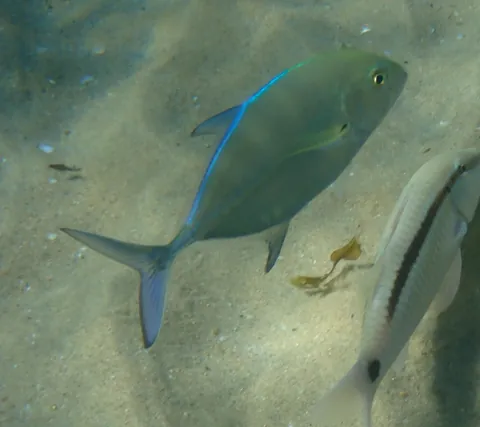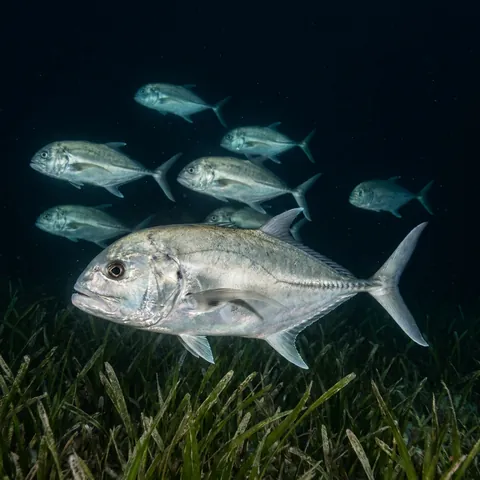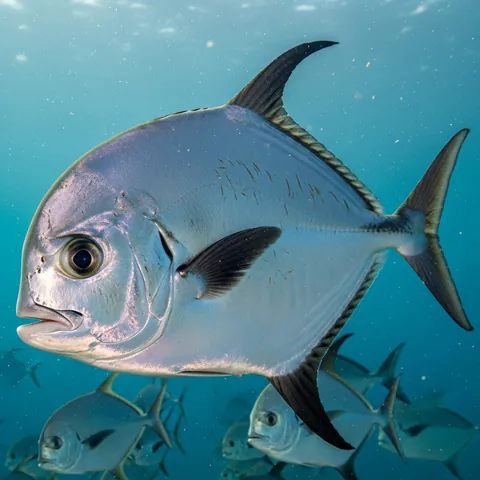
Alexandria pompano
Alectis alexandrina
Caranx latus
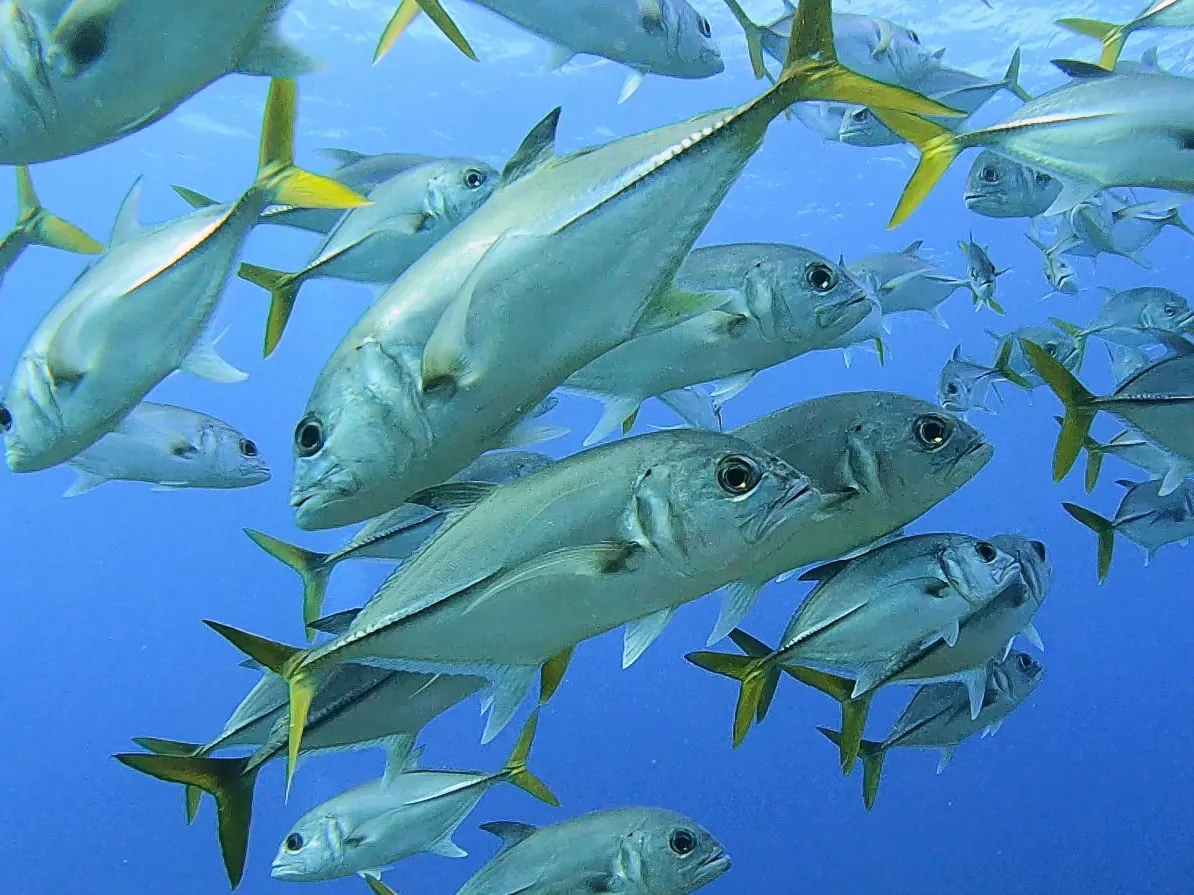
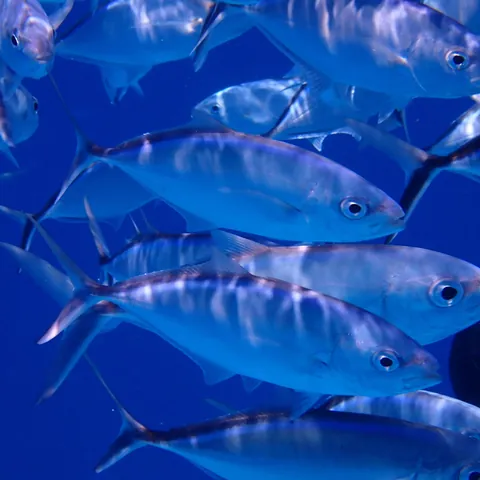
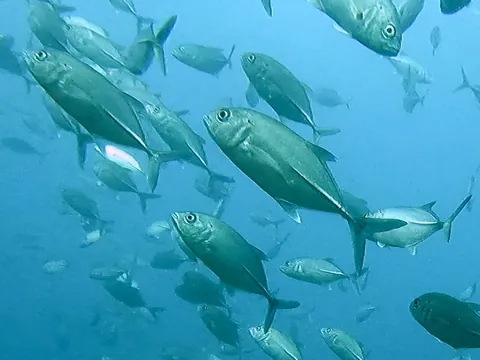
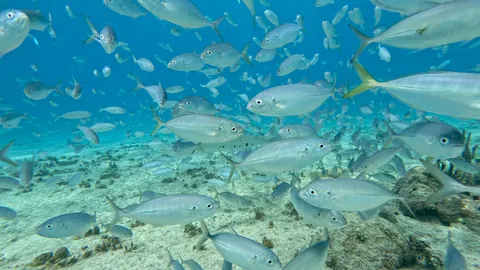
The horse-eye jack is a fast, silvery predator that often patrols reefs in tight schools. It grows to a common length of 60 cm, with the largest recorded at 101 cm and 13.4 kg, and gets its name from its unusually large eyes.
Also known as: gallego, horse eye jack, black jack, yellowjack, false jack, jack, horse-eye crevalle, cabali, horse-eye trevally, horse-eye, horse eye
It closely resembles the crevalle jack, but the crevalle has a dark spot at the base of its pectoral fin while the horse-eye jack does not.
This jack has a deep, elongate body, moderately flattened from side to side, with a steeply curved forehead. Its eyes are large for its head and covered by a fatty eyelid. It is dark blue to silvery-blue above, fading to silvery white or gold below, with a yellow to dusky tail fin. Young fish carry about five dark bars down their sides, which fade as they grow.
It lives in open water around reefs and offshore rigs, often in large schools, sometimes mixed with crevalle jack. Young fish stay closer to shore over sandy or muddy bottoms, and can even enter river mouths and brackish water. Divers typically see it down to about 20 m, though it can range to 140 m.
Horse-eye jacks are sometimes seen swimming paired up with a single wrasse of a completely different species, rather than only schooling with their own kind.
Describe what you saw and we name it, then keep every species you find in your Oceandex.