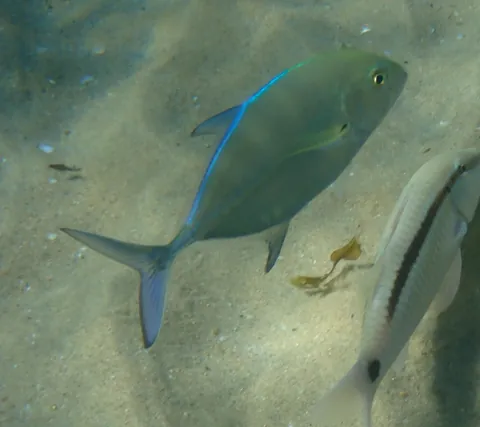
Alexandria pompano
Alectis alexandrina
Seriola dumerili
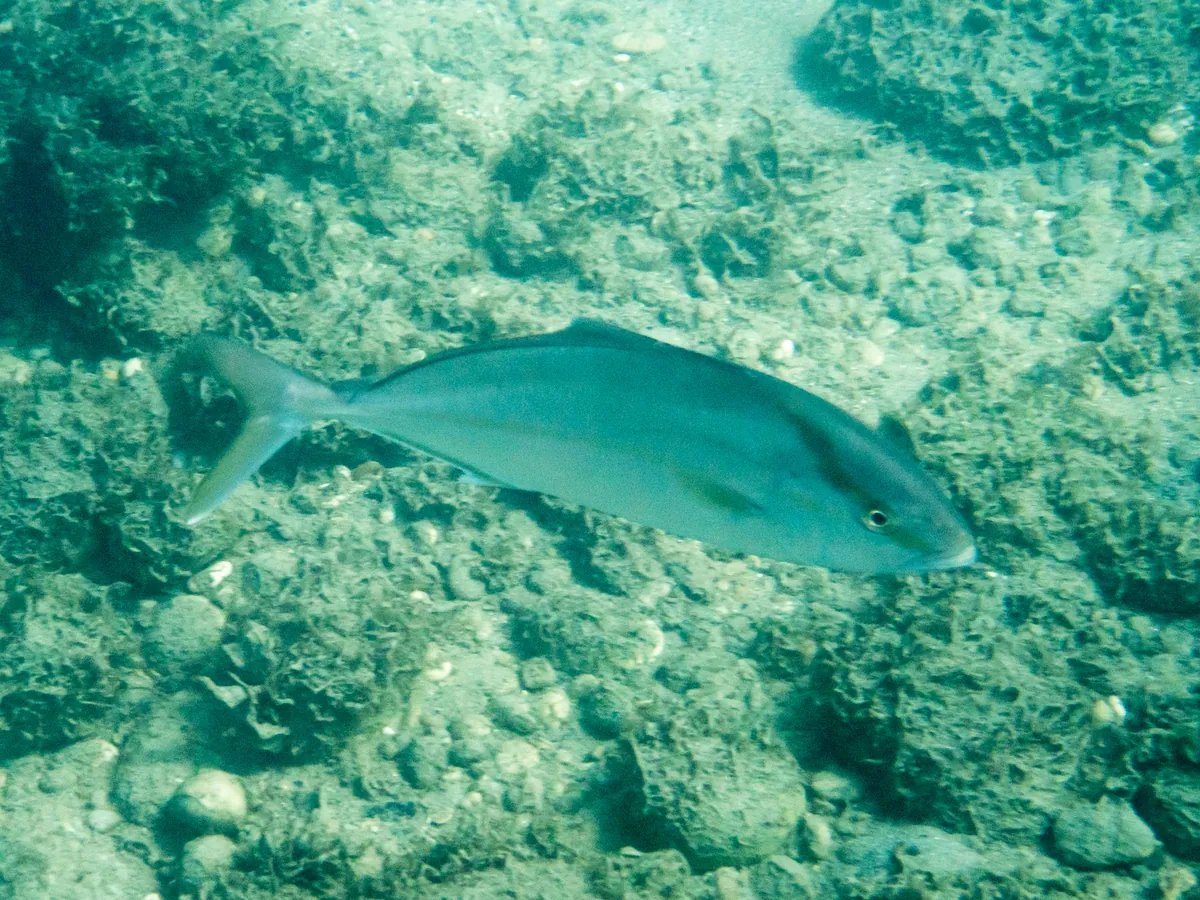
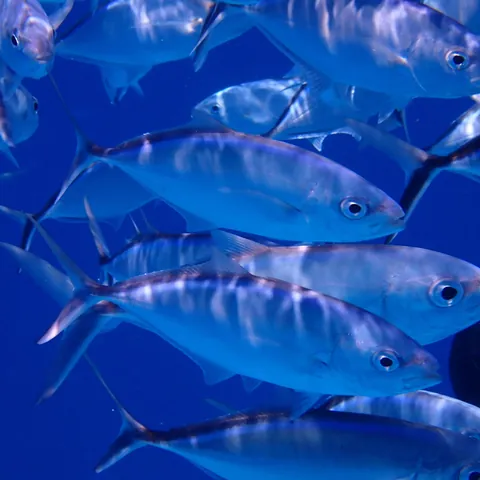
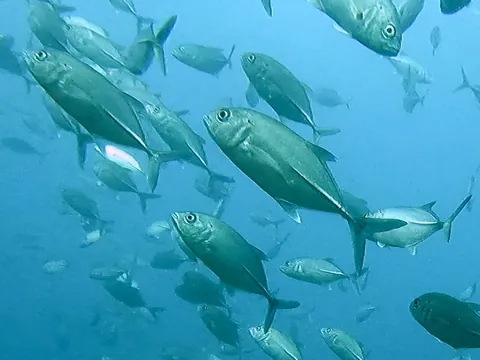
The greater amberjack is a large, fast-swimming predator found in warm seas worldwide. It can grow up to 190 cm long and weigh as much as 80.6 kg, though most are closer to 100 cm.
Also known as: amber jack, amberjack, great amberfish, great yellowtail, greater amberjack, yellow tail, greater yellowtail, greater amberjack, great amberfish, great yellowtail, rock salmon, samson fish, amber jack, jenny lind, yellow trevally, purplish amberjack, sailor's choice
This fish can look like other large jacks, including Seriola carpenteri in parts of its range. Check for the dark stripe running from the upper jaw, across the eye, to just in front of the first fin on the back. This fixed marking is a reliable check even from a distance.
Its body is long and torpedo-shaped, flattened slightly from side to side. The back is brownish to bluish-grey, while the belly is silvery-white. A dark stripe runs diagonally from the upper jaw, across the eye, and forward of the first fin on its back. Some fish also show a light amber stripe along the side, which gives the species its name. Young amberjacks look different: they have clear fins and a set of vertical bands down the body.
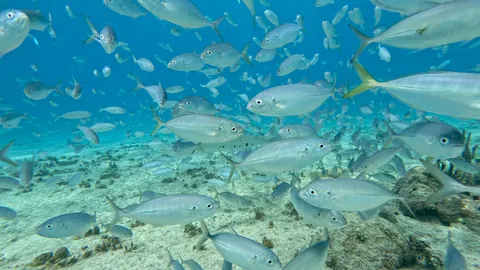
Greater amberjacks live in warm seas nearly worldwide. They are found alone or in small to medium groups, near reefs, deep offshore caves, drop-offs, and rocky outcrops, and also around shipwrecks. They sometimes swim into coastal bays, while young fish often shelter far out to sea among floating seaweed and debris. They range from close to the surface down to about 360 m, though they are most often seen between 18 and 72 m.
Adult greater amberjacks are opportunistic hunters. They eat fish that live near the bottom or in open water, along with squid and crustaceans. Young amberjacks start out eating plankton, then move on to larger prey as they grow, eventually settling into a mostly fish diet.
Males and females are separate from birth and look alike apart from size. Spawning takes place over reefs and shipwrecks, and pairs often mate around the full or new moon. Females lay huge numbers of eggs, spread across several spawning events in a season.
This fish has an unusually large number of common names around the world, including sea donkey, reef donkey, and jenny lind.
Describe what you saw and we name it, then keep every species you find in your Oceandex.