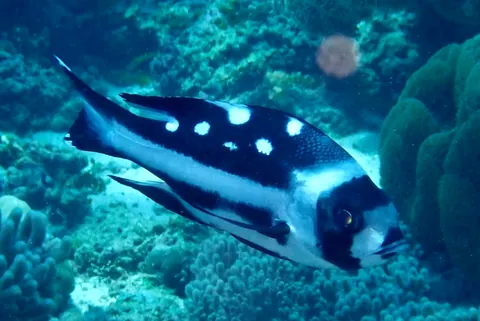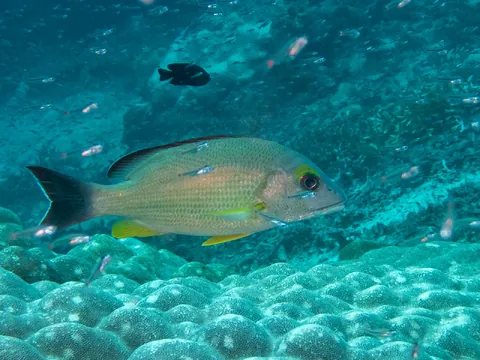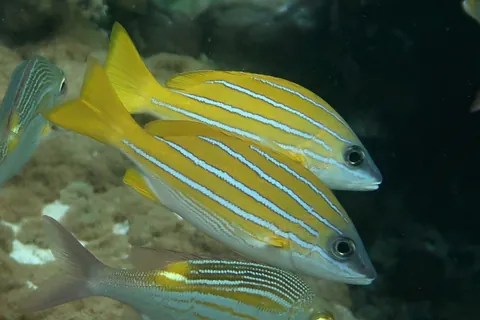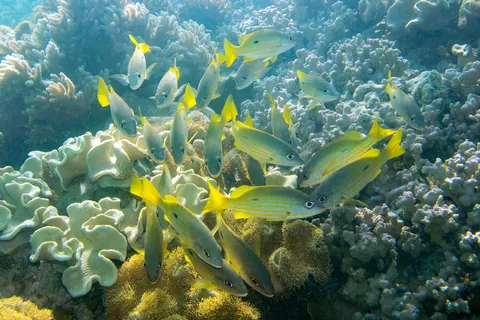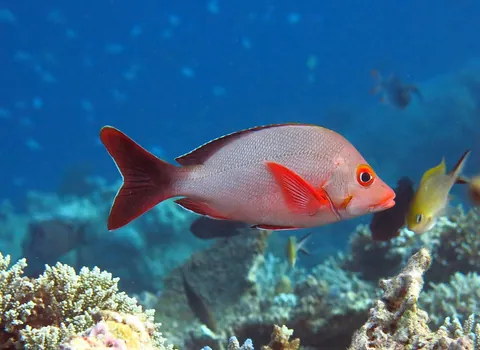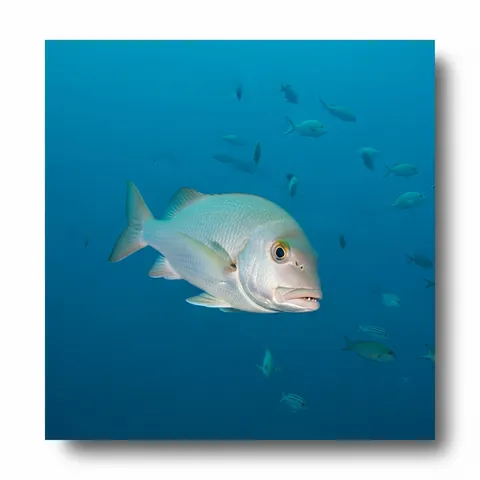
African forktail snapper
Apsilus fuscus
Lutjanus griseus
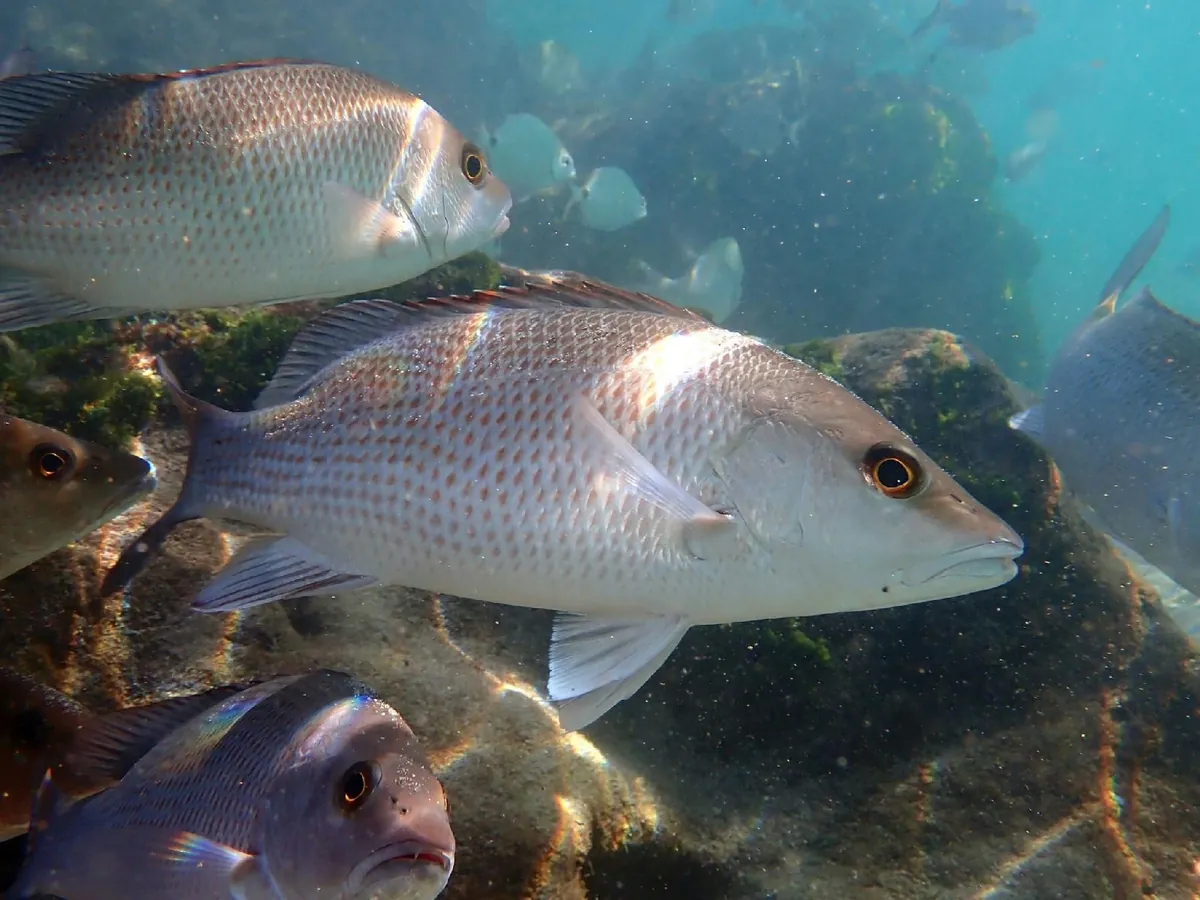
The gray snapper, often called the mangrove snapper, is one of the most common snappers in warm coastal waters. It typically reaches about 40 cm, though it can grow to 89 cm and 20 kg.
Also known as: grey snapper, mangrove snapper, black pargue, gray silk, lawyer, mangrove pargue, silk, pargue
The gray snapper can be confused with the dog snapper. Look below the eye: the dog snapper shows a pale, blue-edged patch of colour there and large, sharp front fangs, while the gray snapper has neither.
This fish is usually greyish red, though it can shift from bright red to copper red. Seen from above underwater, it shows a dark stripe running across each eye. The snout is long and pointed, and the head profile dips slightly just before the eyes. Young fish carry an extra pale blue stripe on the cheek below the eye.
Common on reefs, rocky areas, docks, wrecks and mangroves in warm coastal waters, and also over grass flats and in open water near the bottom. Found from 5 to 180 metres deep, though usually shallower than 50 metres. Young fish sometimes move into estuaries and the lower reaches of rivers.
In the Lucayan cavern in the Bahamas, this fish has been seen waiting beneath a bat colony to catch young bats that fall near the cave entrance.
Describe what you saw and we name it, then keep every species you find in your Oceandex.