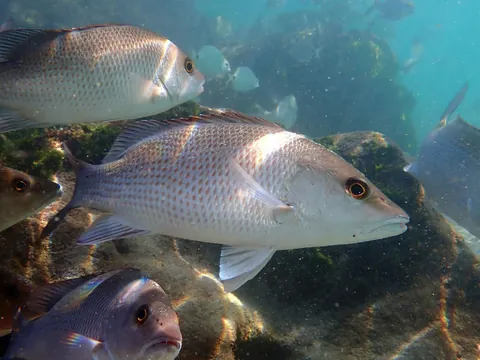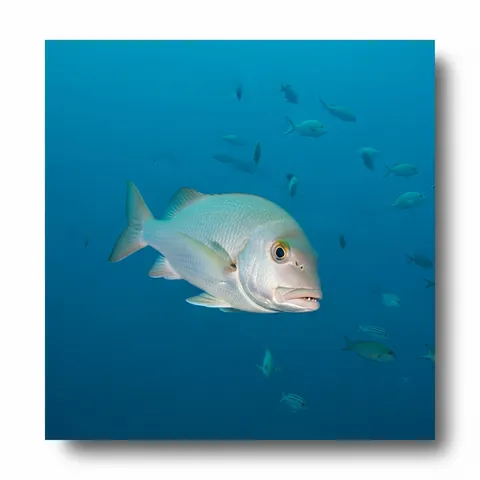
African forktail snapper
Apsilus fuscus
Lutjanus gibbus
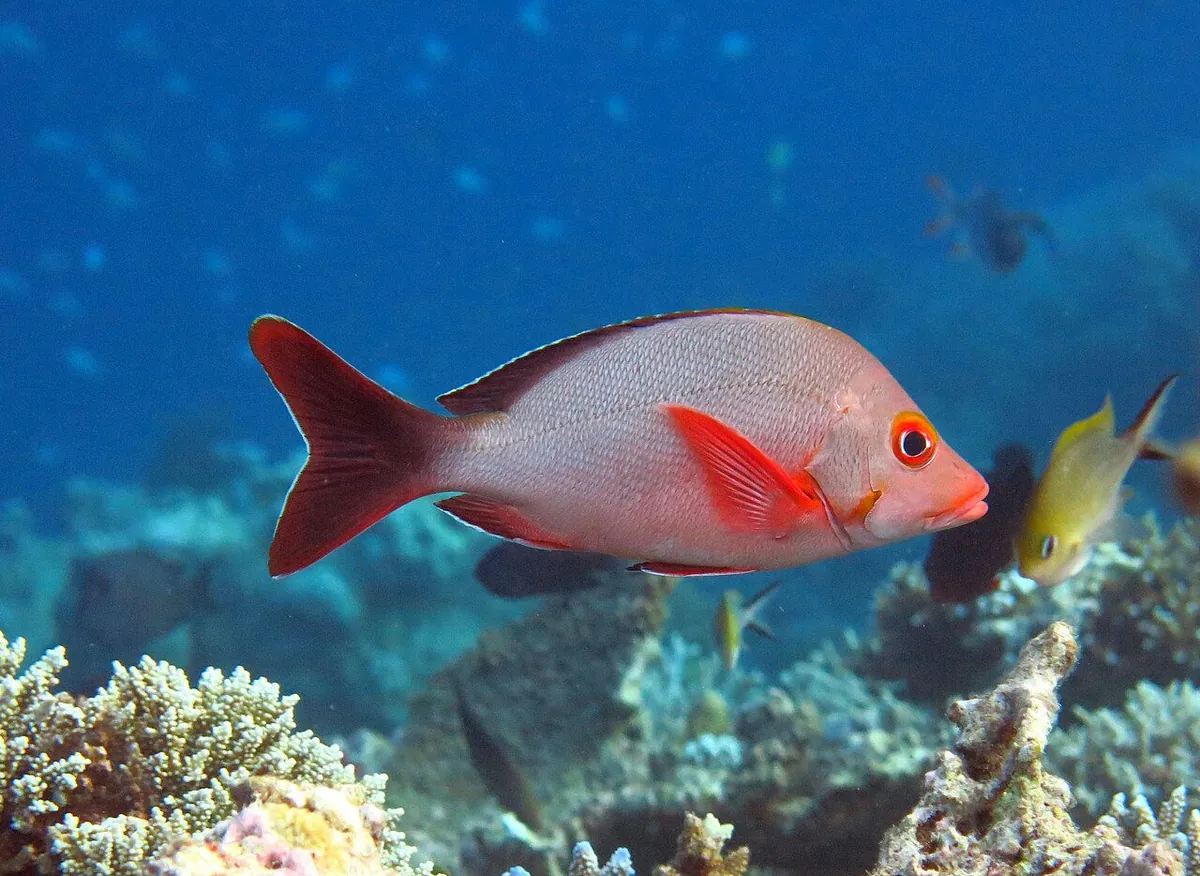
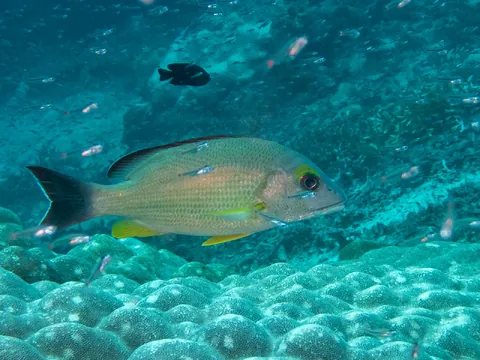
The humpback red snapper is a reef fish that is easy to spot in a crowd. By day it gathers in large, almost motionless groups over coral. It simply hangs there as you swim past. It grows to about 50 cm, though most adults you see are closer to 45 cm.
Also known as: humpbacked red snapper, humphead snapper, hunched snapper, paddle tail snapper, paddle-tail, paddle-tail sea-perch, paddle-tail snapper, paddletail, paddletail snapper, humpback red snapper, humpbacked red snapper, paddletail seaperch, humpback snapper, paddle tail snapper, humphead snapper, snapper, paddle-tail sea-perch, humpback redsnapper, paddletail snapper, red snapper, paddle-tail snapper, hunched snapper, humpback snapper, paddletail snapper, red snapper
This snapper can be confused with other red or grey snappers sharing the same reef. The clearest check is its forehead: nothing else here has that same steep hump. If still unsure, its tail, dark with a thin white edge, is a second clue.
The body is deep and flat-sided. Its forehead rises in a very steep slope from the mouth, giving the fish a humped profile. Its colour is red or grey, darker over the back and the top of the head. The lower part of the gill cover, and the pocket where the pectoral fin meets the body, both carry an orange tint. The fins may be red, but the midline fins are different: the rear dorsal fin, the anal fin, and the tail are normally dark brown to blackish, each with a thin white edge. The tail is forked with rounded tips, and the back corners of the dorsal and anal fins are drawn out into points.
It lives across the Indo-West Pacific, from the East African coast and the Red Sea out to islands of the central Pacific, and from southern Japan south to Australia. Adults are reef fish, and the largest ones move out onto deeper coastal slopes. Young fish use a different kind of place: seagrass beds and mixed sand-and-coral bottoms on sheltered, shallow reefs. The species has been recorded from 1 m down to 150 m.
By day, sub-adults form very large schools. These schools stay in one place or drift slowly along a reef slope, which makes them easy to approach. It hunts fish and many kinds of invertebrates, including shrimps, crabs, lobsters, mantis shrimps, squid, octopus, and brittle stars, close relatives of sea stars and sea urchins. Adults gather in groups to spawn. Off East Africa, most spawning happens in spring and summer.
Its scientific name, gibbus, means "humpbacked" - it was chosen for the steep, bulging forehead that adult fish grow.
Describe what you saw and we name it, then keep every species you find in your Oceandex.