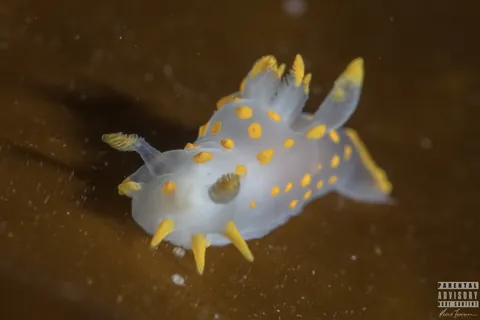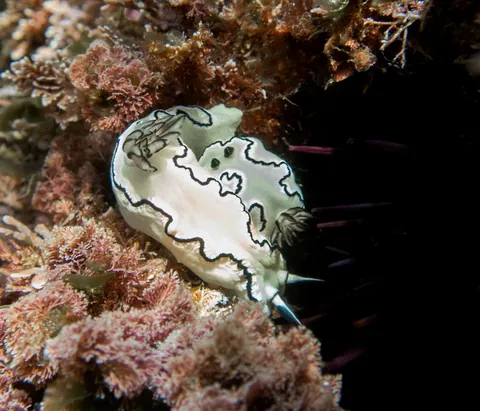
Black-margined Nudibranch
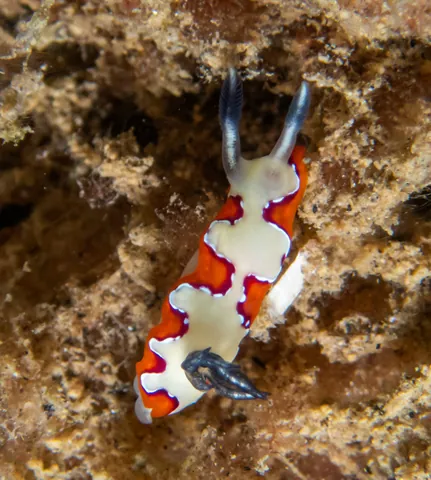
Doriprismatica atromarginata
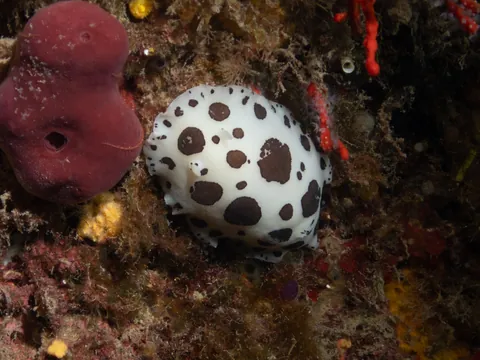
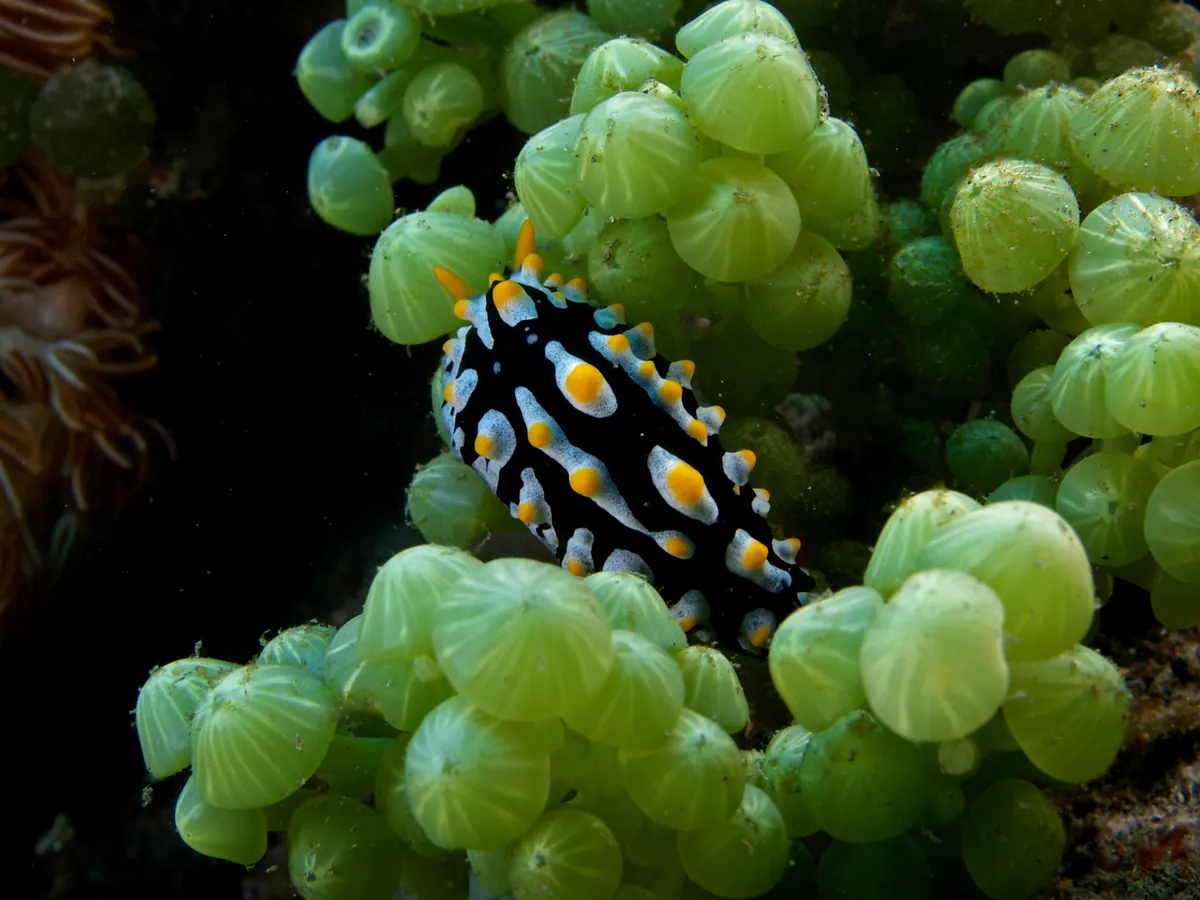
Phyllidia varicosa
The fried egg nudibranch is a sea slug: a shell-less sea snail that crawls over the reef in the open. It belongs to the dorid nudibranchs, a group with no shell to hide in, and it grows to about 7 cm. Divers find it on coral reef, usually between 10 and 20 m. It moves slowly and does not flee, so it is easy to watch and photograph.
Also known as: phyllidia varicosa, phyllidia varicosa lamarck, 1801, variable wart slug, varicose wart slug
Look down on the animal from above. You should see several blue-grey ridges running lengthwise along the back, studded with bumps whose tips are bright yellow. That blue-grey and yellow bump pattern stays the same on every individual and is clear at normal viewing distance.
The back carries three to six ridges that run from head to tail. The ridges are covered in small bumps, called tubercles. The ridges and the bases of the bumps are blue-grey, and each bump is capped with yellow. The underside of the foot, the flat muscular sole the animal crawls on, has a black stripe down the middle.
Young sea cucumbers of the species Pearsonothuria graeffei look strikingly like this nudibranch. They are white with blue or black and carry a few large yellow thorn-like points. The nudibranch is toxic, and predators avoid that colour pattern, so the young sea cucumber gains protection by copying it. Adult sea cucumbers of that species lose the bright colours.
Describe what you saw and we name it, then keep every species you find in your Oceandex.