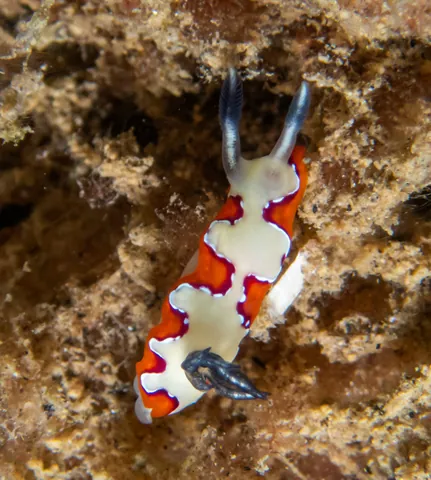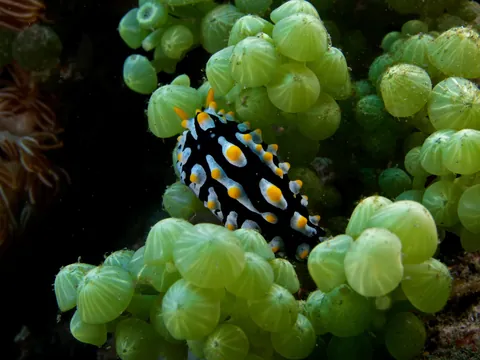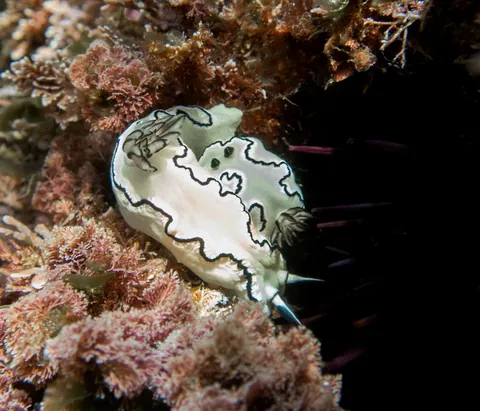
Black-margined Nudibranch
Doriprismatica atromarginata
Glaucus atlanticus
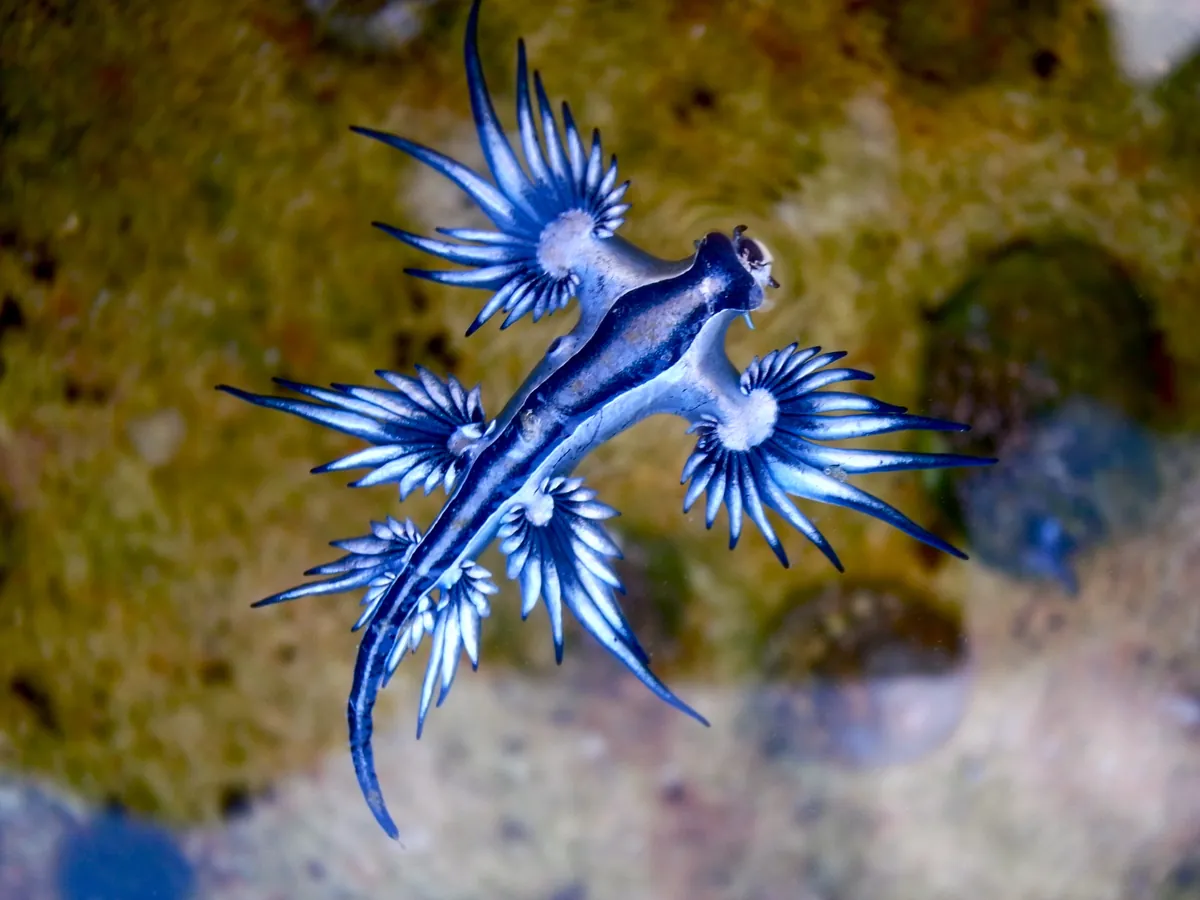
The blue dragon is a tiny sea slug that spends its life floating upside down on the ocean surface, armed with venom it steals from the deadly creatures it eats.
Also known as: atlantic sea swallow, blue angel, blue dragon sea slug, blue glaucus, blue ocean slug, blue sea dragon, blue sea slug, glaucus atlanticus, glaucus atlanticus forster, 1777
At the surface, the blue dragon can be mistaken for the blue, disc-shaped animals it hunts, such as the by-the-wind sailor or the blue button. Look for the feathery, finger-like cerata branching from its body - its prey has no such limbs.
This sea slug has a flat, tapering body no more than 4 centimetres long, with six branching appendages that fan out into feathery, finger-like projections called cerata. It is silvery grey on its underside and dark and pale blue above, with dark blue stripes on its head. Seen from above, its blue colouring blends into the sea; seen from below, its silvery side blends with the sunlit surface.
The blue dragon drifts in the open ocean across tropical and temperate waters worldwide, carried by wind and currents at the surface down to about 37 metres. It sometimes washes up on beaches when currents and weather push it toward shore.
This sea slug floats upside down, held up by the surface tension of the water and a gas bubble it keeps in its stomach. It preys on other drifting animals, including the Portuguese man o' war, using slow swimming movements of its cerata to reach them. It is immune to its prey's stinging cells and instead swallows and stores them in its own tissue for its own defence.
The blue dragon concentrates the stolen stinging cells from its prey, the Portuguese man o' war, so tightly that its own sting can be more powerful than the man o' war's.
Describe what you saw and we name it, then keep every species you find in your Oceandex.