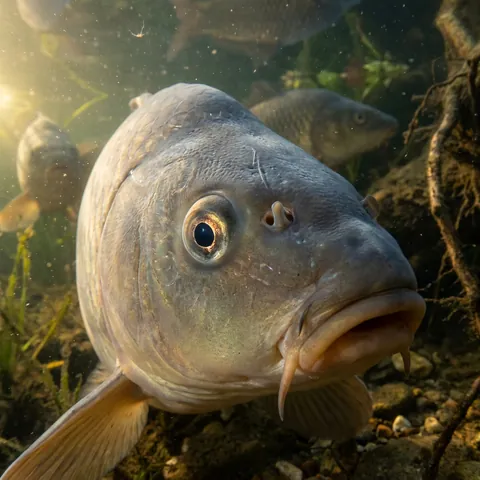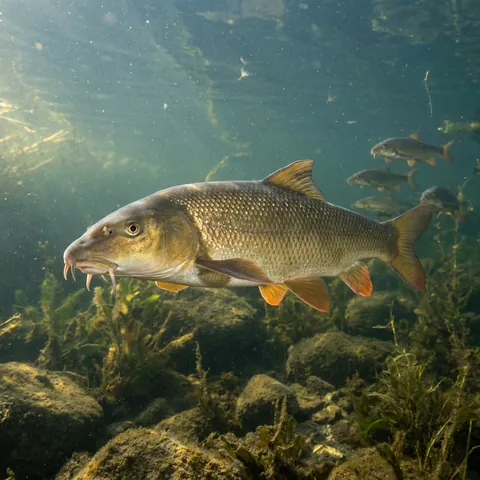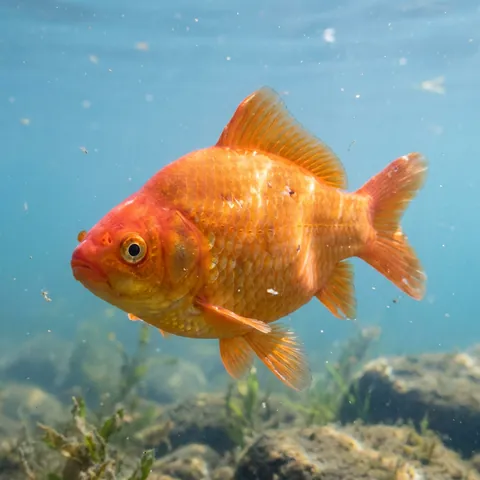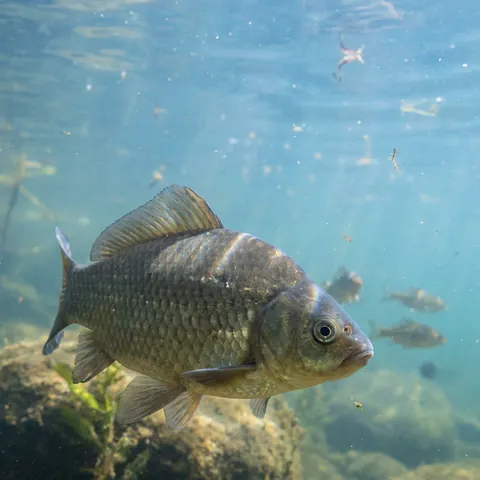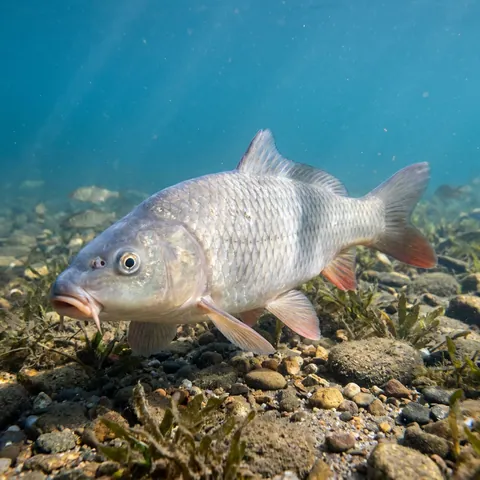
Amur Carp
Cyprinus rubrofuscus
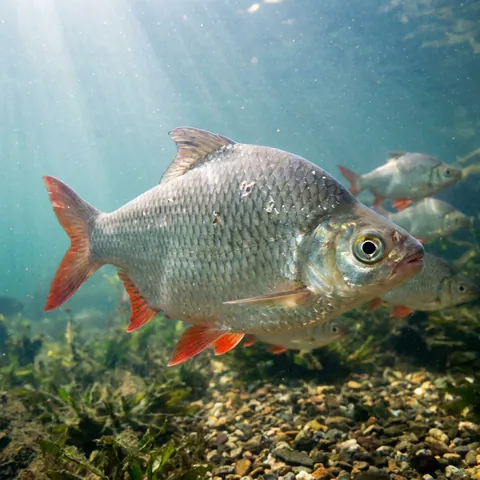
Abramis brama
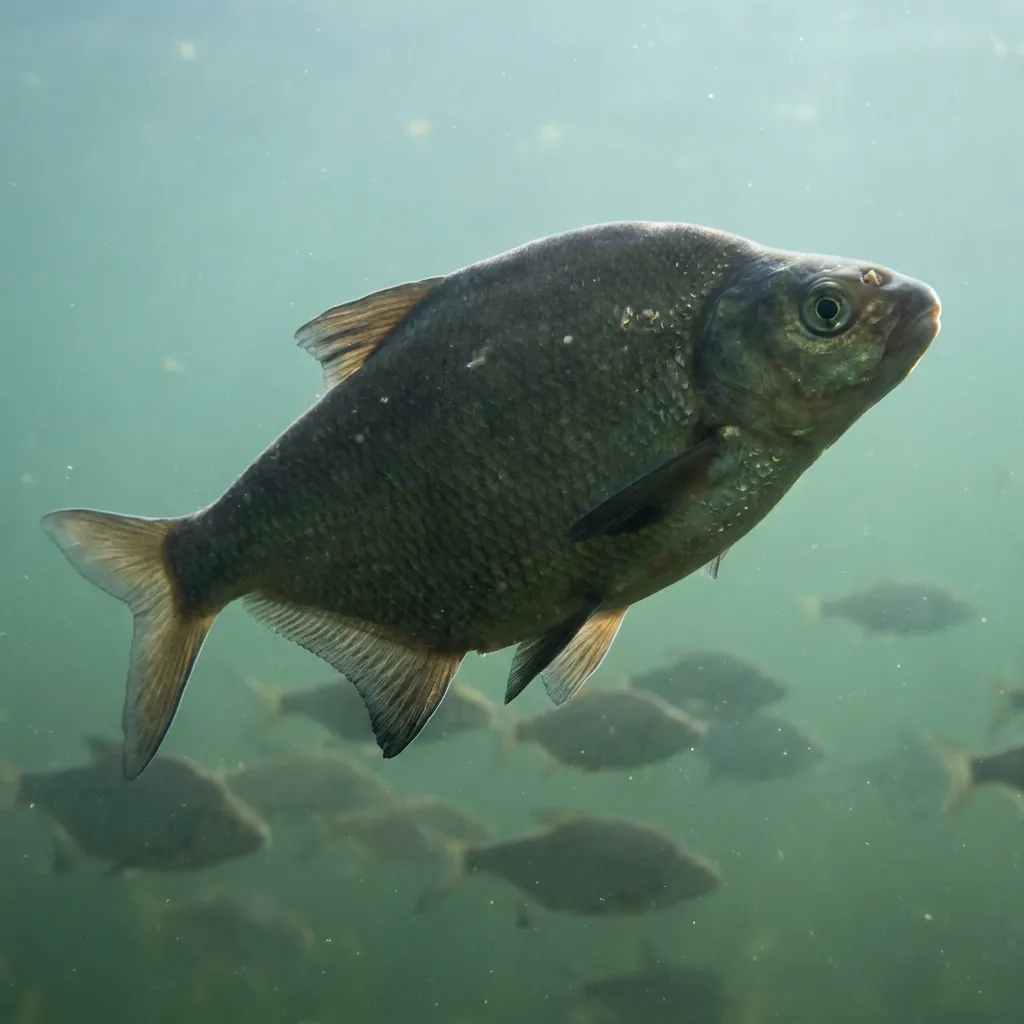
The freshwater bream moves through slow rivers and weedy lakes in tight schools, digging in soft mud for its next meal. It can grow to 82 cm and weigh over 6 kg.
Also known as: freshwater bream, bronze bream, carp bream, bowfin, common bream, aral bream, danube bream, bream, common bream, freshwater bream
It is easily confused with the silver bream, a close relative sharing the same waters. On adult fish, look at the fins: silver bream have a reddish tinge, while this species' fins stay plain grey to black.
This fish has a flattened body with a high, arched back, and a slightly undershot mouth built for feeding along the bottom. Younger fish are bright silver, while older ones can turn bronze, especially in clear water. Its fins are greyish to black, never tinged with red.
It lives across Europe north of the Alps and Pyrenees, and east to the Caspian, Black, and Aral Seas, in ponds, lakes, canals, and slow rivers, and sometimes in brackish coastal water. It favours nutrient-rich water with muddy bottoms and plenty of algae, at depths from 1 to 50 m and water temperatures between 10 and 24 C.
It pushes its mouth into the mud to dig up chironomid larvae, worms, small clams, and snails, and also eats water plants and plankton. In murky water where bottom food is scarce, it can switch to filtering water fleas from the water with its gill rakers instead.
Spawning happens in spring, when males grow small white bumps on the head and body and defend territory. Females scatter their eggs over weed beds and reed stands, where the males fertilise them. Once hatched, the fry stick themselves to water plants until they have used up their yolk, then form shoals and move toward deeper water.
A poorly fed bream can develop a sharp ridge along its back, known as a knife back, from lack of food.
Describe what you saw and we name it, then keep every species you find in your Oceandex.