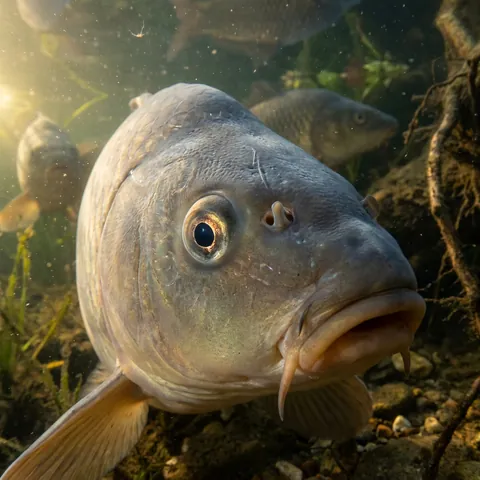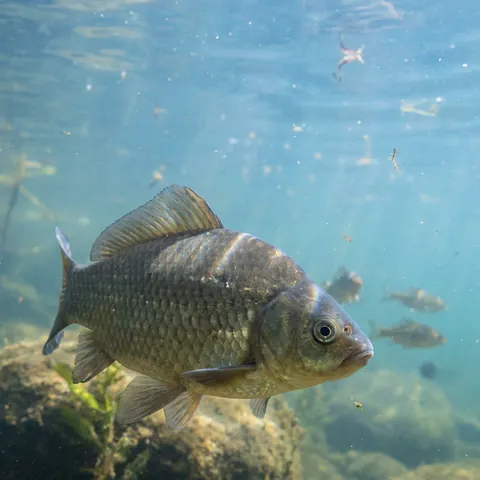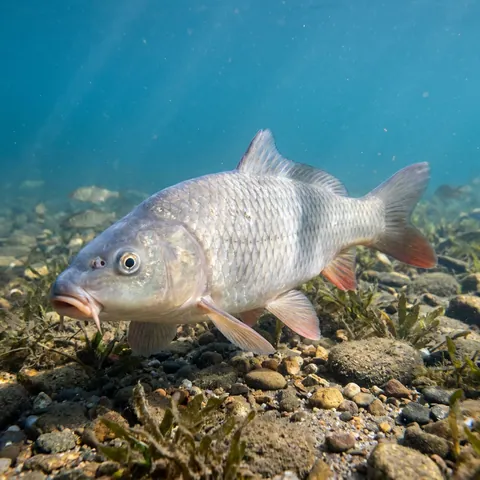
Amur Carp
Cyprinus rubrofuscus
Carassius auratus
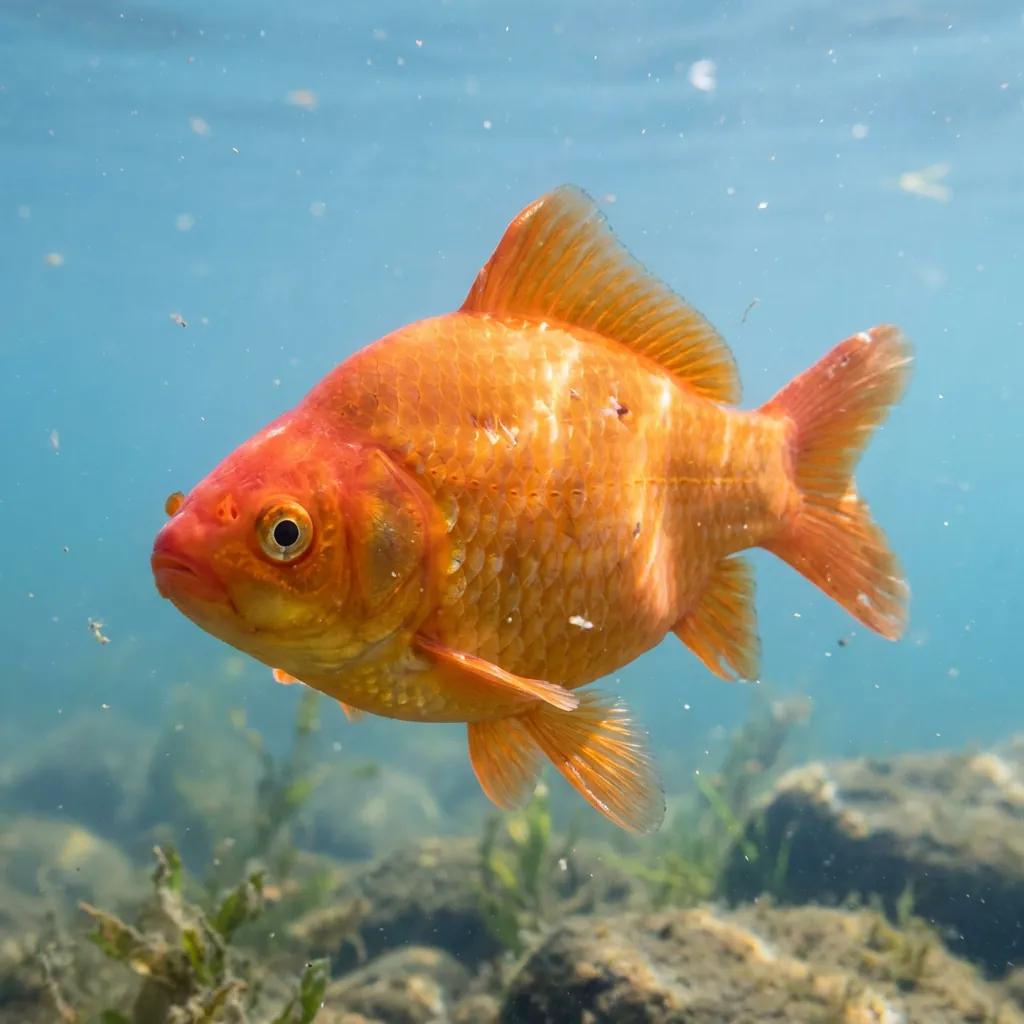
The goldfish is the world's most familiar aquarium fish, but wild and feral populations look nothing like the golden pet-shop kind. Escaped or released fish now live and breed in ponds, lakes, and slow rivers far from their native range.
Also known as: golden carp, gold carp, round crucian carp, domestic goldfish, common goldfish, gold crucian carp
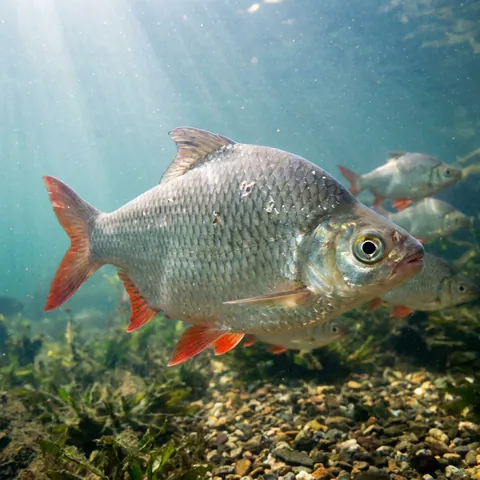
A plain-coloured wild or feral goldfish looks much like a crucian carp; the giveaway is a hint of gold, orange, or metallic sheen that the crucian's flat olive-brown body never shows.
Wild-type goldfish are a dull, metallic olive-brown rather than gold. Centuries of selective breeding have produced hundreds of colour forms and body shapes in captivity, but feral fish in open water usually revert to this plainer wild look.
Goldfish swim in loose schools and feed together. They see an unusually wide range of colour, including ultraviolet, and can detect both the direction and pressure of sound in water. In cold ponds that freeze over, they can survive short spells with almost no oxygen by drawing on energy stored in the liver.
Goldfish are opportunistic feeders that eat almost anything they find, including crustaceans, insects, plankton, small bottom-dwelling animals, plant matter, and detritus. They keep feeding as long as food is available rather than stopping when full.
Breeding usually follows a sharp change in water temperature, often in spring. Males chase egg-carrying females and nudge them to release their eggs, which stick to underwater plants. The eggs hatch within two to three days, and the young grow quickly to reduce the risk of being eaten by adult goldfish or other predators.
Young goldfish hatch a dull metallic brown, the same colour as their wild ancestors, and it can take about a year before they develop true goldfish colouring.
Describe what you saw and we name it, then keep every species you find in your Oceandex.