American Eel
Anguilla rostrata
Anguilla anguilla
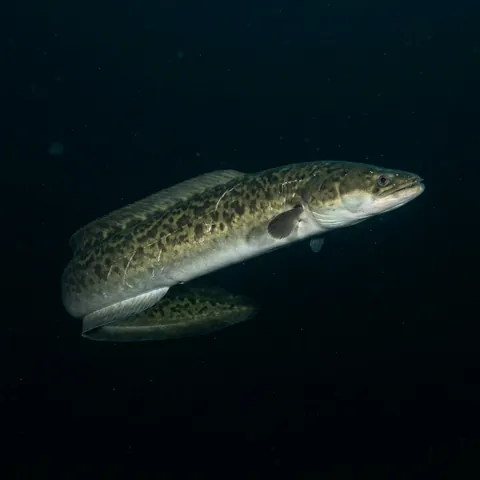
The European eel is one of Europe's strangest fish. It is born far out in the ocean and spends most of its life in rivers, lakes, and streams thousands of kilometres away. It can grow up to 121.5 cm and weigh up to 6.6 kg, though most are far smaller.
Also known as: anguilla anguilla, common eel, eel, river eel, silver eel, sing eel, weed eel, yellow eel
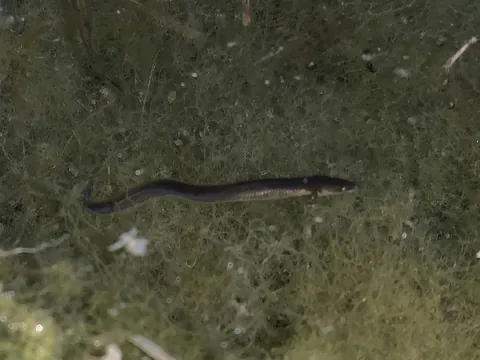
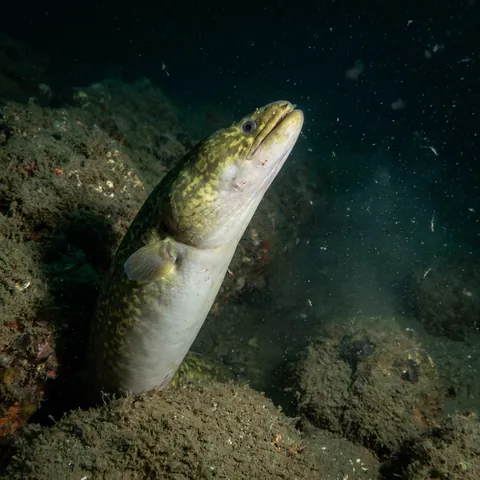
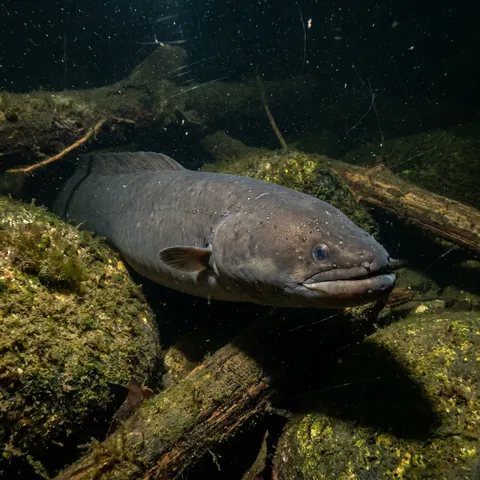
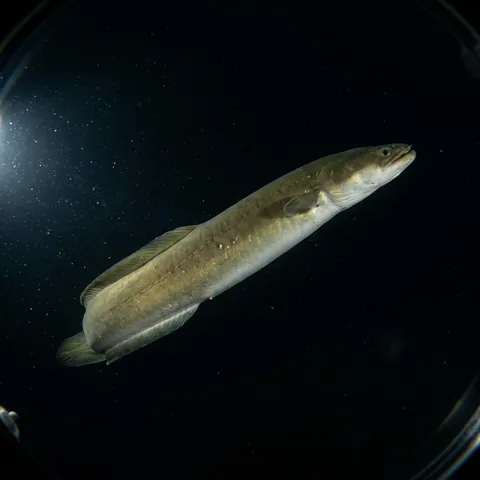
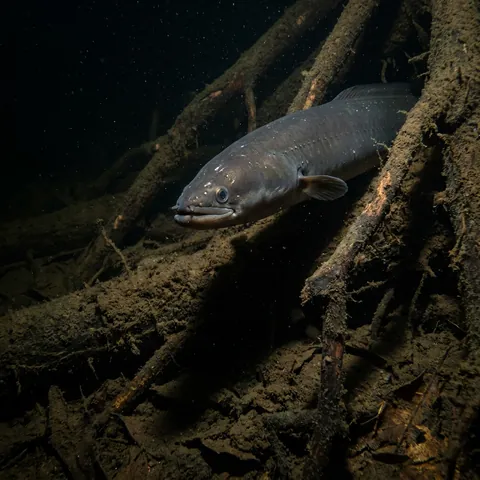
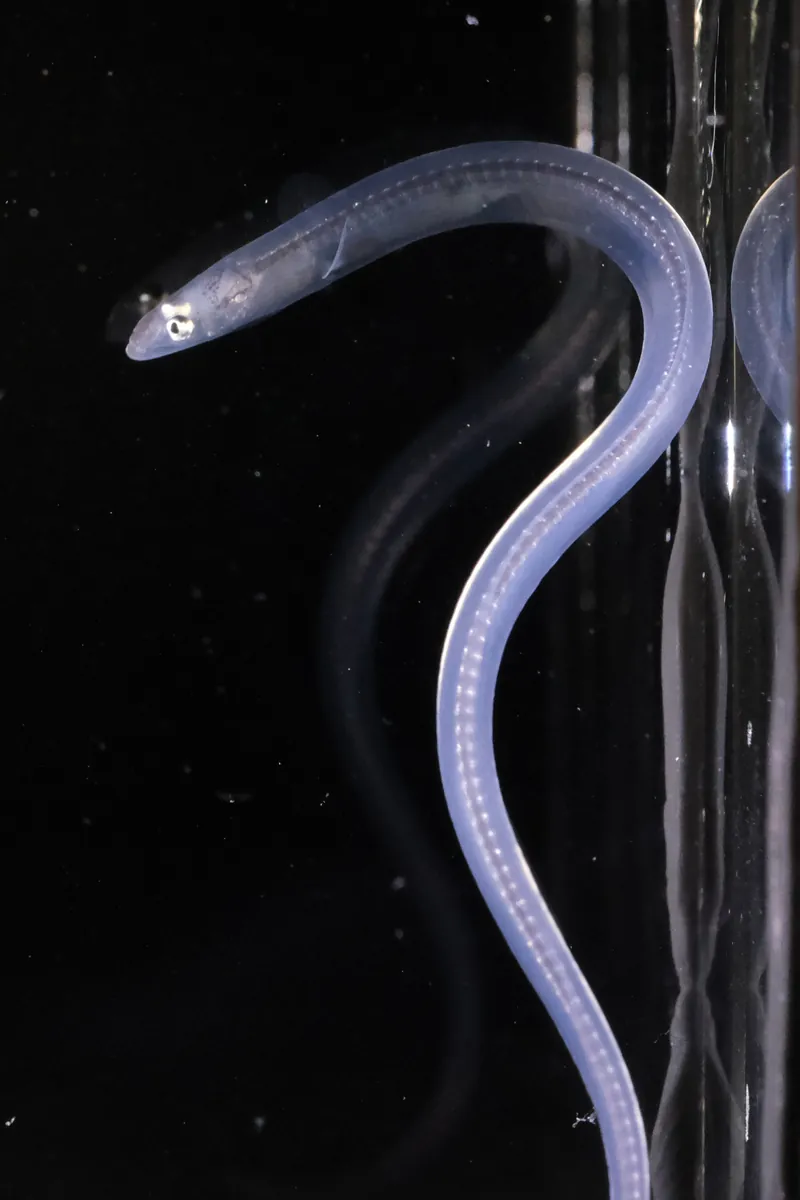
The European eel has a long, snake-like body. Young glass eels are thin, see-through, and about 6 to 8 cm long. As they grow, they become yellow eels, with a brownish-yellow colour on their sides and belly. Before their final journey back to sea, they turn into silver eels: dark on top and silvery-white underneath.
European eels live in fresh water: streams, rivers, and lakes, as well as brackish estuaries and coastal water. They spend their days near the bottom, hiding under stones, in mud, or in crevices among rocks and plants. They can be found from the surface down to about 700 m, in water from 4 to 20°C.
This is a solitary, territorial fish. It hunts mainly at night, using scent to find food. Young eels are sometimes seen in groups, but this is not true schooling. It is simply many eels reacting to the same conditions at once.
European eels eat worms, other fish, slugs, and crustaceans such as crayfish. They will bite chunks from fish too large to swallow whole. When plankton is plentiful, they will eat that too.
European eels are born in the Sargasso Sea, far out in the Atlantic Ocean. The tiny larvae drift toward Europe on ocean currents, changing shape along the way into glass eels and then elvers. They spend years growing in fresh or brackish water before they mature. When ready to breed, they turn into silver eels and swim all the way back to the Sargasso Sea to spawn. They die soon after.
harmless
The European eel is Critically Endangered. Numbers reaching Europe have fallen sharply since the 1970s. Overfishing, parasites, and dams that block migration all play a part, along with pollution and changes in ocean currents. The species is protected under international trade rules.
One European eel, kept in a well at a family home in Sweden, was reported to live far longer than wild eels normally do, becoming a local legend known as the Brantevik Eel.
Describe what you saw and we name it, then keep every species you find in your Oceandex.