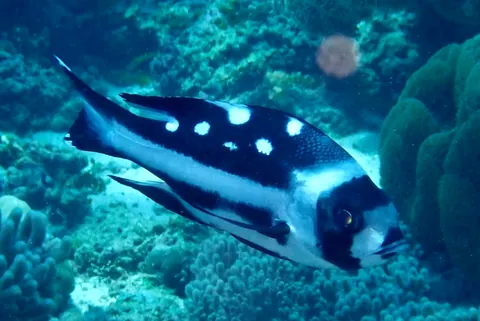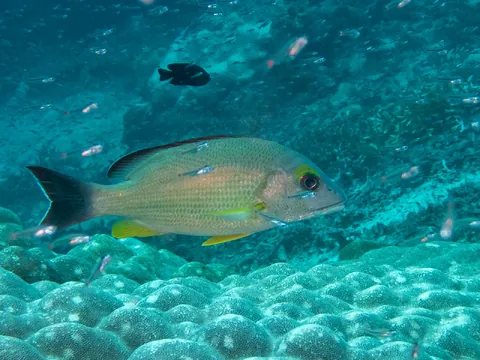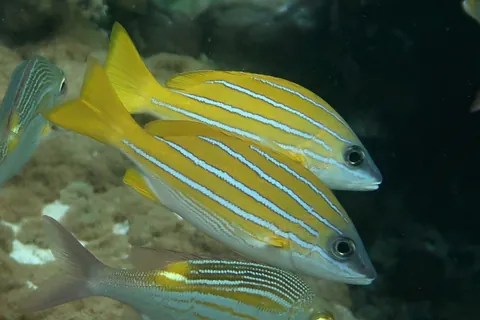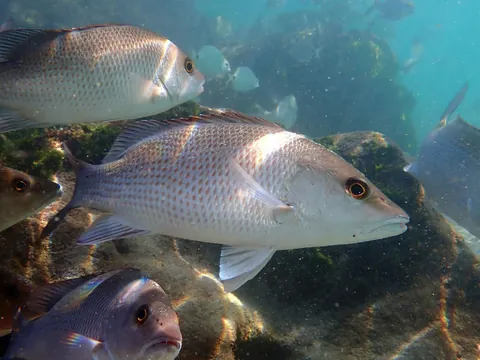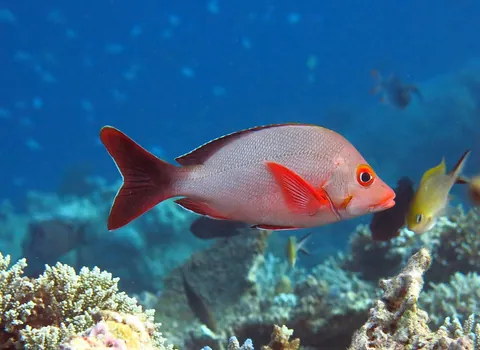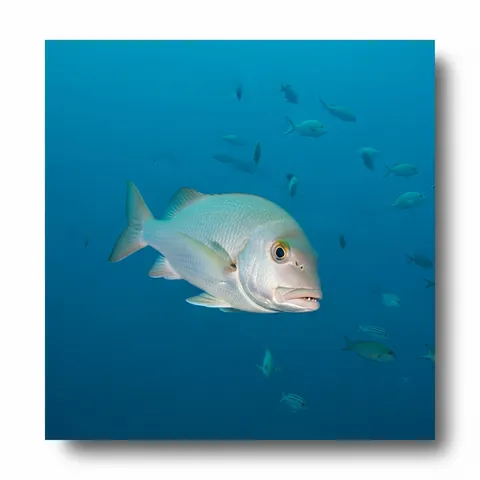
African forktail snapper
Apsilus fuscus
Lutjanus fulviflamma
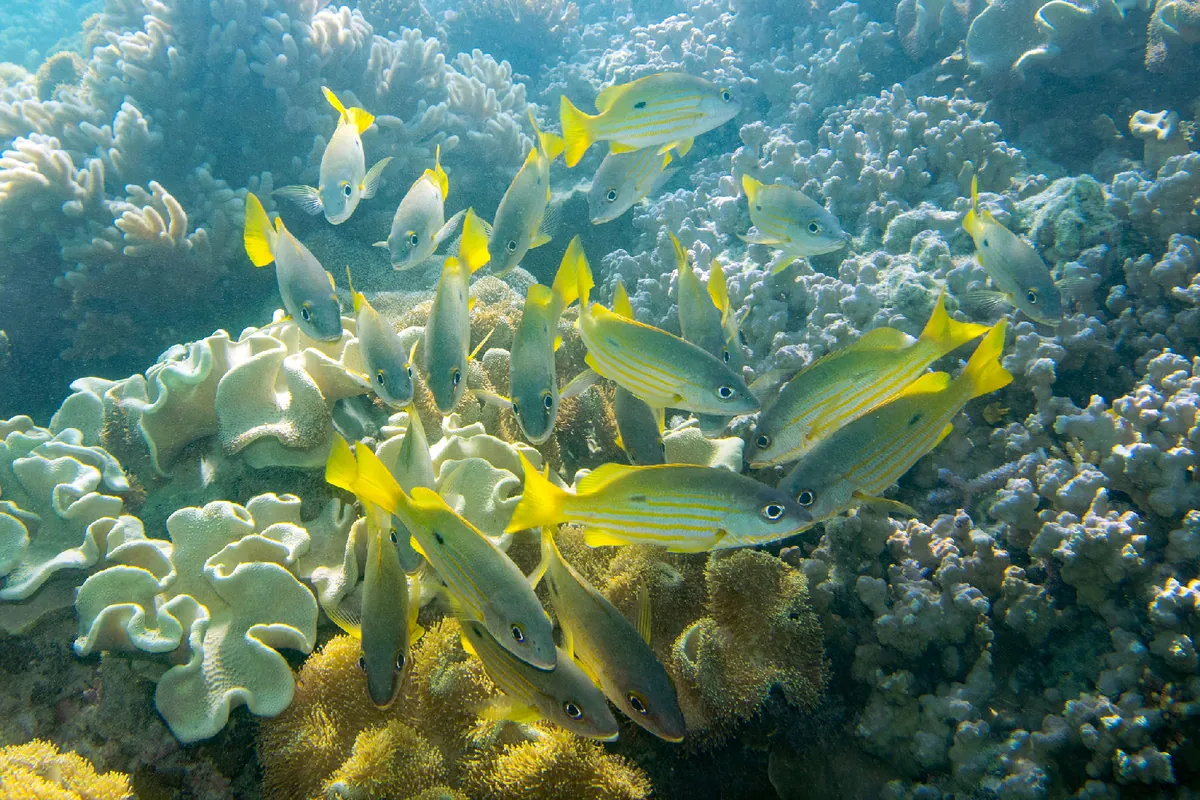
A pale, gold-striped snapper that rarely swims alone, this fish is a regular in the mixed schools that hang over coastal reefs. It grows to about 35 cm, though most individuals stop around 30 cm.
Also known as: black-spot snapper, blackspot seaperch, blackspot snapper, blackspot snapper, dory snapper, dory snapper, finger-mark bream, golden snapper, humpback red snapper, long-spot snapper, longspot snapper, malabar thyrssa, moses perch, longspot snapper, red bream, moses perch, tropical snapper, redspot snapper, black-spot snapper, snapper, golden snapper, blackspot snapper, humpback red snapper, long-spot snapper, finger-mark bream, malabar thyrssa, blackspot seaperch, black-spot seaperch, black spot snapper, black-spot sea-perch, black-spotted sea perch, black-spot seaperch, red bream
In a mixed school with bluestripe and bigeye snapper, look for the squared black spot on the lateral line partway to the tail - the other two species in the school do not have it.
The body is pale, marked with five to seven narrow yellow stripes of equal width running along the flanks; the longest stripe runs through the eye and onto the snout. A squared-off black spot sits on the lateral line (the faint sensory stripe along its side), about three-quarters of the way from the head to the tail. The tail fin is straight-edged or only slightly notched.
Adults gather in schools over coastal coral reefs and in deep lagoons. Juveniles are more sheltered, sometimes turning up in mangrove estuaries or the lower reaches of freshwater streams before moving out to the reef.
It regularly forms large mixed schools together with the bluestripe snapper and the bigeye snapper, and hunts fish, shrimps and crabs. Spawning happens in batches over the spring and summer months, with timing that varies by region.
A single individual once turned up far from home in the Mediterranean, off Malta; genetic testing traced its ancestry back to East Africa, suggesting it swam in through the Suez Canal.
Describe what you saw and we name it, then keep every species you find in your Oceandex.