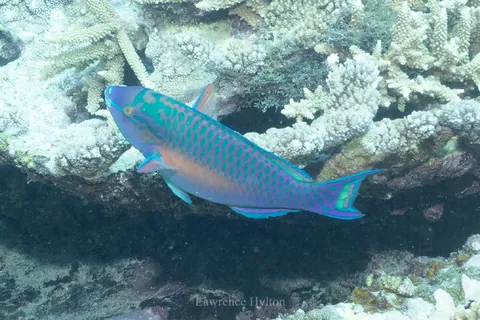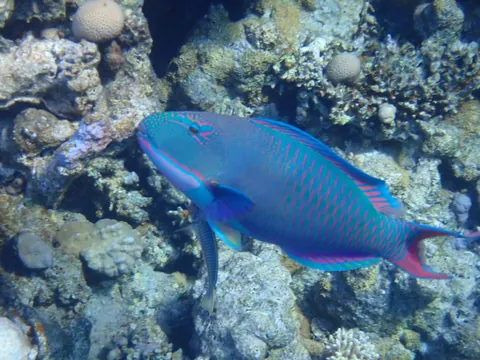
Bicolour parrotfish
Cetoscarus bicolor
Chlorurus sordidus
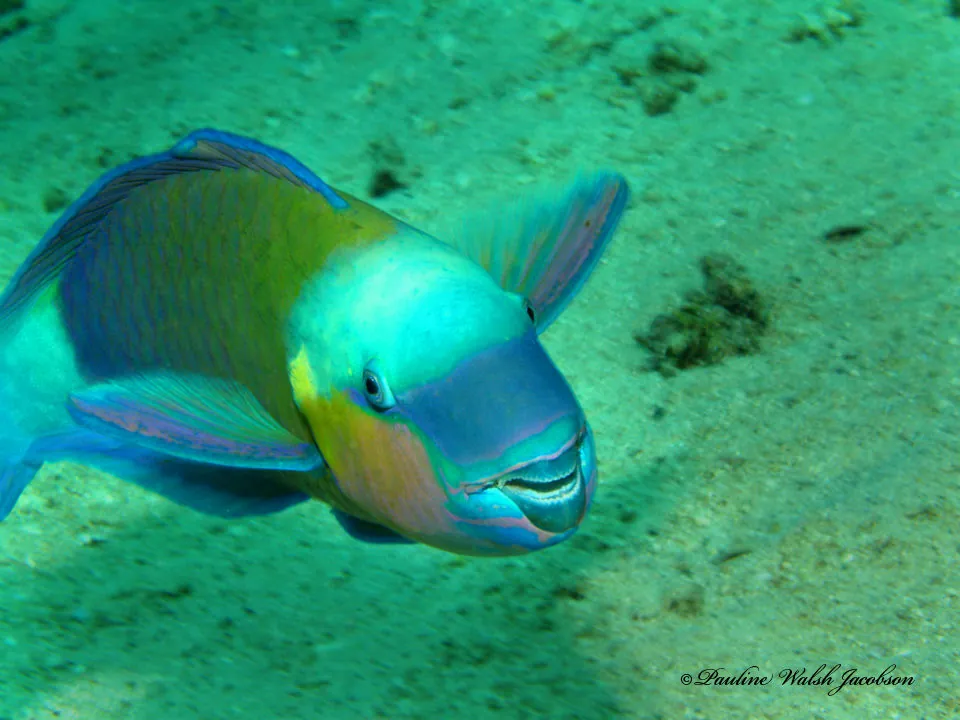
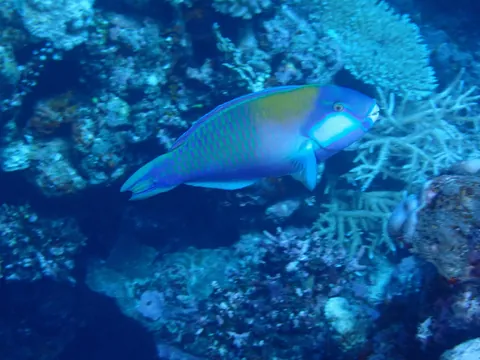
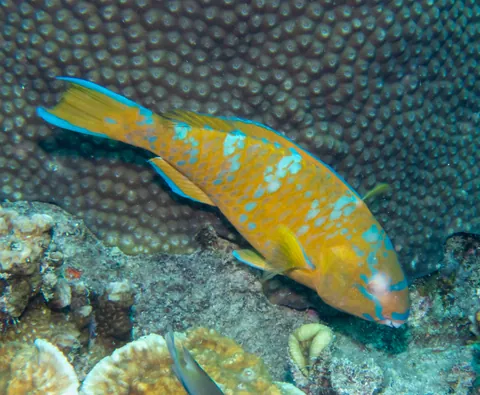
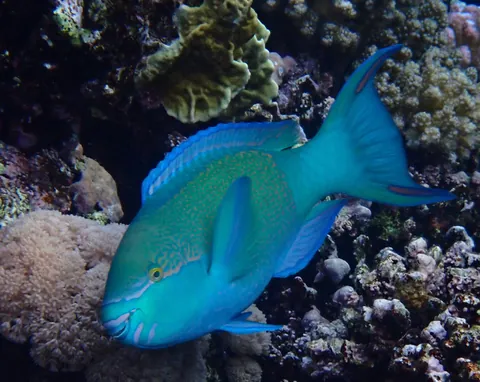
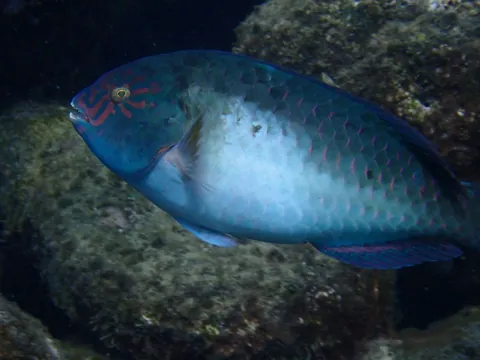
The daisy parrotfish is one of the hardest reef fish to pin down, because almost nothing about its colour stays the same. Small ones can be plain brown or plain grey. Big ones may be speckled, or carry a broad tan patch. It is so variable across its huge range that scientists think some local forms may turn out to be separate species. Growing to 40 cm, it is a fish you will see on most Indo-Pacific reefs, often in a crowd.
Also known as: daisy parrotfish, green parrotfish, green-finned parrotfish, shabby parrotfish, bullethead parrotfish, daisy parrotfish, bullethead parrot, shabby parrotfish, greenfin parrotfish, green parrotfish, parrotfish, green-finned parrotfish, bullethead parrotfish, bullethead parrotfish, daisy parrotfish, greenfin parrotfish, indian bullethead parrotfish
Colour will not settle this one. Two fish of the same species can look nothing alike, so ignore the pattern and read the head shape instead. The profile is short and rounded, blunt as a bullet, rather than sloping or drawn out to a point like many other parrotfish. That is why it is also called the bullethead parrotfish, and the shape does not change with age, sex or mood.
A medium-sized parrotfish with a blunt, rounded head and the fused, beak-like teeth of the family. Early-phase fish range from dark brown to light grey. Many carry a pale patch with a dark centre on the tail base, the narrow part of the body just before the tail fin. Larger ones may instead show uneven rows of small light spots towards the rear. Terminal males vary too, and often have a large tan area on the flank or the tail base.
Look for it across the tropical Indo-Pacific, including the Red Sea. It uses a wide spread of reef ground: coral-rich patches, bare pavement on shallow reef flats, lagoon reefs, seaward reefs and drop-offs, down to 50 m. Its behaviour changes from place to place. Young fish keep to rubble patches on reef flats and in lagoons. Juveniles and early-phase females gather in large groups and travel long distances between the places where they feed and the places where they sleep. It grazes algae off the bottom, and groupers and coral trout hunt it.
Describe what you saw and we name it, then keep every species you find in your Oceandex.