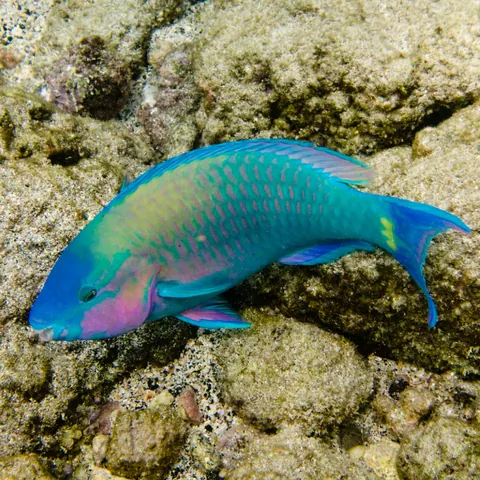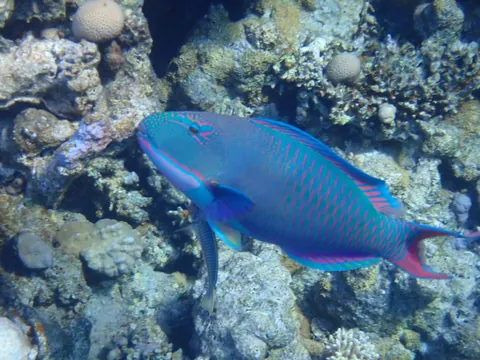
Bicolour parrotfish
Cetoscarus bicolor
Scarus chameleon
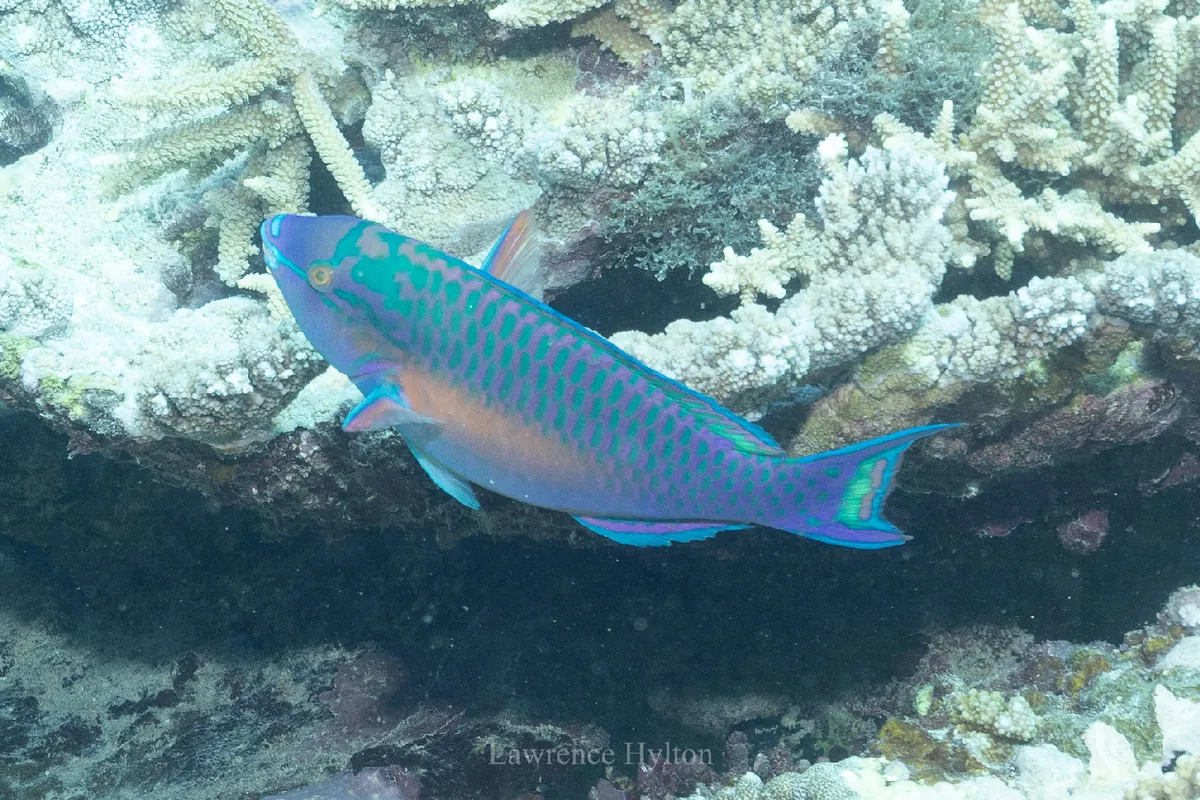
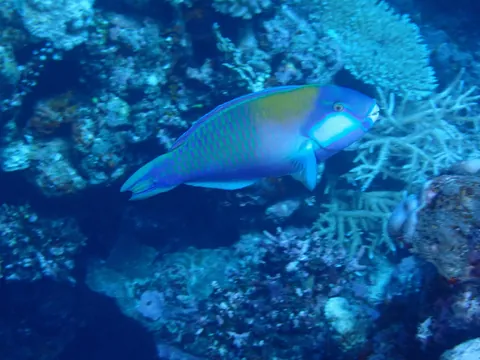
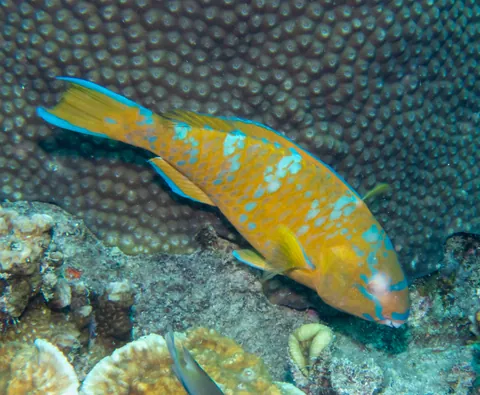
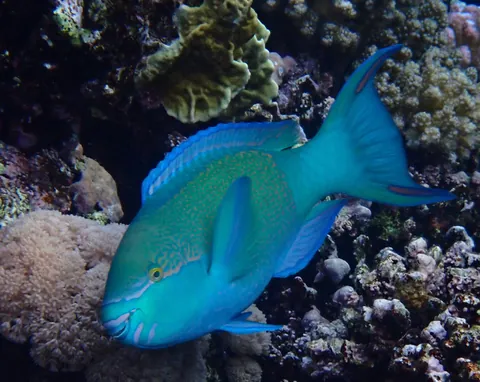
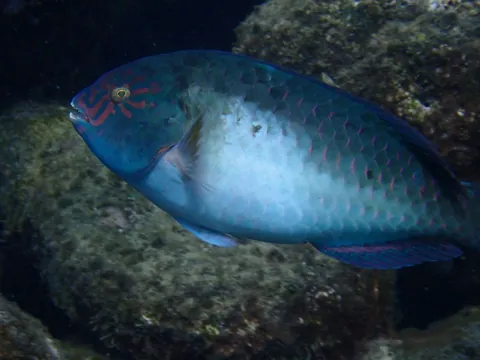
Few reef fish are as well named as the chameleon parrotfish. It can switch its colours fast, and it does so at every stage of its life. Divers meet it on outer reef flats and on open lagoon and seaward slopes, from about 3 m down to at least 30 m. Most are around 25 cm long, and the biggest reach 31 cm.
Be honest about this one: colour will not settle it. Initial-phase fish look much like the common rivulated parrotfish, and the nearest relative, the festive parrotfish, shares both the look and the range. The useful clue is behaviour, not pattern. Watch one fish for a minute. If it shifts between a pale and a dark livery while you hang there, and a lone large male keeps clear of the mixed feeding school, you are probably on this species. Many sightings stay unconfirmed, and that is a fair result.
There is no single look to learn. Young fish, initial-phase fish and full-grown terminal males are all variable, and any of them can change shade quickly. The initial phase covers females and the smaller males, and these are the plainest. Terminal males, the large secondary males, are more strongly marked, but even they flip between a light livery and a dark one. Feeding females often join mixed schools with other parrotfish, while males tend to be off on their own.
This parrotfish spent decades filed under the wrong name. Until 1986 it was recorded as Scarus lunula, and only then was it recognised as its own species, described from Sumilon Island in the Philippines.
Describe what you saw and we name it, then keep every species you find in your Oceandex.