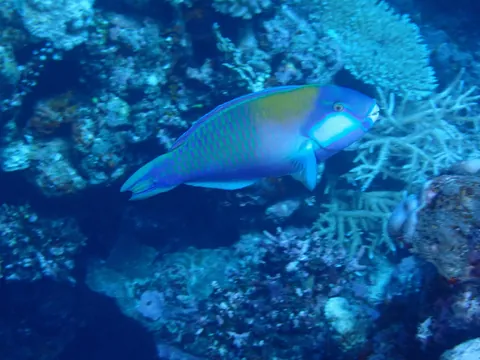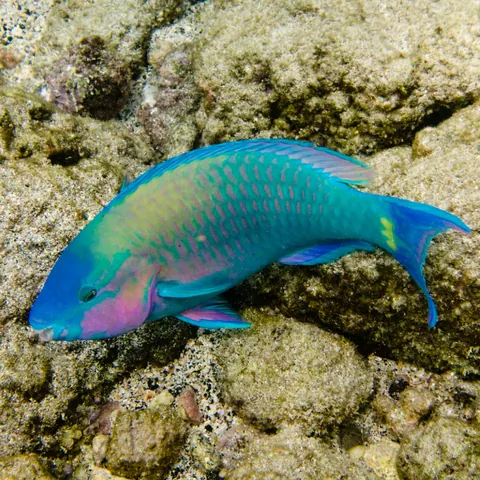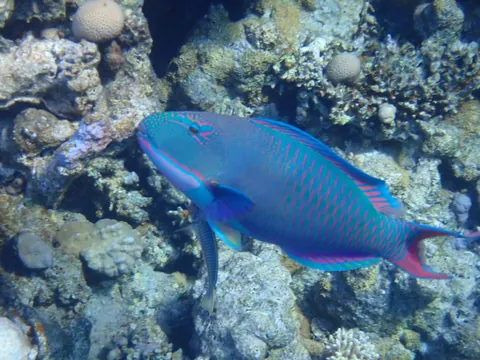
Bicolour parrotfish
Cetoscarus bicolor
Calotomus carolinus
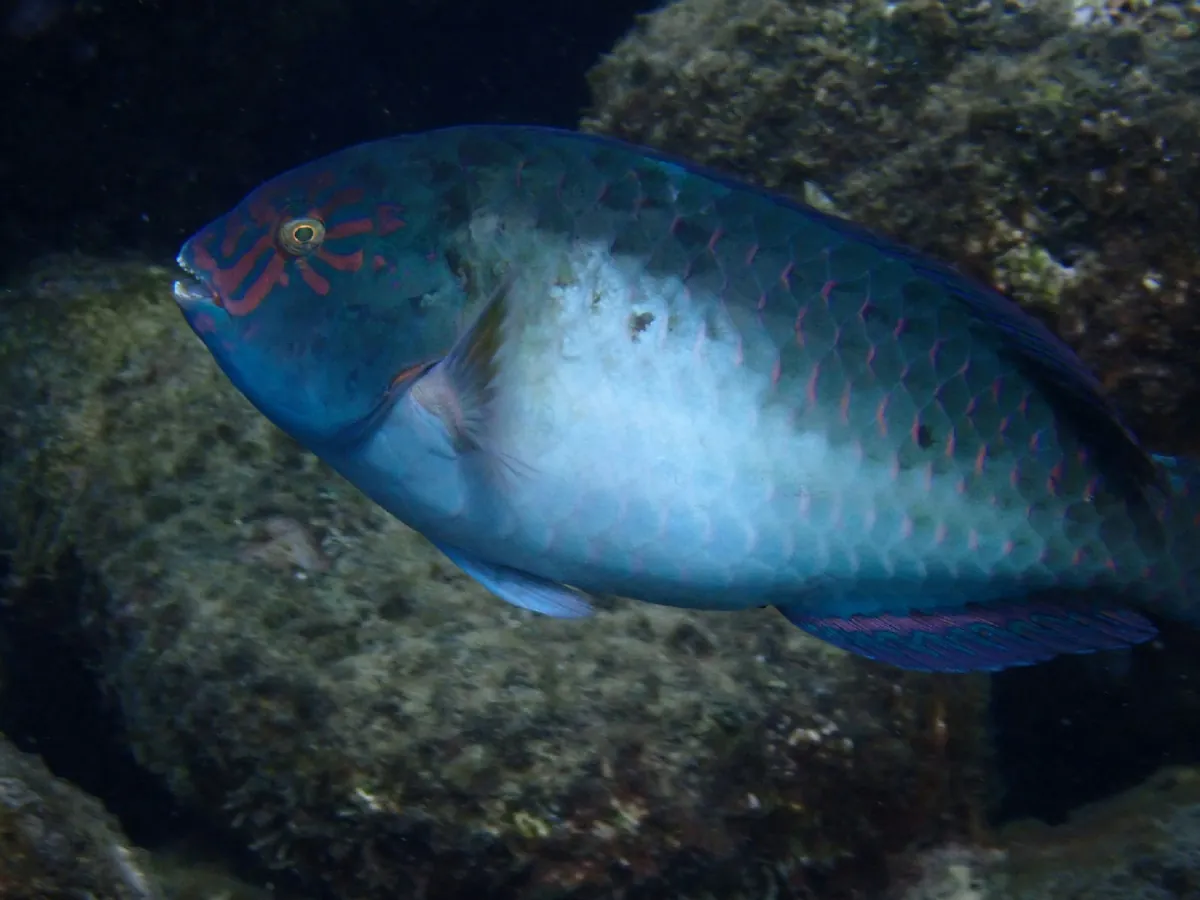
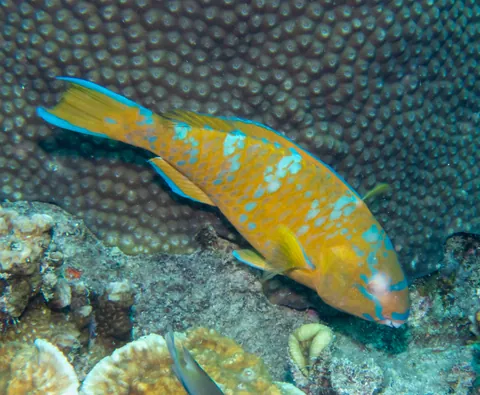
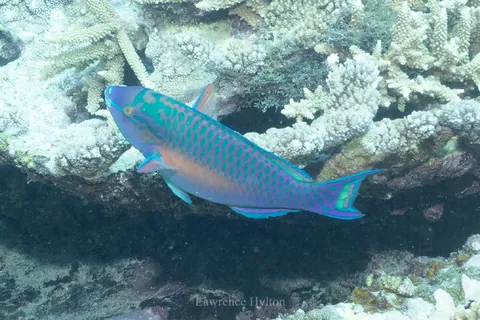
The Carolines parrotfish changes its look so much as it grows that a diver could easily mistake the different life stages for different species. It grazes quietly over reef and lagoon, munching algae off the rock and coral.
Also known as: bucktooth parrotfish, carolines parrotfish, christmas parrotfish, stareye parrotfish, carolines parrotfish, starry-eye parrotfish, stareye parrotfish, starry-eye parrotfish, stareye parrotfish, stareye parrot, spinytooth parrotfish, bucktooth parrotfish, star-eye parrotfish, marbled parrotfish, christmas parrotfish, bucktooth parrot fish, stareye parrotfish, star-eye parrotfish, carolines parrotfish
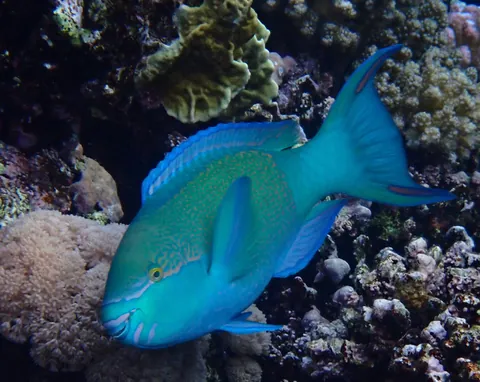
Blue-green adult males can be mistaken for other parrotfish of similar colour. Look for pink lines radiating out from the eyes, the feature behind its other common name, the stareye parrotfish.
This parrotfish has the fused, pebbly teeth typical of its family, forming a beak used for scraping algae. Young fish are mottled orange-brown with some pink shading. Adult females stay mottled brown, with eyes that bulge slightly. Adult males turn shades of blue or green. It grows up to 54 cm long.
It lives on reef flats, in lagoons, and on seaward reefs, from shallow water down to considerable depth, usually alone or in small groups. It favours areas of coral, rubble, seagrass, and algae, and has a wide range across the Indo-Pacific, from East Africa through the Indian Ocean to the eastern Pacific.
This parrotfish is known across the Pacific under many local names, including panuhunuhunu in Hawaiian.
Describe what you saw and we name it, then keep every species you find in your Oceandex.