Atlantic Stingray
Hypanus sabinus
Dasyatis pastinaca
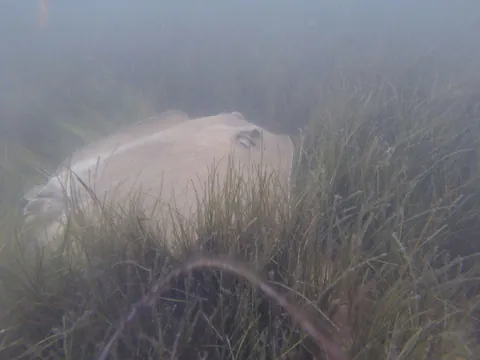
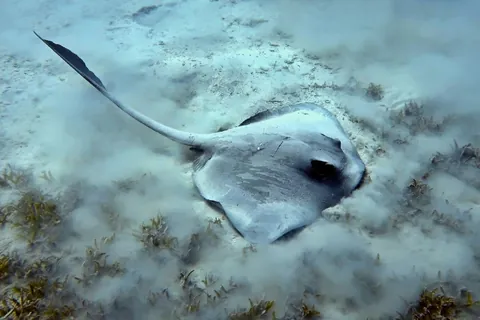
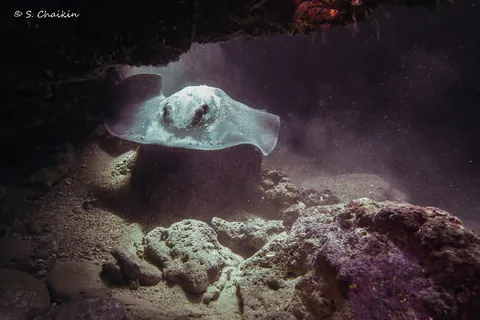
Half buried in sand with only its eyes and spiracles showing, the common stingray is easy to miss until you are right on top of it. A serrated, venomous spine partway along its whip-like tail is the one thing every diver should watch out for.
Also known as: blue stingray
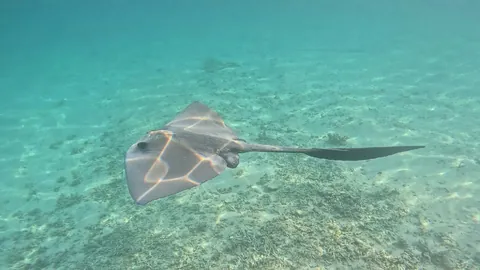
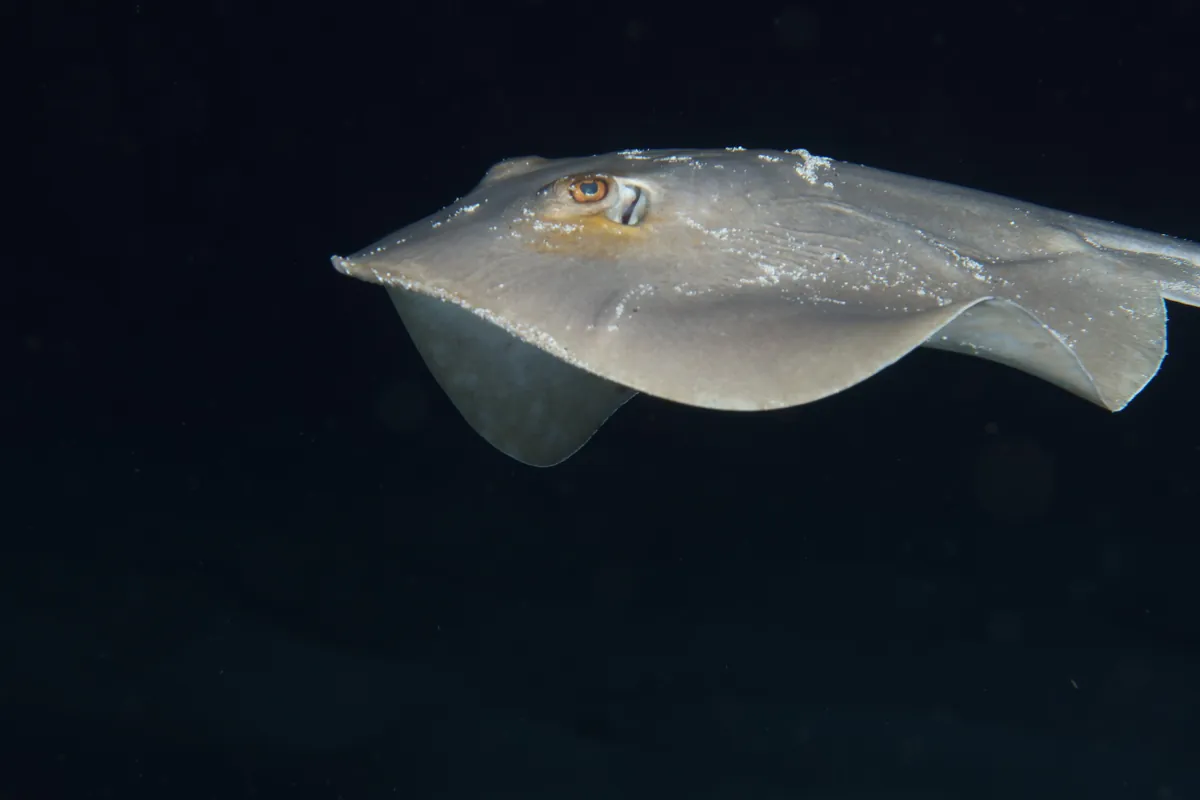
Its diamond-shaped disc with a sharply pointed snout is more angular than the rounder disc many other stingrays have, a useful clue among similar whip-tailed rays.
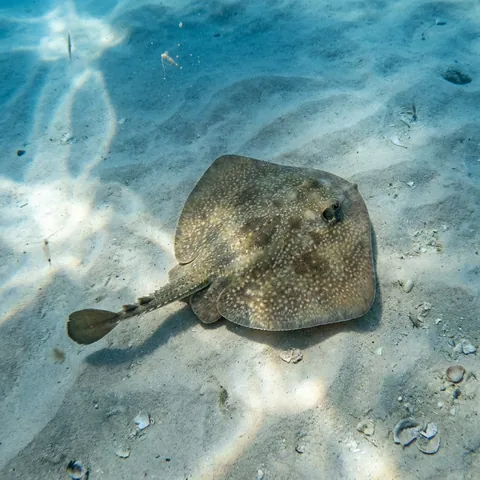
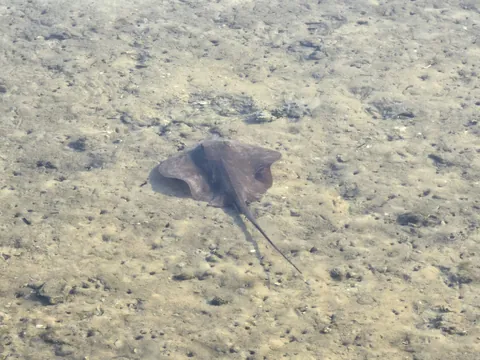
This ray has a flattened, diamond-shaped disc, slightly wider than it is long, with a pointed snout and convex rear edges. Colour above is a solid gray, brown, reddish, or olive-green. Its tail is slender and whip-like, roughly half the length of the disc, with a serrated, venomous spine set partway along it. The skin is mostly smooth, though older individuals develop a row of bony knobs along the middle of the back.
It lives throughout the Mediterranean and Black Seas, and in smaller numbers along the northeastern Atlantic coast from Norway to Madeira and the Canary Islands. This bottom-dwelling ray is usually found between about 20 and 35 metres deep, though it ranges from the shore down to 200 metres. It favours sandy or muddy bottoms in calm water, and sometimes turns up near rocky reefs or in estuaries.
This ray is seen alone or in loose groups, and seems to be more active at night, burying itself in sediment during the day. It feeds on a wide range of bottom-dwelling animals, including crustaceans, cephalopods, bivalves, worms, and small fish, with fish becoming more important in its diet as it grows older. Individuals have been seen closely following one another near a food source, possibly to take advantage of another's find.
This stingray regularly grows a replacement tail spine before the old one is even shed, so some individuals carry two or three stinging spines side by side.
Describe what you saw and we name it, then keep every species you find in your Oceandex.