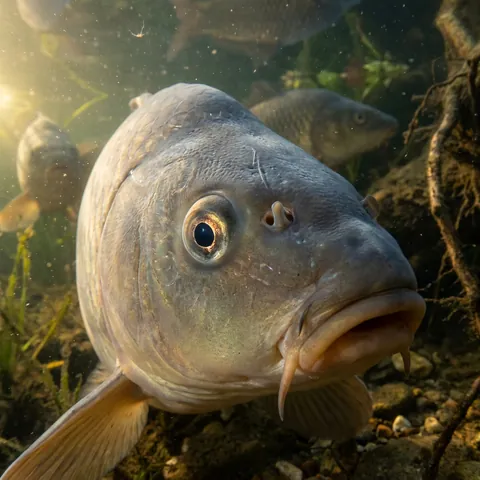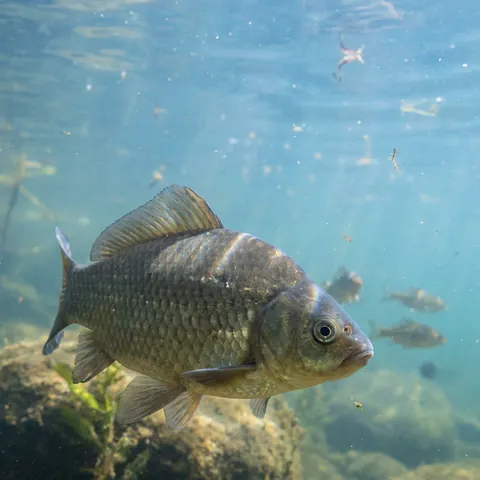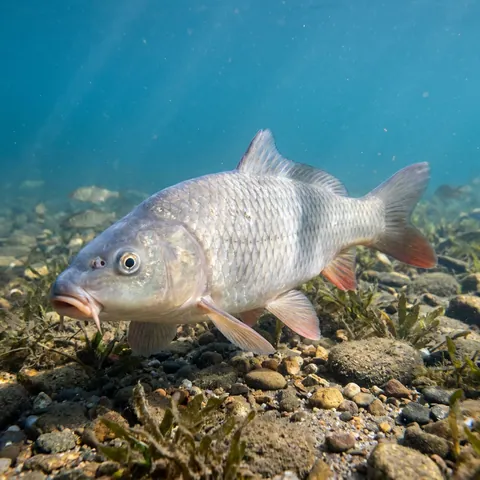
Amur Carp
Cyprinus rubrofuscus
Barbus barbus
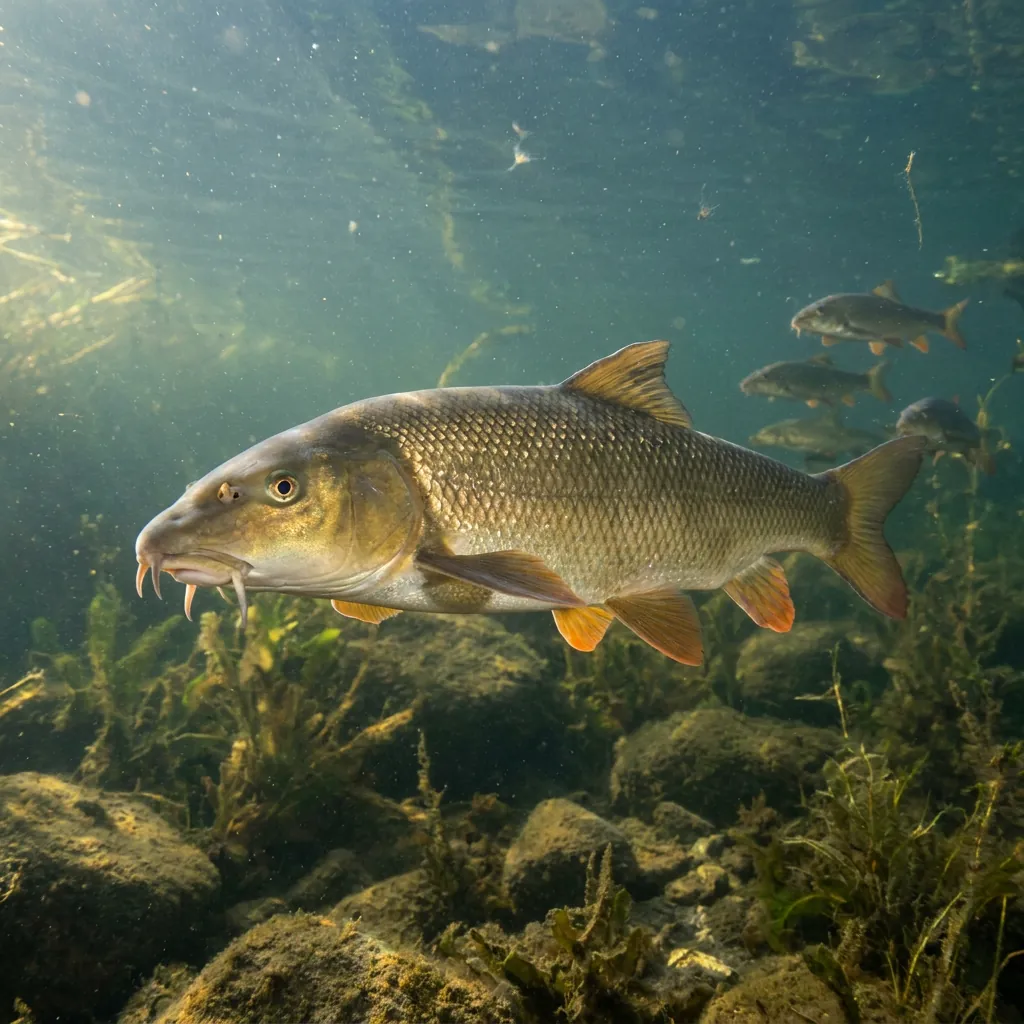
The common barbel is a long, muscular river fish built to hold its ground in fast currents, named for the four whisker-like feelers around its mouth. Anglers prize it for the fight it puts up on the line.
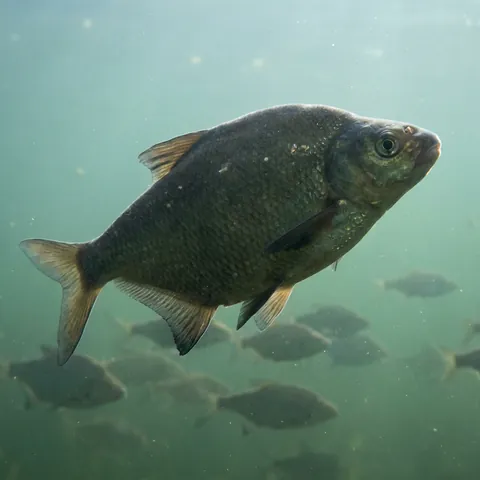
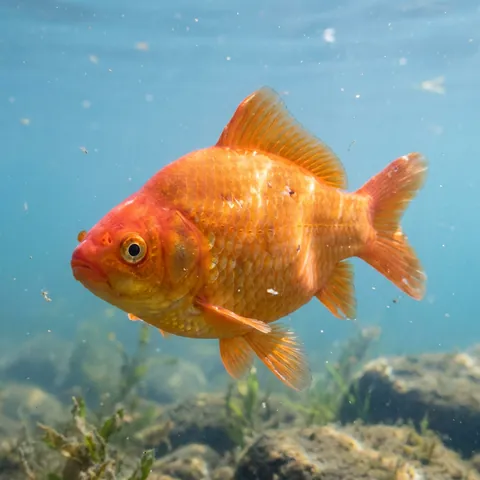
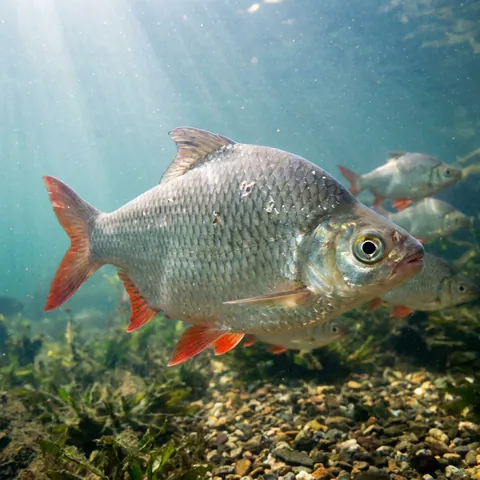
It shares rivers with other slender bottom-feeding fish. Check its mouth: barbel has four whisker-like feelers at the corners, a feature most look-alikes lack.
It has a slender body with a sloping forehead and a flattened underside, shaped to hug the riverbed in strong flow. Its pectoral fins sit low and horizontal for the same reason. Young fish are grey and mottled, while adults turn dark brown, bronze or grey above with a pale belly and fins tinged red or orange. The tail is split into two uneven lobes, with a rounded, slightly shorter lower lobe and a pointed upper one. Four whisker-like barbels hang from the corners of its mouth, used to feel out food on the riverbed.
It is native across northern and eastern Europe, from the Pyrenees and Alps to Lithuania, Russia and the northern Black Sea, and has also been introduced elsewhere, including Britain and Italy. It favours fast, gravelly or stony stretches of river known to anglers as barbel zones, though it also turns up in slower rivers and stocked still waters.
Barbel migrate upstream to reach their spawning grounds before gathering in shallow water to breed in late spring and early summer. Males cluster around females as eggs are released and fertilised, then buried in shallow pits dug into the river gravel. A female may spawn more than once in a season.
The angler Izaak Walton once wrote that the Danube held so many barbel that people could catch them by hand, several cartloads at a time.
Describe what you saw and we name it, then keep every species you find in your Oceandex.