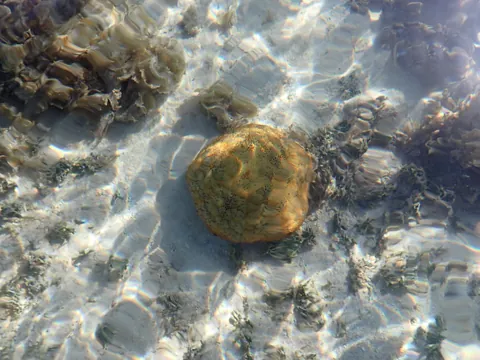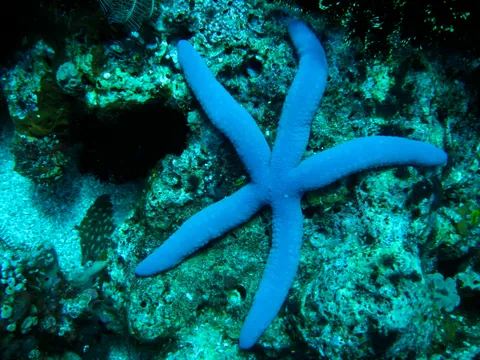
Blue sea star
Linckia laevigata
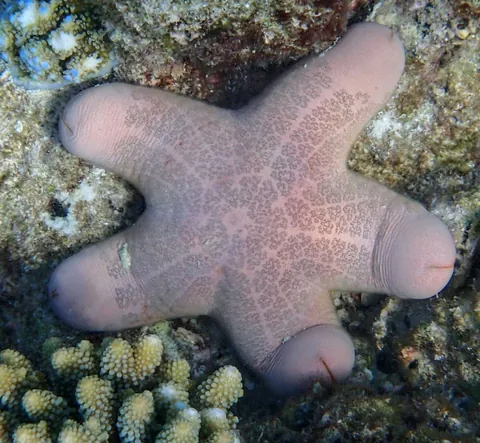
Protoreaster nodosus
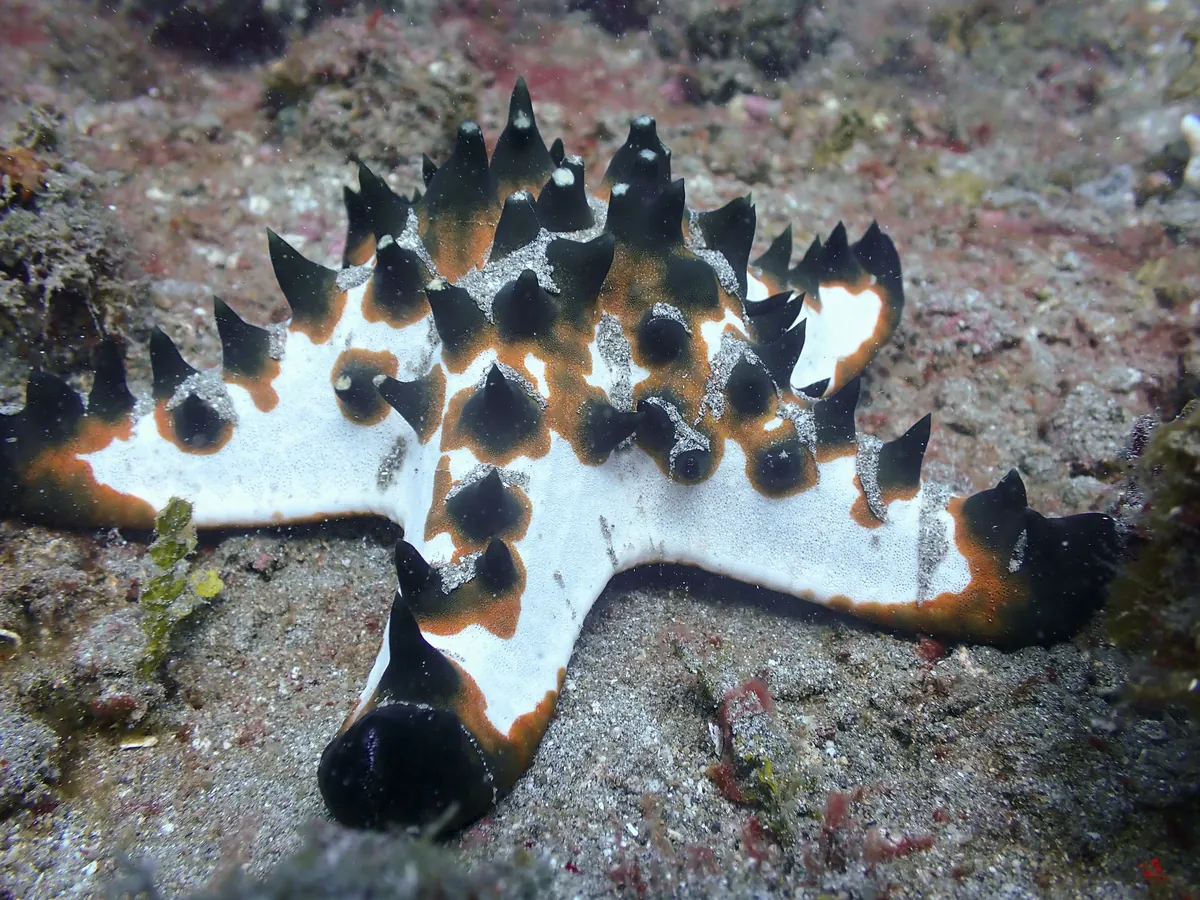
The chocolate chip sea star looks exactly like its name suggests: a pale, cookie-dough-coloured body dotted with dark, cone-shaped studs, resting in the open on sandy reef flats and seagrass beds.
Also known as: horned sea star
Its pale body and rows of dark, cone-shaped spines make this sea star hard to mistake for anything else on the reef flat - the pattern is distinctive enough on its own to confirm the species.
This sea star has rows of black, conical spines standing up on its upper side, which can wear down and become blunt with age. On its underside, rows of purple (or sometimes pale, transparent pink) tube feet run along each arm. It usually has five tapering arms, though four- or six-armed individuals turn up occasionally, and it can grow up to 30 centimetres across. Its body colour ranges from red or brown to a light tan resembling cookie dough.
This sea star lives in the warm, shallow waters of the Indo-Pacific, on sheltered sandy or slightly muddy bottoms, seagrass meadows, and stretches of coral sand, rather than on hard reef structure. It can also be seen in the intertidal zone, sometimes briefly exposed at low tide.
Because it reacts to changes in its surroundings, scientists use the chocolate chip sea star as a bioindicator - a species whose condition signals the health of the reef around it.
Describe what you saw and we name it, then keep every species you find in your Oceandex.