Amur Carp
Cyprinus rubrofuscus
Cyprinus carpio
The common carp is one of the most widely spread freshwater fish on Earth, native to Europe and Asia but now found on almost every continent. It can grow to 120 cm and weigh over 40 kg, though most are far smaller.
Also known as: aischgrund carp, amur carp, amur wild carp, asian carp, blubber lips, calico carp, chinese carp, common carp, cyprinus carpio, edible carp, euro, european carp, german carp, grass carp, great carp, koi, koi carp, leather carp, mirror carp, mud sucker, nishiki-koi, scale carp, wild carp, wild common carp
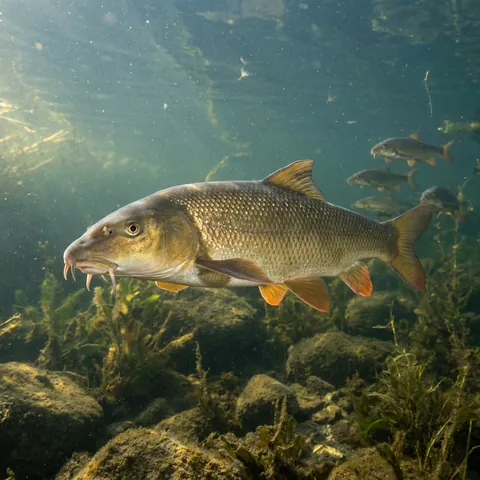
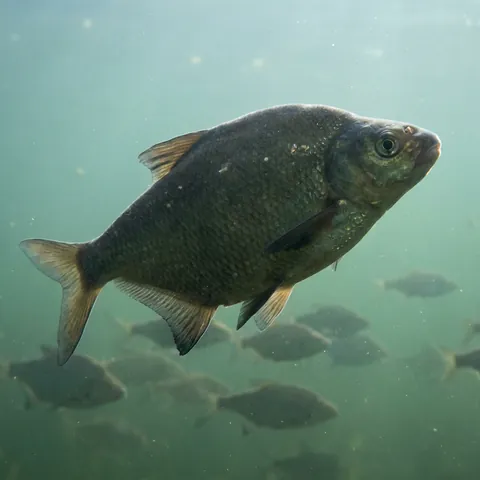
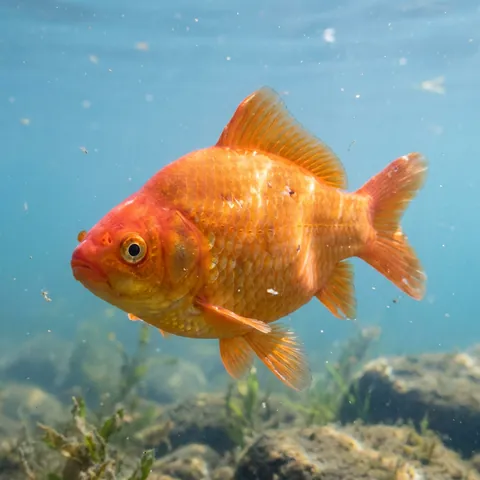
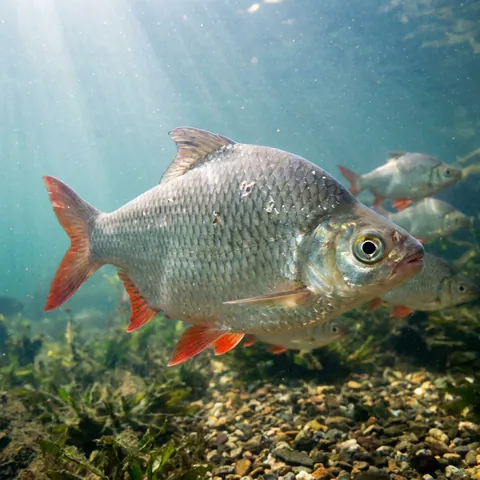
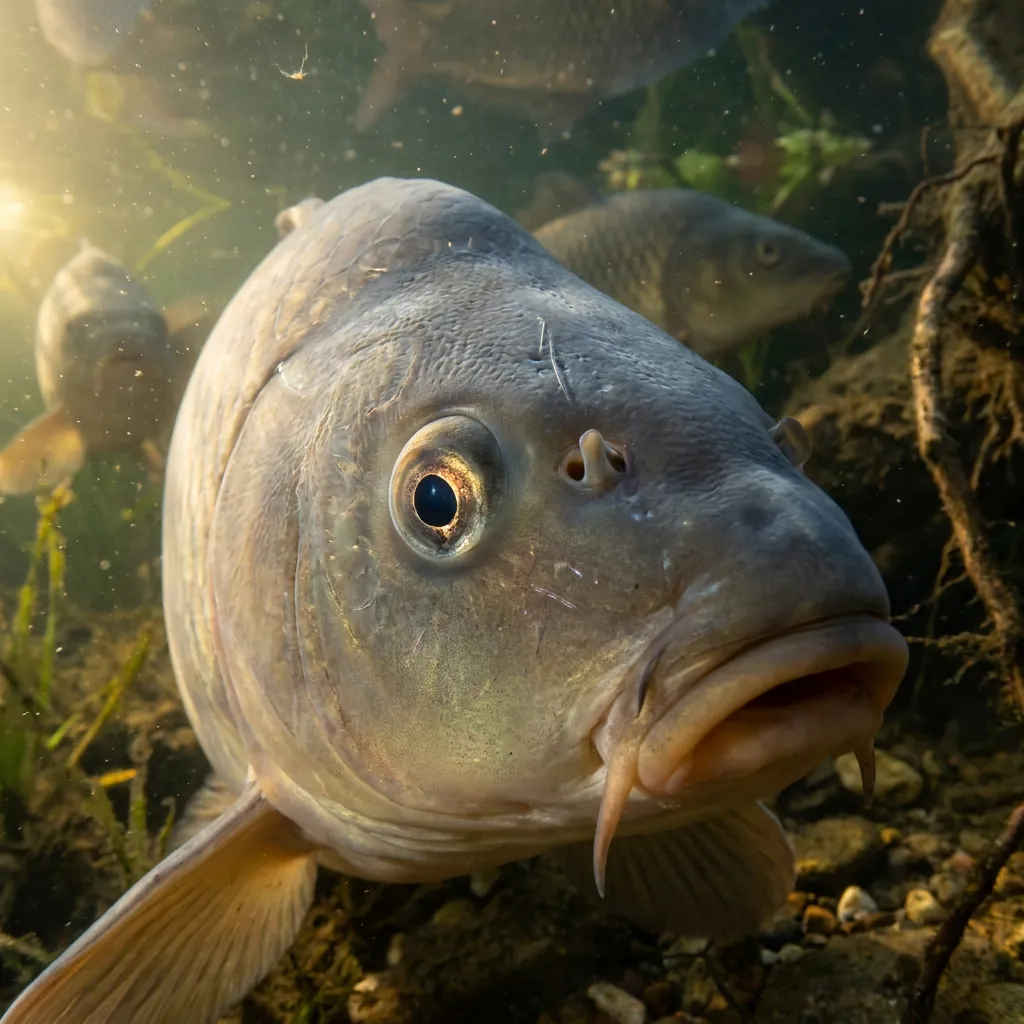
It can be mistaken for goldfish or other carp-like fish sharing the same waters. The barbels settle it: common carp always have two pairs on the mouth, while goldfish have none.
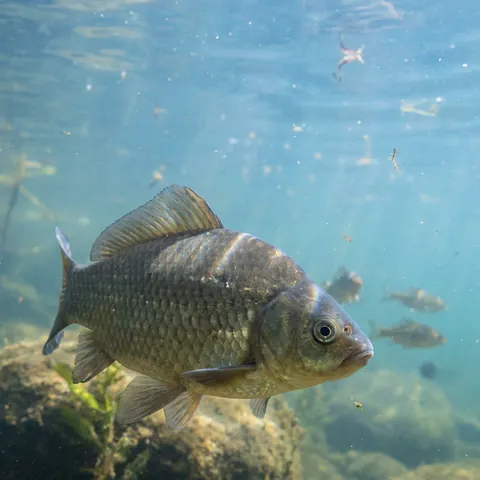
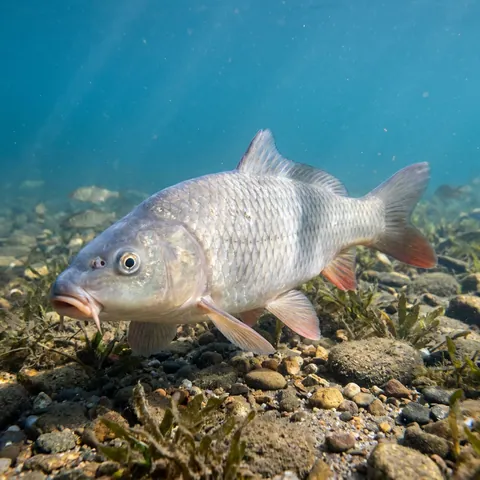
Its body has a dark gold sheen, darker on the back and yellow underneath, covered in large, shiny scales. The mouth points downward and carries two pairs of barbels, short whiskers used to feel for food. Large pectoral fins sit behind the gills, and a long dorsal fin runs along the back two-thirds of the body, rising higher near the head.
It lives in slow-moving or standing fresh water with soft, muddy bottoms, such as lakes, backwaters, and large rivers. It tolerates water from 3 to 35 degrees Celsius and depths down to 50 m, and often gathers in groups of five or more.
Carp feed along the bottom throughout the day, most actively at night and around sunrise. They can survive in water with very little oxygen by gulping air at the surface, and can live through winter under ice as long as some open water remains below it.
It eats almost anything: water plants, insects, crustaceans, snails, worms, and even fish eggs. It roots through mud on the bottom, using its barbels to feel for food, then sorts what it finds by taste before swallowing.
A female can lay around 300,000 eggs in a single spawning, usually in spring, and may spawn more than once in a season. Carp often migrate to shallow backwaters or flooded meadows to spawn, where the eggs and young develop in warm, sheltered water.
harmless to humans (invasive pest in many regions)
Wild populations have declined due to river engineering and interbreeding with domesticated and introduced carp stocks, though the species overall remains widespread and adaptable.
Scientists showed that some carp eggs can survive being eaten by waterfowl, passing through the bird's gut and still hatching afterward.
Describe what you saw and we name it, then keep every species you find in your Oceandex.